Best boiler temperature for a Missouri winter

A local pro who services boilers gets in touch about the tune-up.

Find my pro

What's the best boiler temperature setting for winter in Missouri?

Missouri winters swing from mild to single digits, and a boiler that's set wrong either runs up the gas bill or struggles to keep the house warm when a cold snap hits. You want a number that works for your thermostat and your radiators without guessing every time the temperature outside drops.

Set the boiler's water temperature to around 160 to 180 degrees for most of the winter

A boiler heats water, not air directly, so the setting controls how hot that water gets before it moves through your radiators or baseboards. Around 160 to 180 degrees is enough to heat a Missouri home through a normal winter day. On the coldest stretches, when temperatures drop into the single digits or below, pushing it closer to 180 keeps the house from losing ground. Running it much hotter than that doesn't heat the house faster. It just burns more gas and puts more wear on the boiler, since the burner has to work harder to reach and hold a higher temperature. Since most homes here heat with gas, that extra wear shows up as a bigger bill before it shows up as a repair.

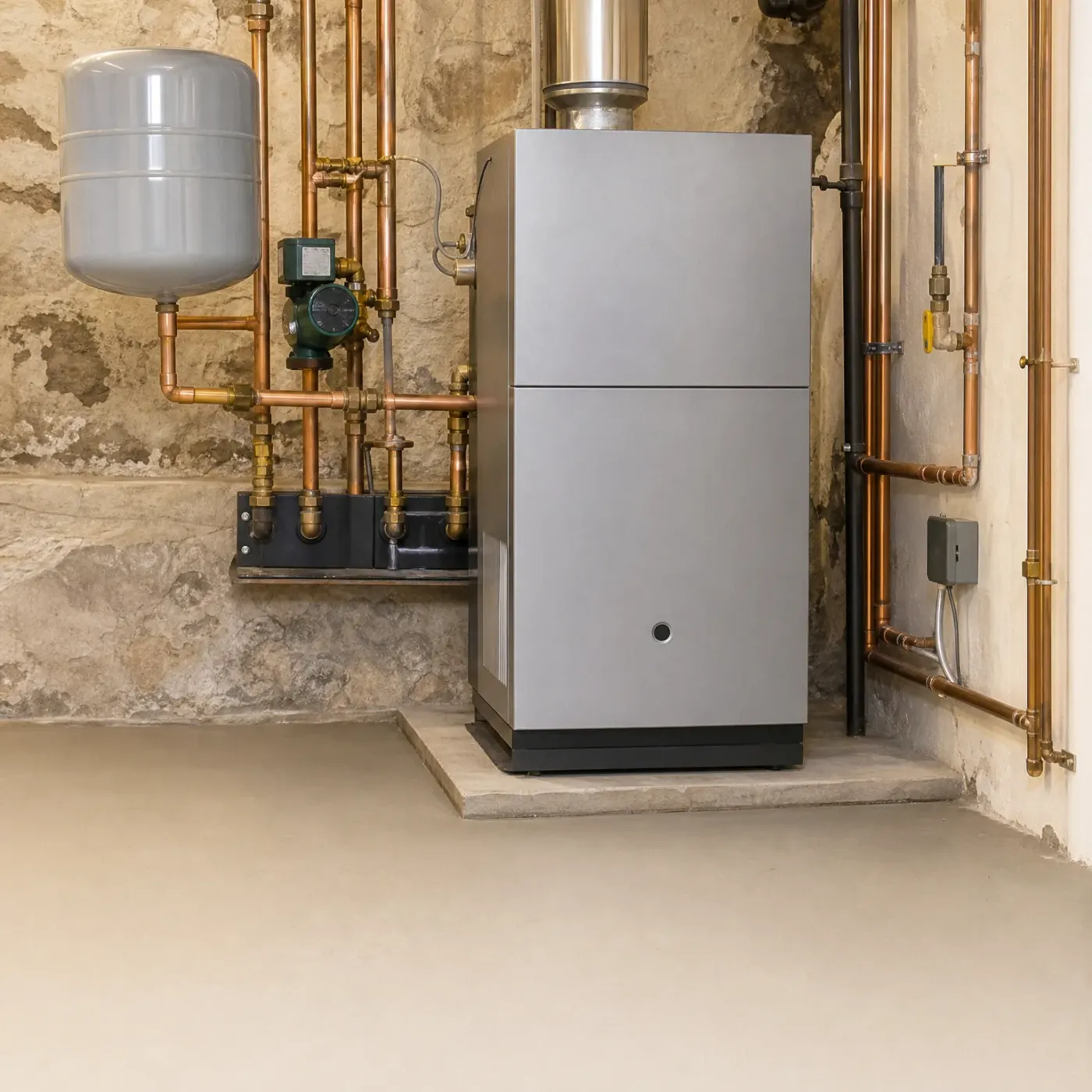
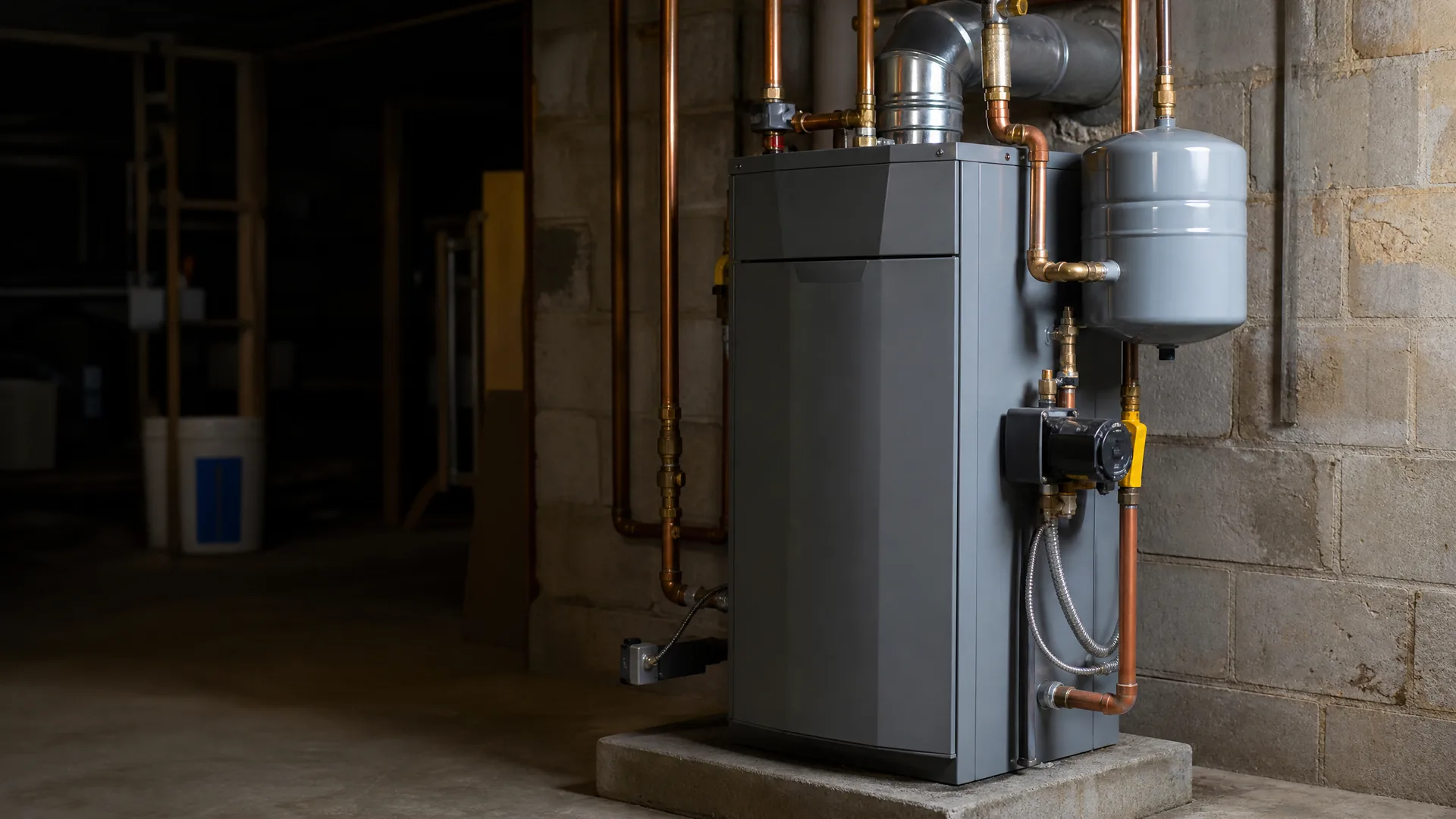
A gray boiler unit with a flue pipe stands on a concrete pad in a basement, surrounded by copper piping, a circulator pump, an expansion tank mounted on a stone wall, and an electrical outlet.

Running Right

This is a boiler set correctly for the weather outside. Water temperature matches what the house needs that day, the pump moves heat evenly, and the expansion tank holds steady pressure. Gas use tracks the thermostat instead of fighting it, even when a cold snap pushes temperatures down into the single digits.

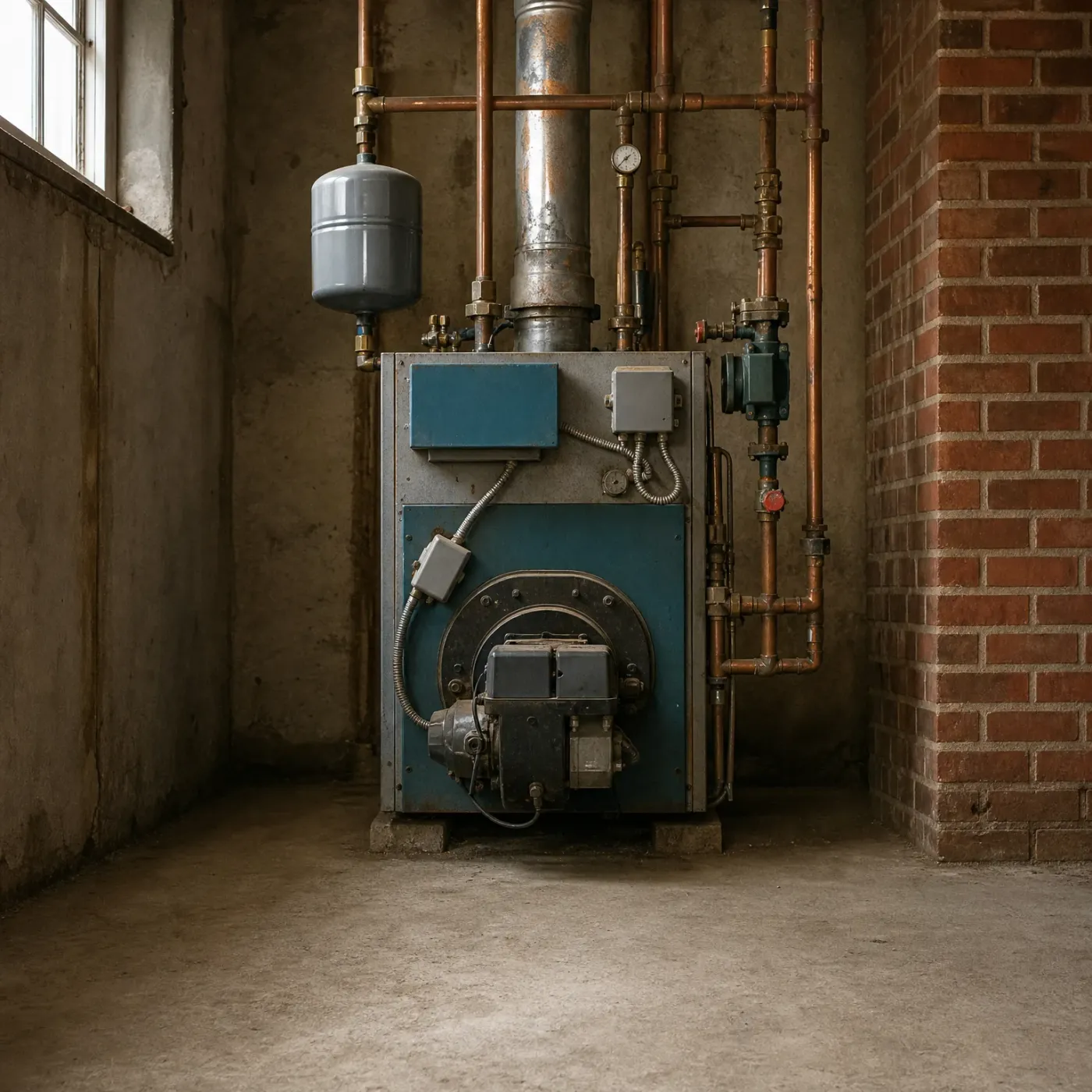
A blue cast-iron boiler with a burner unit, gauges and copper piping stands in a concrete-floored basement room beside a red brick pillar and a window.

Set Wrong

This is a boiler left on one setting all winter, pushed too hard or not hard enough for what Missouri asks of it. Pressure drifts, the gauge reads off, and valves work harder than they should. Gas bills climb some months and the house still doesn't hold heat on the coldest nights.

Why does one room run cold while the boiler keeps firing?

If the water temperature is set wrong for the weather, you'll notice it room by room before you notice it on the gas bill. A back bedroom stays cool while the living room gets warm. Radiators or baseboards feel barely warm to the touch even though the boiler is cycling often. On a single digit night, the thermostat can't catch up no matter how long it runs. Set too high the other direction, the boiler short cycles, turning on and off more than it should, and that wear adds up over a winter. Left alone, a boiler working against the wrong setting all season puts more strain on the pump and the heat exchanger than it needs to.

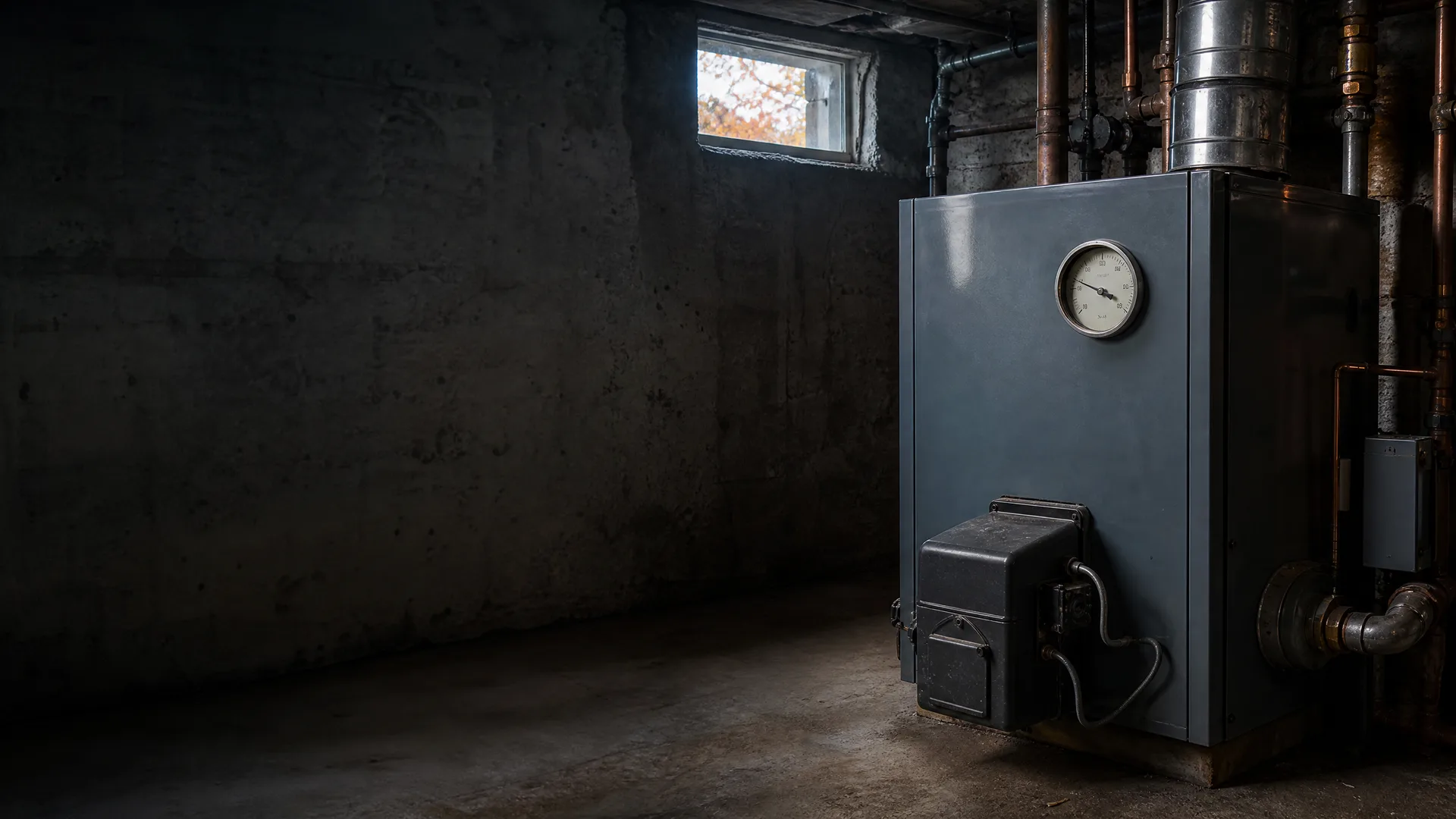
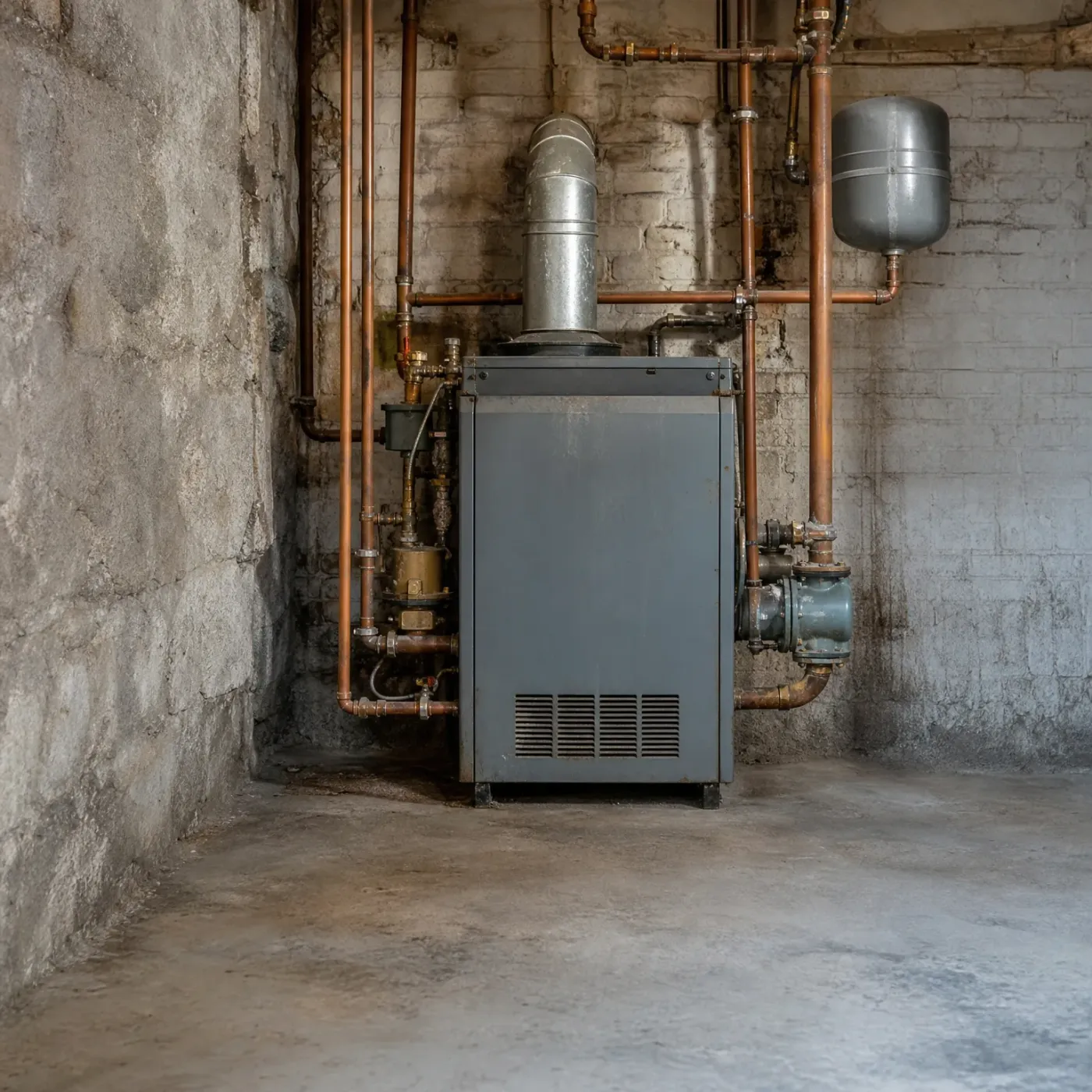
A gray boiler with a round pressure gauge and copper and metal pipes stands in a dim concrete basement lit by a small window.

You're down in the basement on a gray October afternoon, moving the storage bins off the shelf by the water heater, when you notice the boiler's pressure gauge. The needle sits low, closer to zero than the middle of the dial where it usually rests. Upstairs the thermostat is set the same as always, but you've noticed the living room took longer to warm up this morning. You crouch down and look closer at the gauge, tapping the glass once out of habit. It hasn't moved. Outside, the first cold front of the year is pushing through, the kind that drops a mild afternoon into a thirty-degree night, and the boiler is about to find out if it's ready for that.


A woman in a gray sweater and jeans stands in an open wood front door of a white stucco house while a man in a dark jacket walks toward her on the entry path.

What the outdoor reset curve is actually doing

Most boilers built in the last couple decades have an outdoor reset control. A sensor outside reads the temperature and the boiler adjusts how hot it sends the water to the radiators or baseboards, instead of firing to one fixed setting all winter. On a 40 degree day in St. Louis it might send water out at 120 degrees. Drop to single digits and it climbs toward 180. The curve that maps outside temperature to water temperature gets programmed in, and if nobody's touched it since the boiler went in, it may still carry the installer's default rather than a curve set for your house.

A curve set too high means water hotter than the house needs on mild days, short cycling the burner and wasting gas. Set too low and the house can't keep up once a cold snap settles in. Getting that curve right takes a tech who can check it against how your rooms actually hold heat, not just reset it to a factory number. That's the kind of adjustment a contractor matched to your situation would look at as part of a maintenance visit, rather than something a dial on the boiler tells you on its own.

A large weathered ceramic vase and a shallow wooden bowl sit on a rustic wooden table beside a window with linen curtains, with a blurred sofa with cushions and a hanging fabric panel in the background.
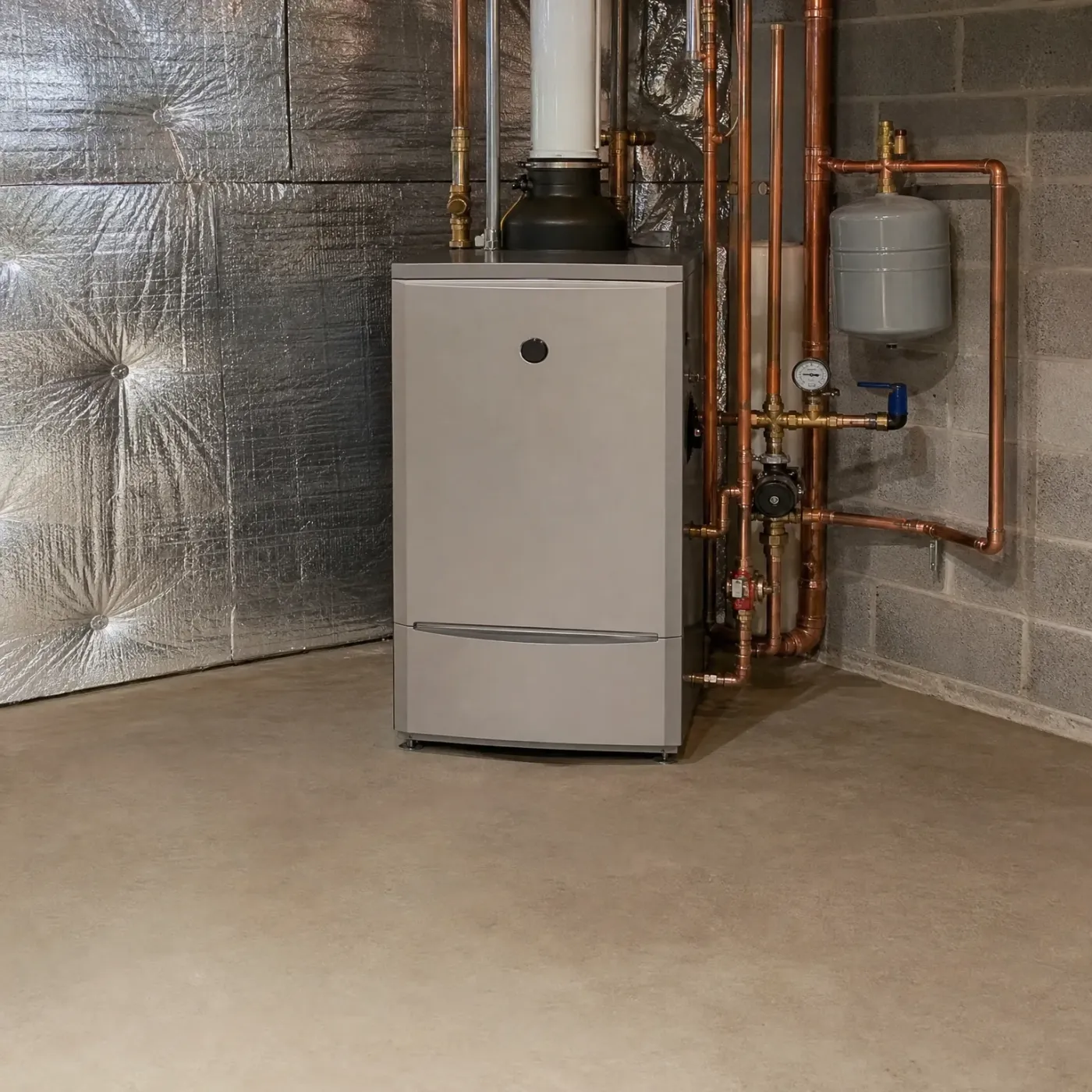
A gray residential boiler in a basement corner with copper piping, a circulator pump, pressure gauge, blue-handled valve and gray expansion tank against a concrete block wall, next to a foil-insulated wall.

Set Right for the Weather

The water temperature matches what the house needs that day, the expansion tank holds steady pressure, and the pump moves heat evenly through the copper lines to every radiator or baseboard on the system.

A gray boiler on a concrete block base in a basement, with copper piping, a metal flue, and a gray expansion tank mounted beside it against a concrete wall.

Set Wrong, or Just Old

This boiler has to work harder to hit the same room temperature. Pressure swings, the flue runs hotter than it should, and a system like this is worth a second look before the next cold snap.

A woman in a cream knit sweater sits in an armchair with her eyes closed and head tilted back, beside a window showing orange autumn foliage and a wooden side table with a mug.
A gray-haired man with a beard in a blue button-placket shirt reclines on a couch with his eyes closed, beside a sunlit window with a green plant.
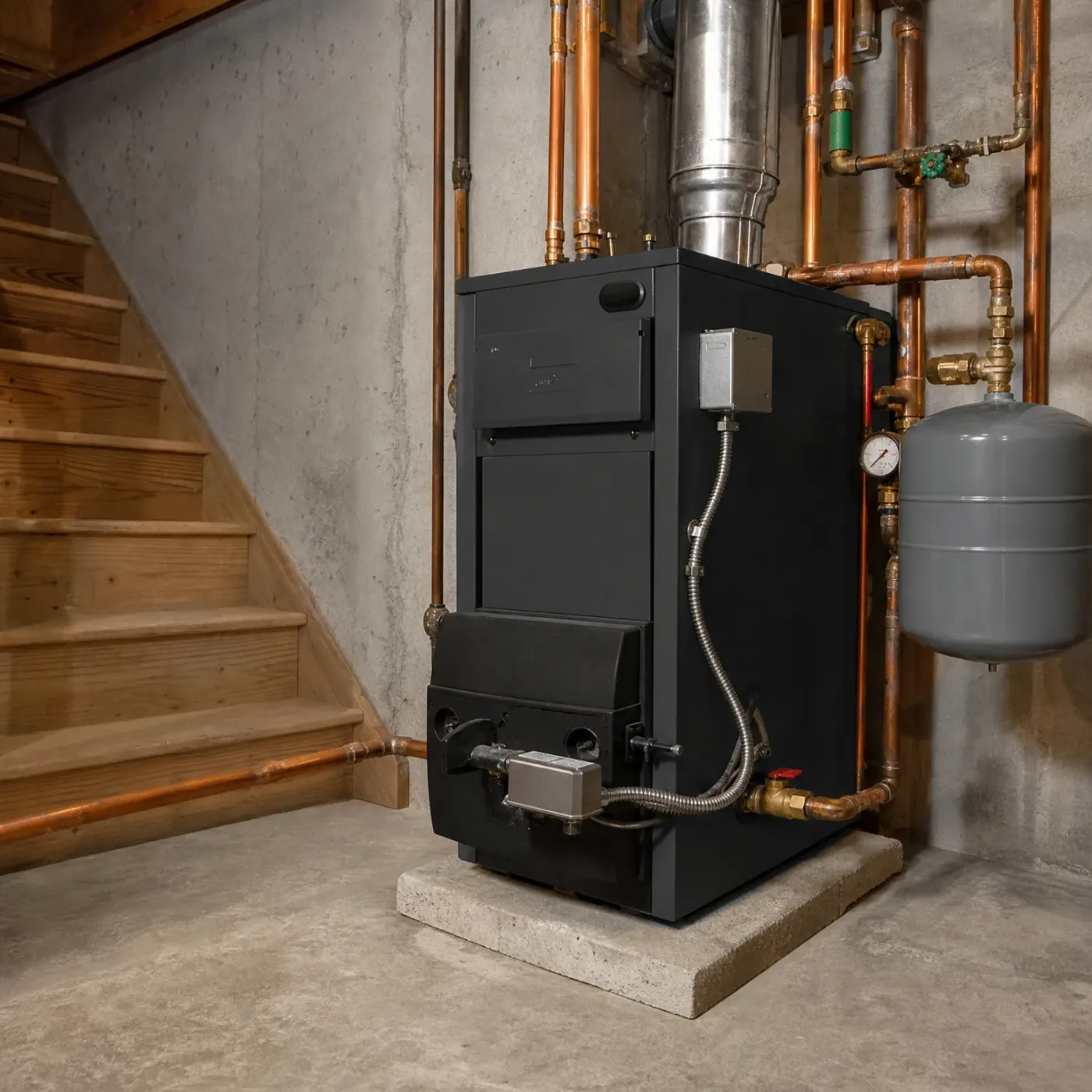
A black boiler on a concrete pad in a basement, connected to copper piping, a metal flue, and a gray expansion tank, beside a wooden staircase and concrete wall.

Matched to your boiler job

One form instead of hunting for a pro who does boiler tune-ups.

A local pro who knows boilers gets your details and gets in touch.

Get a boiler pro

There's no charge for the request.

A woman with long gray hair wrapped in a checked blanket sits on a sofa by a window with yellow autumn foliage outside, with a lamp, framed picture and plant in the background.
An older woman in a cream knit sweater sits on a sofa by a window, looking out at sunlit trees with yellow and orange autumn leaves, with a bookshelf and lamp behind her.
A woman with gray shoulder-length hair in a dark knit sweater sits on a cushioned seat by a window, looking out at yellow autumn foliage, with a living room, armchair, houseplant and framed picture behind her.
An older woman with gray hair in a bun, wearing a cream knit sweater, sits on a sofa with a gray blanket and looks out a large window toward yellow-green autumn trees, with a lit table lamp and dark armchair behind her.

Inside the Water Temperature Loop

  • Boiler water runs 120 to 180 degrees, well above the 68 to 70 degrees the air in your house needs.
  • A thermostat only tells the boiler when to fire, never how hot the water itself gets.
  • Cast iron radiators work with lower water temperatures than baseboard convectors, which need more heat to push the same warmth into a room.
  • The high limit control is the backstop that shuts the burner off if the water climbs past what the system is built to handle.
  • Every boiler has a low water cutoff, and it will stop the burner cold if pressure or water level drops too far.
  • Short cycling, where the boiler fires and shuts off every few minutes, usually means the water temperature is set higher than the day calls for.

A boiler doesn't heat your house directly. It heats water, sends that water through pipes to radiators or baseboards, and the metal gives off heat as the water passes through. The thermostat on the wall only decides when the burner turns on. It has no say over how hot the water gets once the burner is running. That number is set at the boiler itself, or by the outdoor reset control if the system has one. Cast iron radiators were built for an era of lower water temperatures and give off heat efficiently even at 140 or 150 degrees. Baseboard convectors have less surface area, so they often need water closer to 180 degrees to put out the same warmth. Set the water too hot for what the house needs that day, and the boiler satisfies the thermostat fast, shuts off, then fires again a few minutes later. That short cycling wears on the burner and the ignition parts faster than steady, longer runs do. Two safety controls sit behind all of this. The high limit shuts the burner off if water temperature climbs past what the system is rated for. The low water cutoff does the opposite job, stopping the burner if water level or pressure drops too low, which protects the heat exchanger from running dry and cracking.

Winter nights average 25°F statewide

A 25°F overnight low is the kind of cold where the boiler is firing most of the night, not just at dawn. On a curve set for that temperature, the radiators stay warm enough to hold the house steady instead of catching up each morning.

NOAA nClimDiv 1991-2020 county normals weighted by homes

A boiler set to run too hot wastes gas standing by, cycling on and off more than the house actually needs. One set too low never catches up once the outside temperature drops into the 20s or lower.

The right setting isn't one number you dial in and forget. It's a curve matched to the weather, so the boiler sends out exactly as much heat as that day in Missouri calls for.

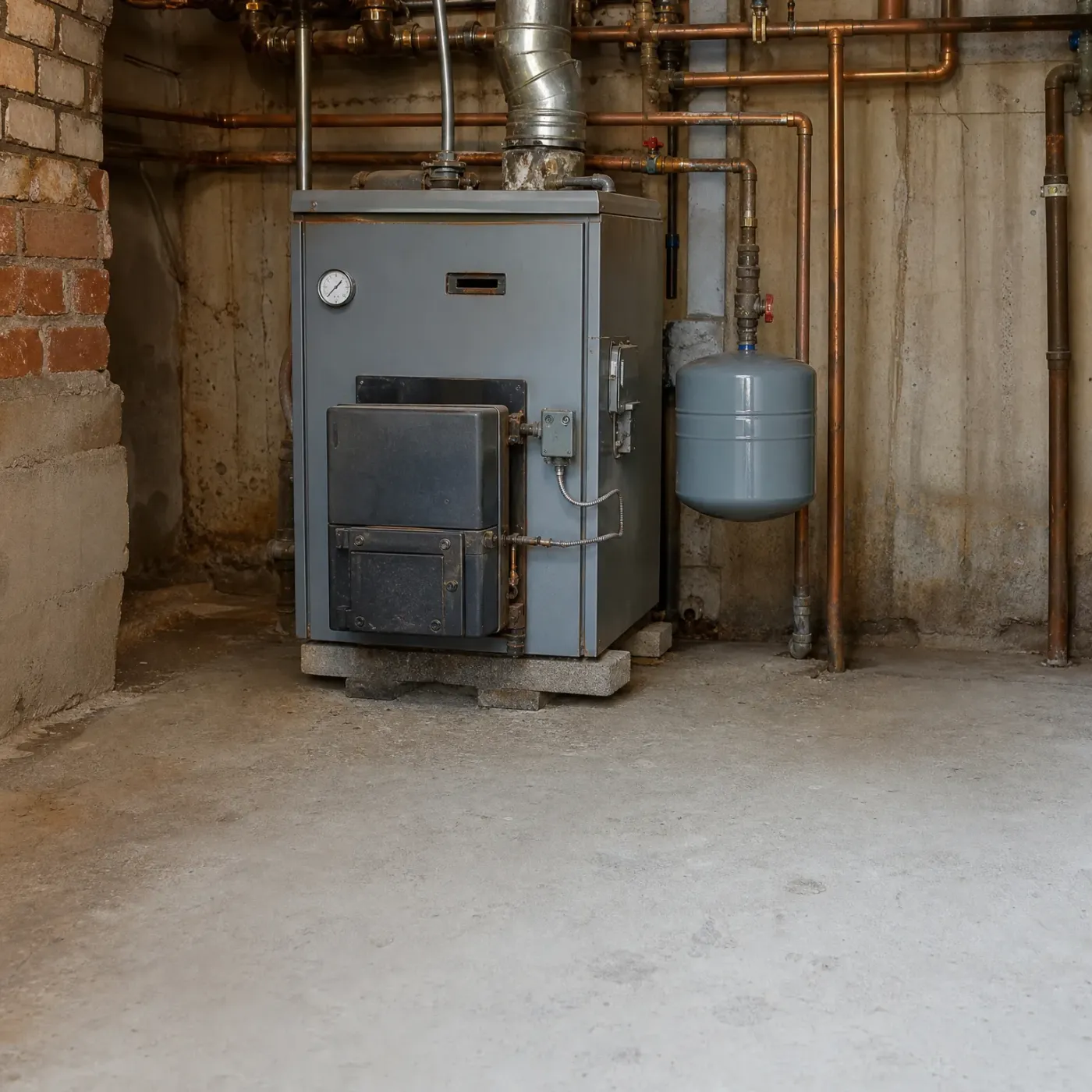
A gray boiler with a metal flue pipe and copper piping stands against a weathered painted brick basement wall, with an expansion tank mounted overhead and a bare concrete floor in front.
Before you get your boiler maintenance
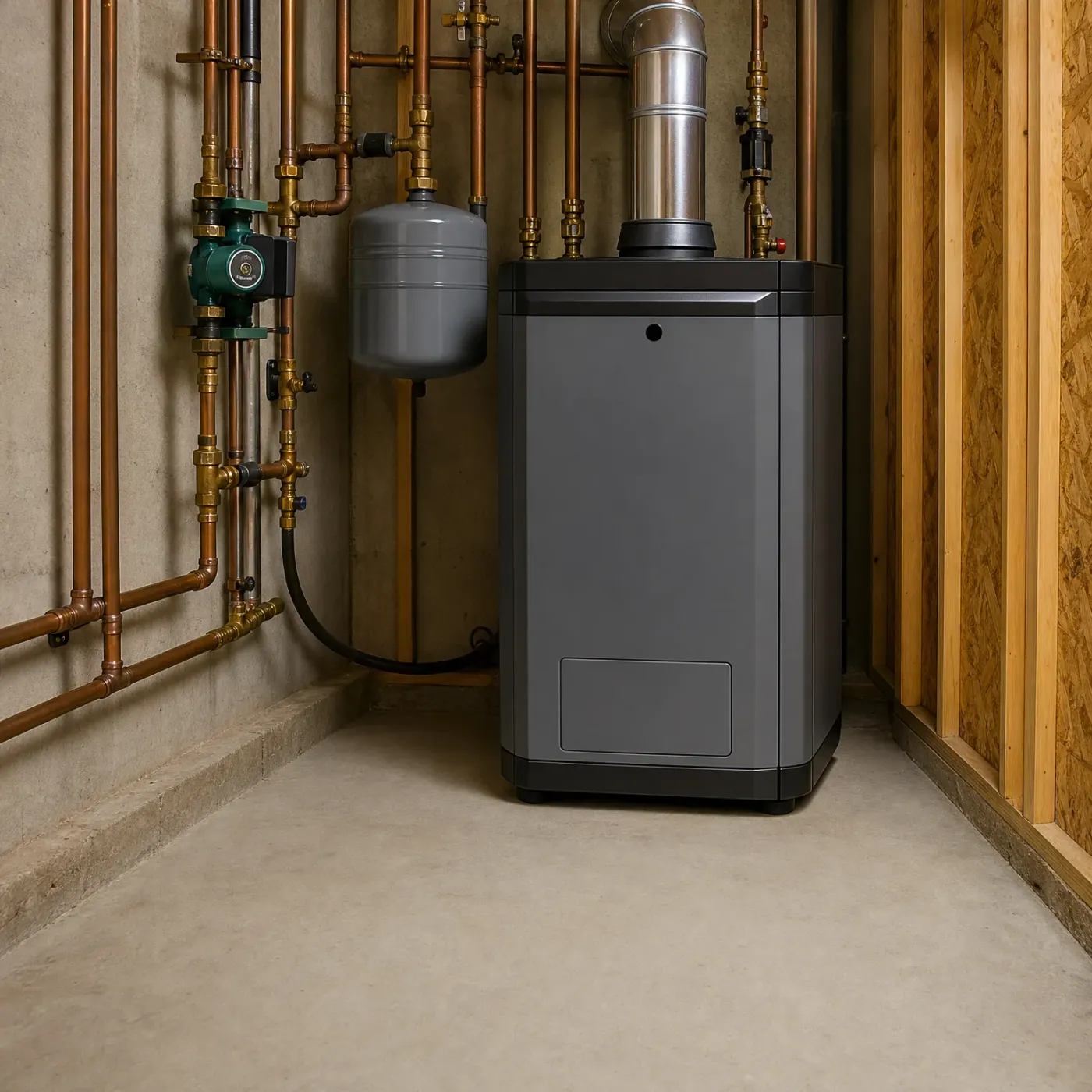
A gray floor-standing boiler with a metal flue pipe stands in a basement corner beside copper piping, brass valves, a green circulator pump, and a gray expansion tank on a concrete wall, with exposed wood framing and sheathing at right.
After you get your boiler maintenance

Calling around for quotes

You explain the pressure gauge, the cold bedroom, and the setting question to every contractor you call, then wait to hear back and compare what each one tells you.

Connect with a pro

Matched with a contractor

Tell the page what your boiler is doing once, and a contractor who covers your part of Missouri reaches out to you directly.

Connect with a pro

Guess at It, or Get It Set

Call Every Winter

  • You check the pressure gauge yourself and guess whether low means a leak or just normal settling.
  • You nudge the thermostat up or down by feel when a room runs cold, without knowing what the boiler itself is set to.
  • A cold snap in the single digits catches the system off guard and you're the one troubleshooting it at 6 a.m.
  • Small issues like a sticking valve or a worn pump bearing go unnoticed until they cause a cold room or a bigger repair.
  • You're searching for a contractor again each time something seems off, starting the explanation over from scratch.

Get It Checked Once

  • A contractor checks pressure, water temperature, and the reset curve against what the house actually needs this winter.
  • Any sticking valve, worn pump bearing, or slow leak gets caught before it turns into a cold room or a bigger bill.
  • You get matched with someone who already knows boilers like yours, instead of explaining the setup from zero each time.
  • The outdoor reset curve gets set to match Missouri's swings, from the mild stretches to the nights near zero.
  • One visit replaces the back and forth of calling around, comparing quotes, and repeating the same story to each contractor.
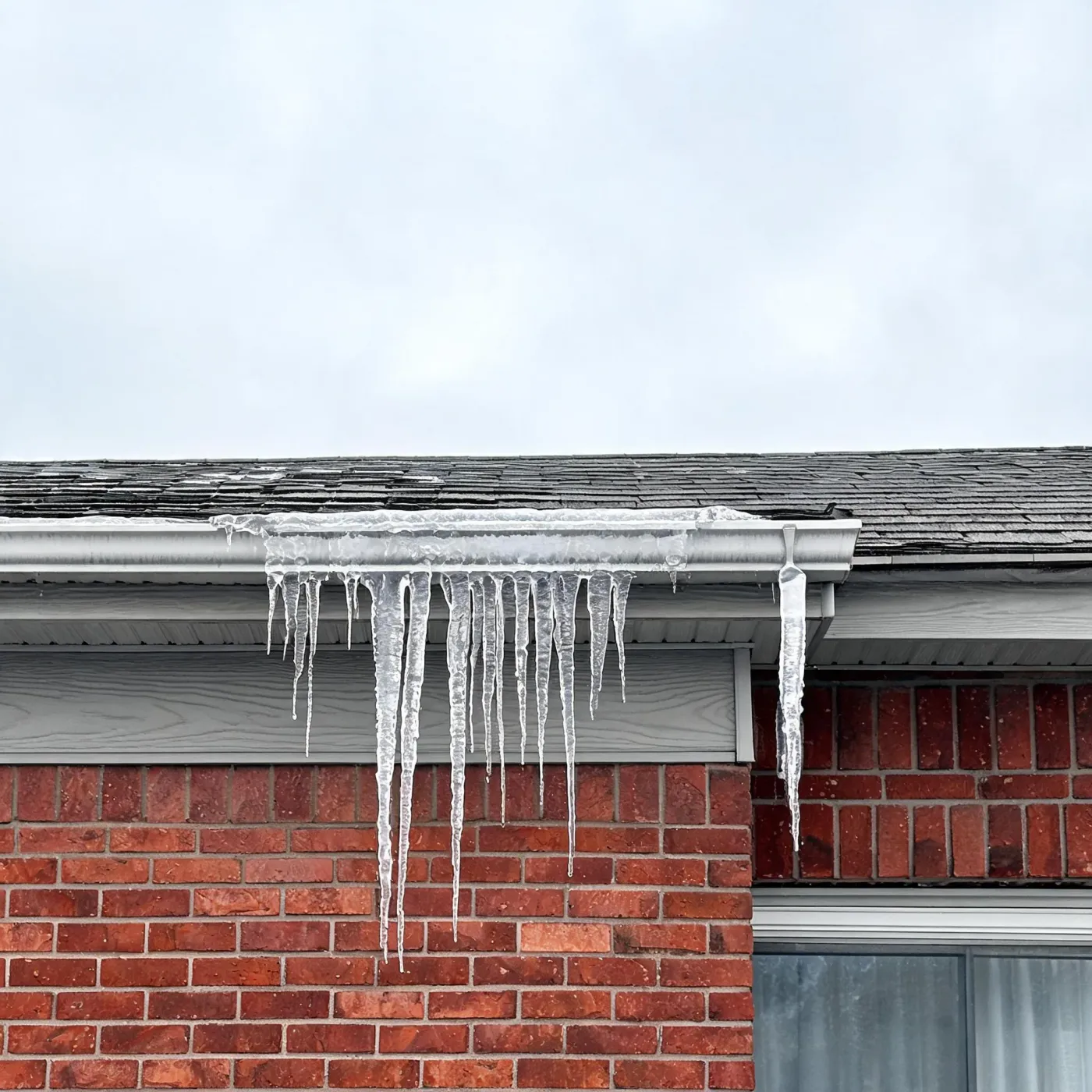
Icicles hanging from a metal gutter along the edge of a shingled roof above gray siding and a red brick wall, under an overcast sky.

Winter nights average 25°F statewide, per NOAA climate data, and that's the stretch where a boiler's setting matters most. At that temperature the system is firing on and off most of the night, not just warming things up at dawn. If the water temperature is set too low for a night that cold, the radiators or baseboards cool off between cycles and the house never quite catches up, so you wake up to a chill even though the boiler ran for hours. Set correctly for a 25°F night, the water stays hot enough that the house holds its heat through to morning instead of losing ground while you sleep.

NOAA nClimDiv 1991-2020 county normals weighted by homes

The right boiler setting for a Missouri winter is the one matched to your house, your radiators or baseboards, and the outdoor reset curve, not a single number copied from somewhere else. Cast iron wants less heat in the water than fin-tube baseboard does, and a curve set for a 25°F night won't leave a room cold when the thermostat is doing its job. A technician who checks the pressure, the curve, and the way heat reaches every room can tell you where your system actually stands, instead of you guessing at it room by room all winter. That's the part that takes the work off your plate. You won't need to call around explaining the same cold bedroom and the same pressure gauge reading to one contractor after another, waiting on callbacks, sorting through quotes that don't quite answer the same question. You get matched with someone who already knows what you've told the page, and they take it from there.

A gray residential boiler on a concrete pad in a basement, with copper piping, a gas valve, a flue vent, and a gray expansion tank against a concrete block wall.

A local pro for your boiler maintenance

Step 1 of 3: Equipment