Profile view of a bearded man wearing a dark baseball cap and a dark gray T-shirt against a plain off-white background.

Boiler carbon monoxide signs in Missouri

Step 1 of 3: Equipment

A boiler that's leaking carbon monoxide usually shows it before anyone feels sick. Look for soot or a yellow-brown stain around the draft hood or flue connection. A burner flame that should be blue but shows yellow or orange tips is drawing air wrong, often because the flue isn't venting properly. Water streaking down a wall near the vent pipe, or the pipe itself rusting from the outside, means exhaust is condensing where it shouldn't. Some boilers trip their own high-limit or flame sensor repeatedly when combustion goes bad, which can look like a nuisance shutdown rather than a gas problem. A plug-in CO alarm near the boiler room is the only way to catch it when none of these signs show yet, since carbon monoxide itself has no smell. If you notice any of this, shut the boiler off and get it looked at before running it again. Gas boilers are common in Missouri homes, and this is the kind of thing worth catching early rather than living with for a season.

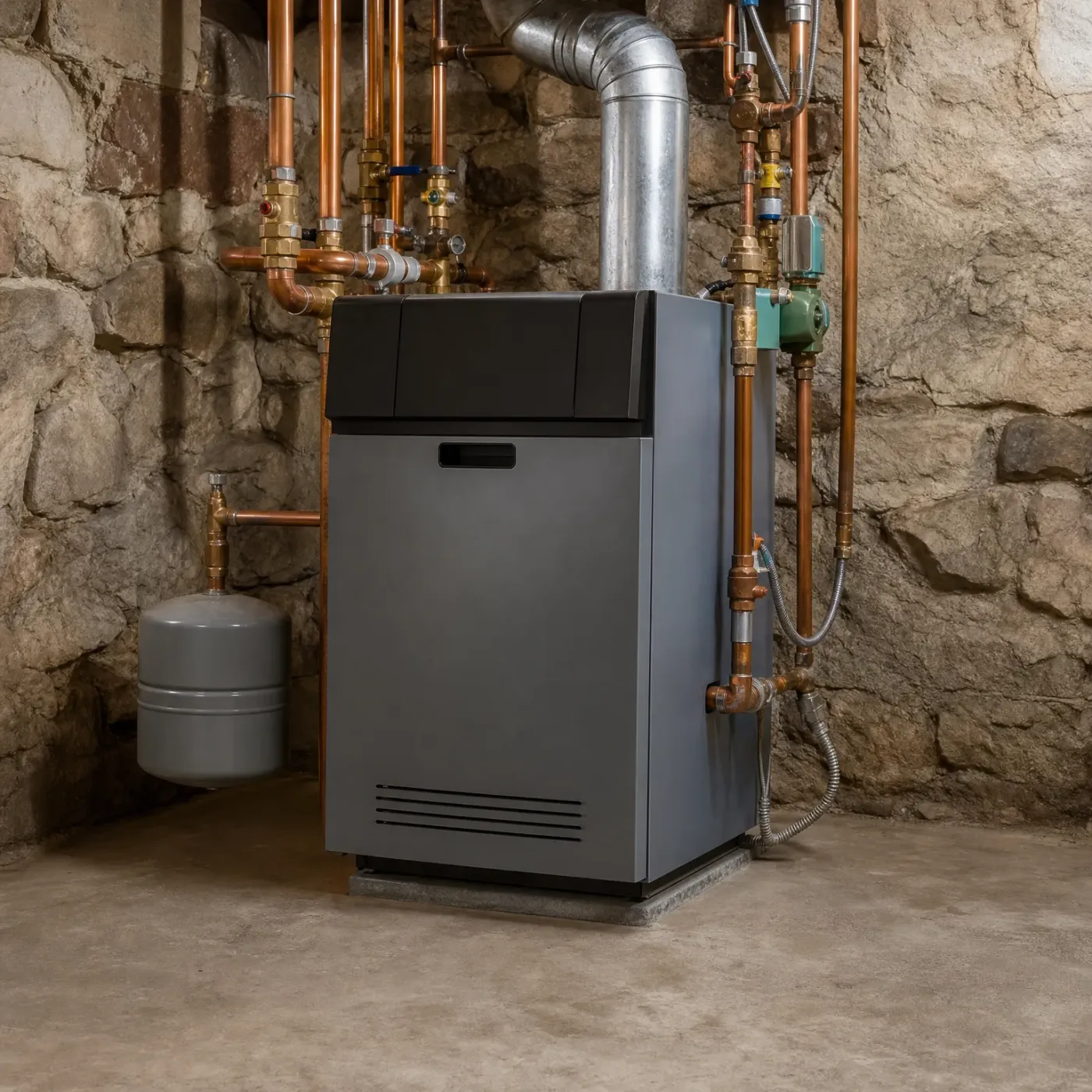
A gray residential boiler on a concrete pad in a basement with stone walls, connected to copper piping, brass valves, a circulator pump, an expansion tank, and a metal flue duct.
A boiler like this one draws clean, burning blue, with the flue and fittings free of any stain.
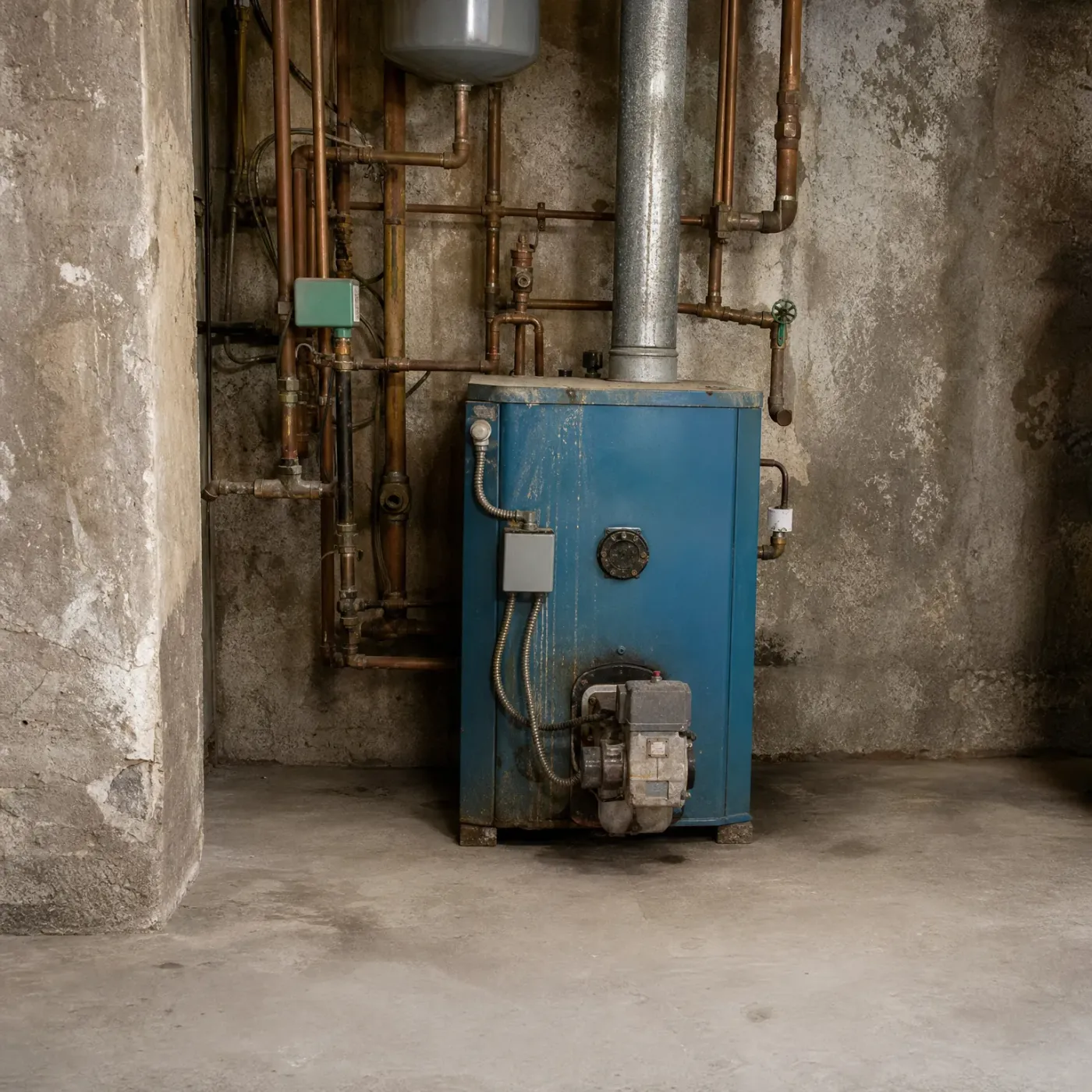
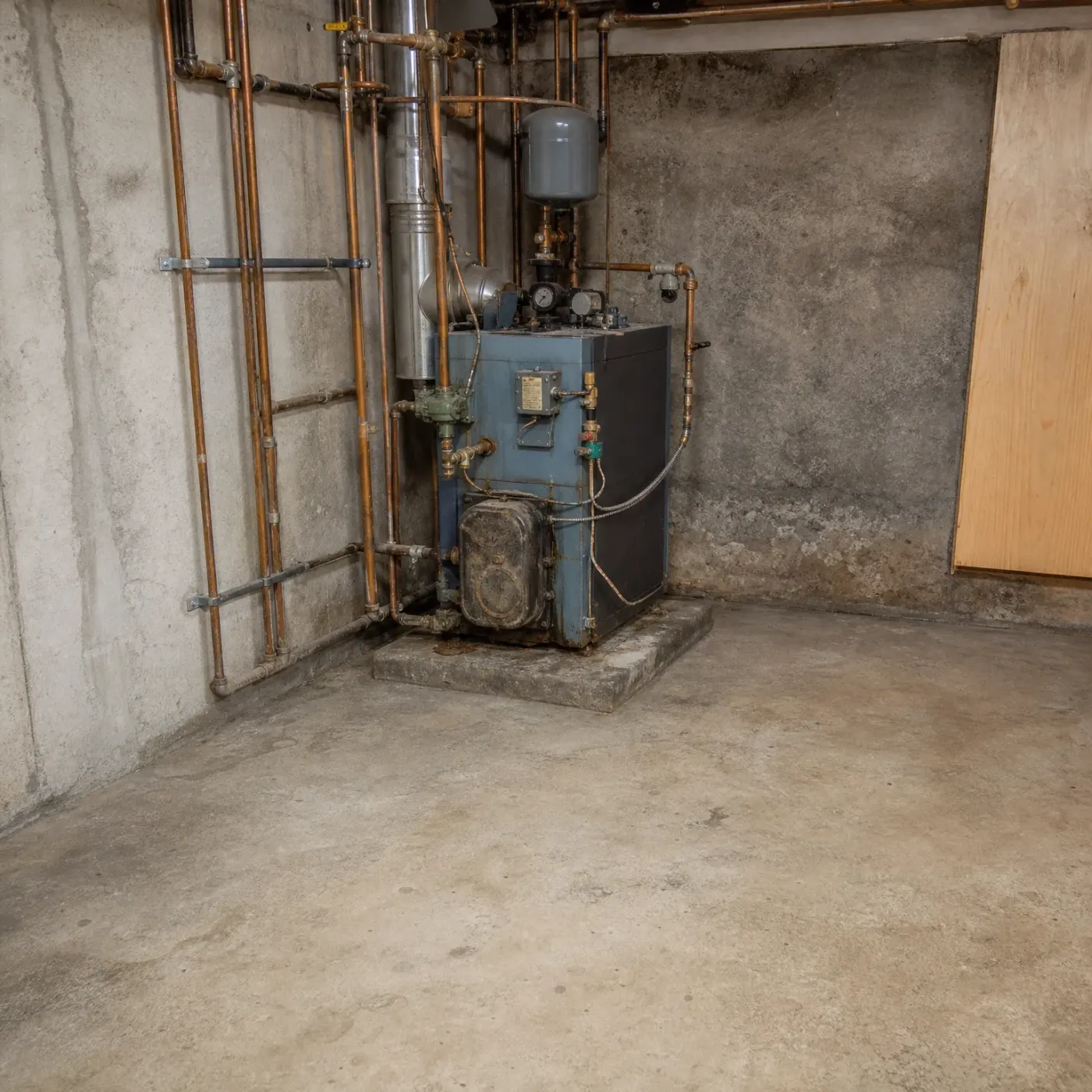
A blue cabinet boiler with a metal flue pipe and copper piping stands against a bare concrete wall in a basement with a concrete floor.
A stained flue, a soot-streaked burner base, or a yellow flame like this one means the gas isn't burning clean.
  1. Combustion air mixes wrong and the burner flame turns yellow

  2. Incomplete burning throws off soot instead of clean exhaust

  3. Soot builds up around the draft hood and flue connection

  4. Carbon monoxide collects in the flue gas instead of venting out

Call Now or Wait

Call a tech now

  • A yellow flame or soot stain means the burner is already drawing wrong, and that gets worse, not better, left alone.
  • A carbon monoxide detector near the boiler catches a leak long before anyone in the house feels sick from it.
  • Missouri winters mean the boiler runs for months straight, so a cracked heat exchanger stays lit and venting badly the whole time.
  • A local tech who works on boilers all season knows which models crack at the heat exchanger and which just need the burner cleaned.
  • Sending one request means one contractor calls, not five, and you're not stuck fielding bids while the flame keeps burning yellow.

Wait it out

  • A flame that's a little off-color one day can look normal the next, which makes it easy to tell yourself it was nothing.
  • Soot around the draft hood builds slowly, so the sign is there weeks before anyone looks closely enough to see it.
  • Gas here is cheap enough that a boiler running inefficiently doesn't always show up fast on the bill as a warning sign.
  • Without a carbon monoxide detector in the house, a slow leak from the flue has no other way of announcing itself.
  • A crack in the heat exchanger doesn't heal on its own, so every week it waits is a week it's still venting wrong.
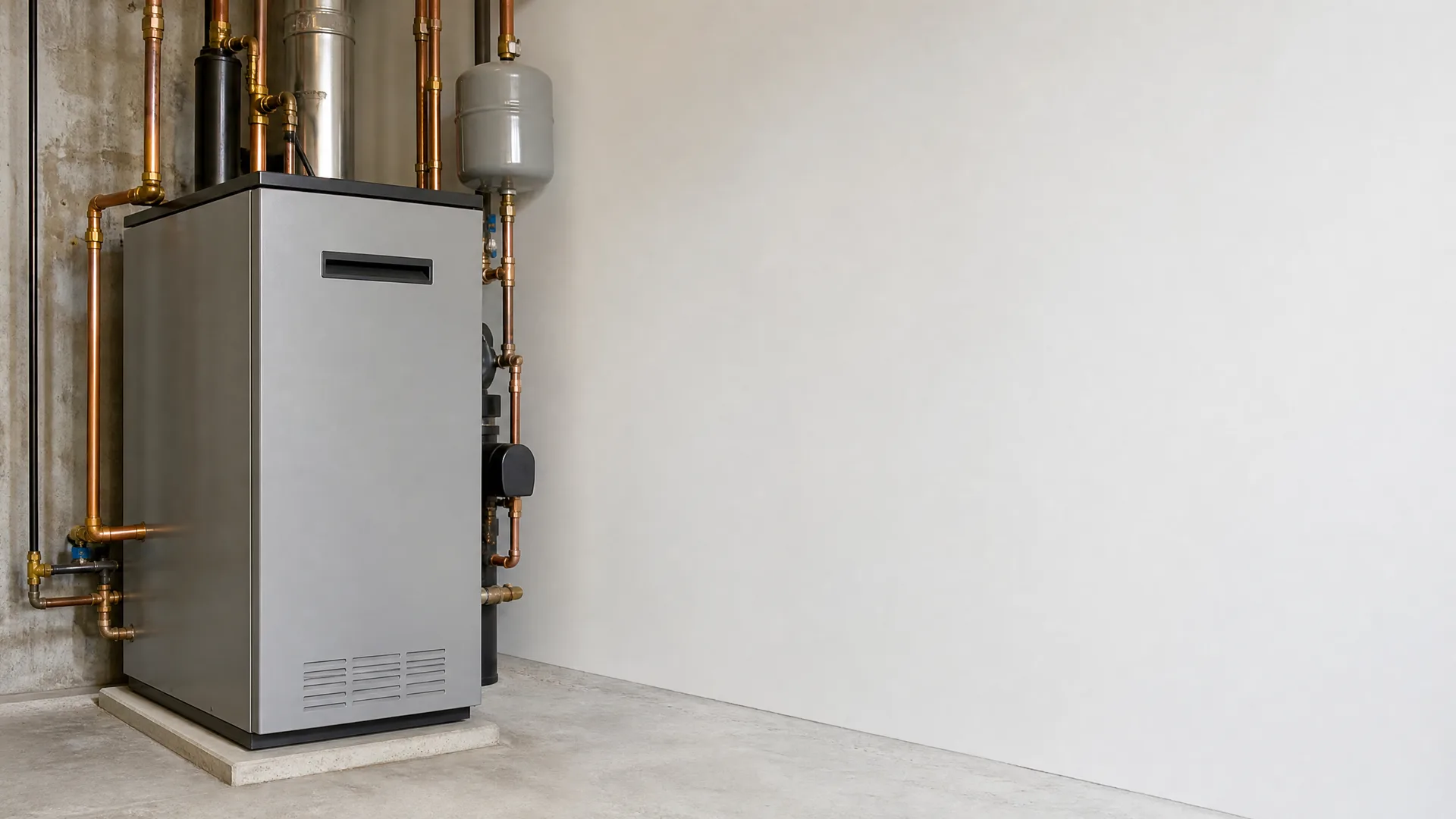
A gray floor-standing boiler on a concrete pad in a bare room, connected to copper pipes and an expansion tank against a plain light wall.

Why the vent matters so much

A boiler sends exhaust out through a flue pipe, usually straight up through the roof or out a sidewall. That pipe has to pull steadily and vent fully outside. If it's blocked by a bird nest, crushed where it bends, or pitched the wrong way, the exhaust backs up into the house instead of leaving it. Carbon monoxide rides along with that exhaust, so a vent problem is a carbon monoxide problem.

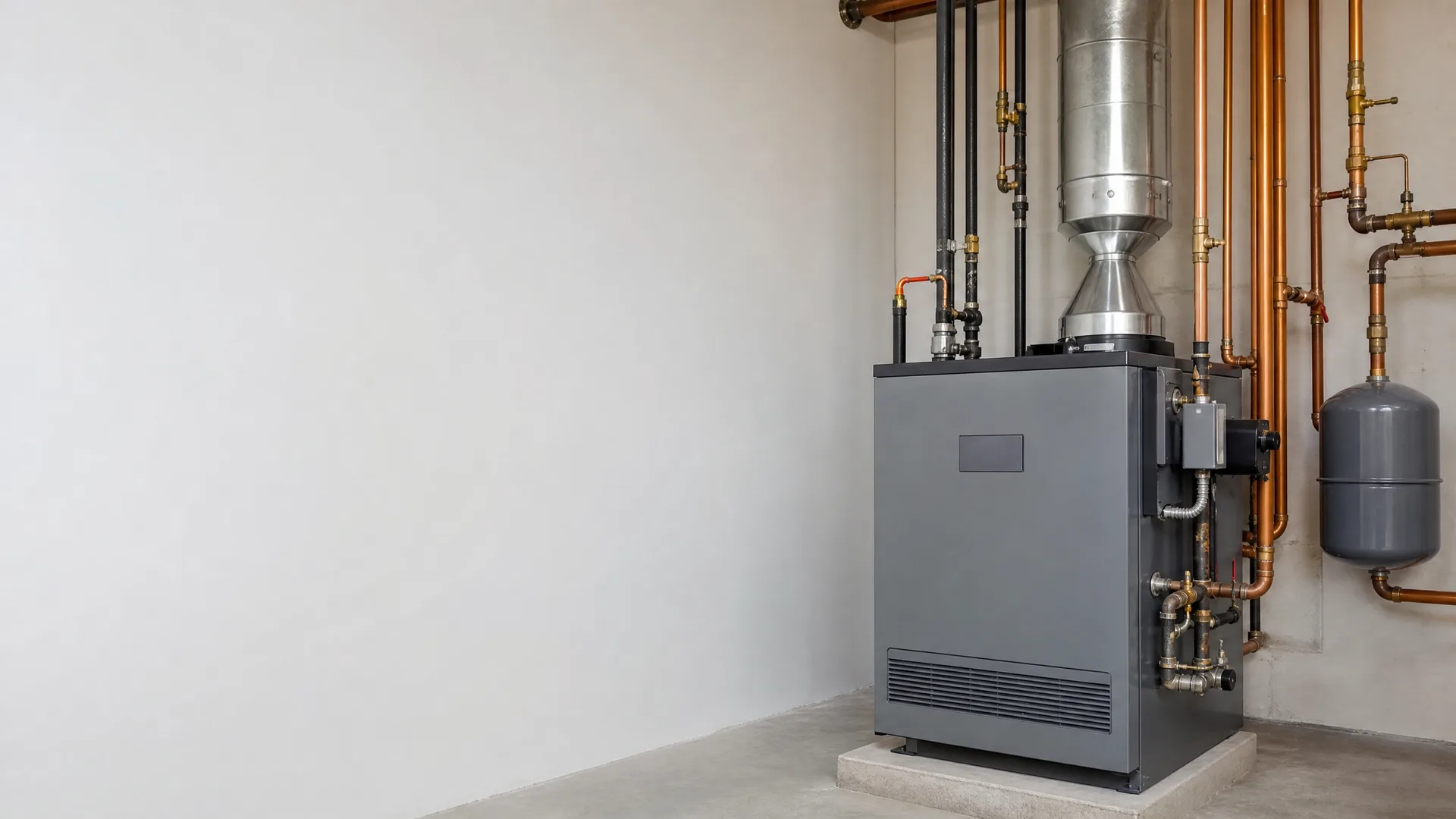
A gray boiler on a concrete pad in a plain room, connected to copper and black pipes and a stainless steel flue.

What a cracked heat exchanger does

Inside the boiler, the heat exchanger keeps the flame and flue gas separated from the water running through the system. A crack in it lets flue gas mix where it shouldn't, and some of that gas can end up pulled back into the room air near the unit instead of going up the flue. This is a repair job, not something to patch, since the crack only widens with more heating cycles.

Winter nights average 25°F statewide

Winter nights here average 25°F, so your boiler is firing most of the night to hold the house at temperature. That's long run times, and long run times mean more exhaust moving through the flue. A vent that's partly blocked has more chances to back up carbon monoxide instead of pushing it outside.

NOAA nClimDiv 1991-2020 county normals weighted by homes

What you'd actually notice

A boiler leaking carbon monoxide doesn't announce itself. You might notice a faint smell near the unit, or more condensation on nearby windows than usual. Sometimes it's nothing you can point to, just a headache that clears up once you leave the house and comes back when you're home. A pilot light that keeps going out, or a burner that sounds different when it fires, are both worth paying attention to. None of these prove a leak by themselves, but together with a yellow flame or soot around the flue, they add up to something worth checking.

What's actually at risk

Carbon monoxide is dangerous because you can't smell it or see it. It builds up slowly in enclosed rooms, especially where a boiler sits in a basement or utility closet with the door usually shut. Anyone sleeping nearby or spending long stretches in that part of the house gets the highest exposure. A detector placed near the boiler is the only reliable way to catch it before it reaches a level that makes someone sick. Left unaddressed, a vent problem or cracked heat exchanger only gets worse with every hour the boiler keeps running.

A smiling man in a navy long-sleeve shirt sits at a wooden table in a kitchen and dining area, with a ceramic mug, a potted plant, and a sliding glass door behind him.
A smiling bearded man in a green henley shirt stands at a kitchen island with a gray mug, looking off to the side, with a dining area and shelves blurred behind him.
A smiling bearded man in a navy sweater sits at a white kitchen island with a ceramic mug, with open shelves, potted plants and a range hood behind him.
A smiling man in a dark olive long-sleeve shirt sits in a kitchen beside a counter with a dark mug, with a dining table, sideboard and hallway visible in the blurred background.

Hand off the boiler problem

Only one pro gets your request, so you hear from one company.

No fee to send it, and nothing to sign.

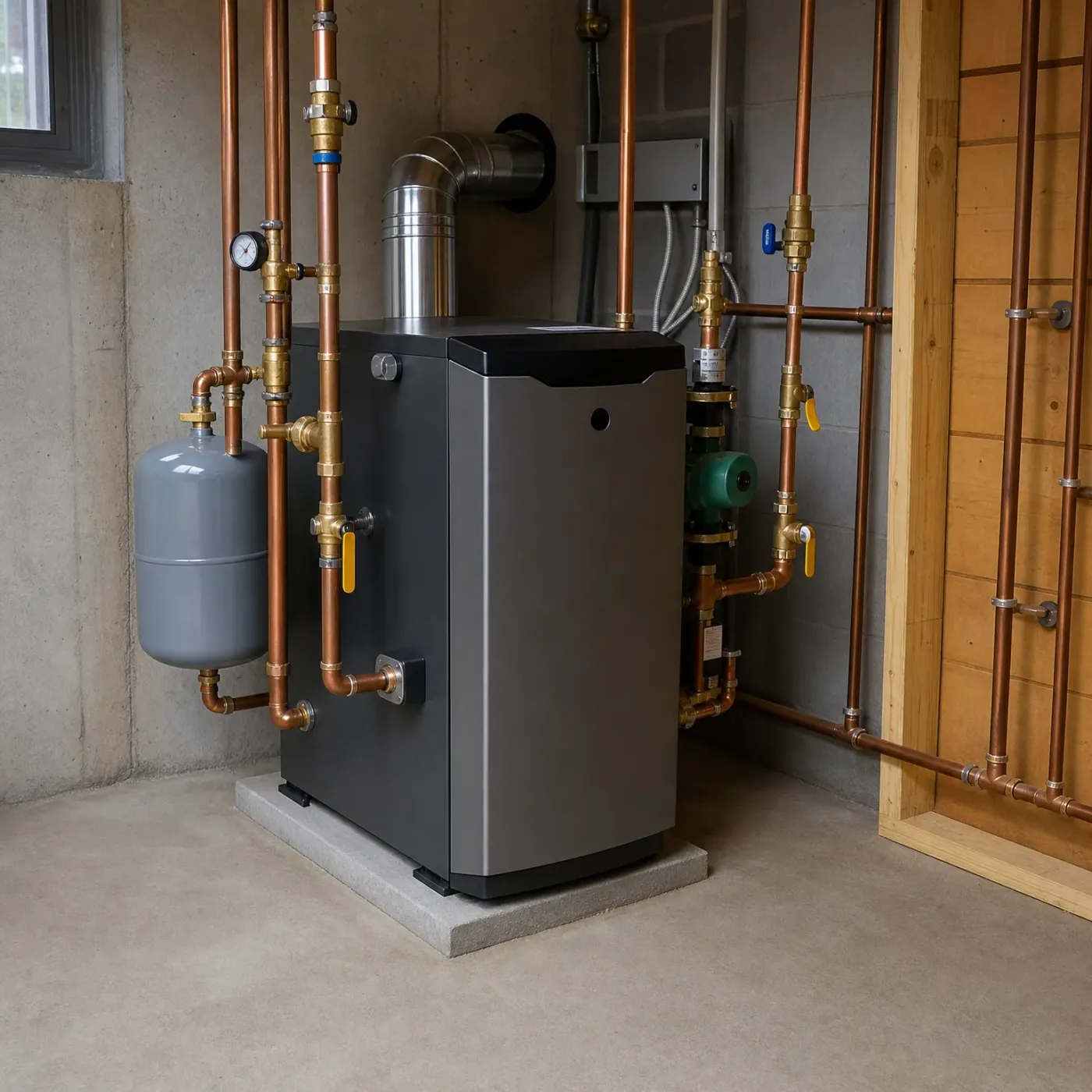
A dark gray floor-standing boiler on a concrete pad in a basement, surrounded by copper piping, brass valves, a gray expansion tank, a circulator pump, and a metal flue pipe against concrete block walls.

Running clean

Copper lines, brass fittings, a green circulator pump, all in good order around this boiler. The flue pipe runs straight to the ceiling with no stain on it anywhere. That's a burner getting the air it needs.

A blue boiler on a raised concrete pad in a basement corner, with copper and steel pipes, a gauge cluster, an expansion tank, and a metal flue running up the bare concrete walls.

Running in trouble

This boiler sits on bare concrete with the same copper piping and flue setup, but age alone doesn't tell you it's failing. What tells you is a stained flue pipe, a streaked burner base, or a flame that's gone yellow instead of blue.

Can a carbon monoxide detector tell me my boiler is leaking?

A carbon monoxide detector seems like it should settle the question one way or the other, so it's a reasonable thing to lean on if you've got a boiler running all winter and you're not sure what else to check. But there's a difference between what the detector is built to catch and what it actually catches in time to matter.

Yes, but only once levels build up in the room, not at the boiler itself

A carbon monoxide detector works by sampling the air around it, so it only sounds once gas has traveled from the boiler and built up enough in the room to trigger the sensor. If your boiler sits in a closet or utility room, that can take a while even with a real leak. Placing one near the boiler, not just near bedrooms, catches a leak sooner because that's where the gas shows up first. It's a real safeguard, worth having regardless. But a stained flue, soot around the draft hood, or a yellow flame tells you something is wrong before the air has carbon monoxide in it at all.

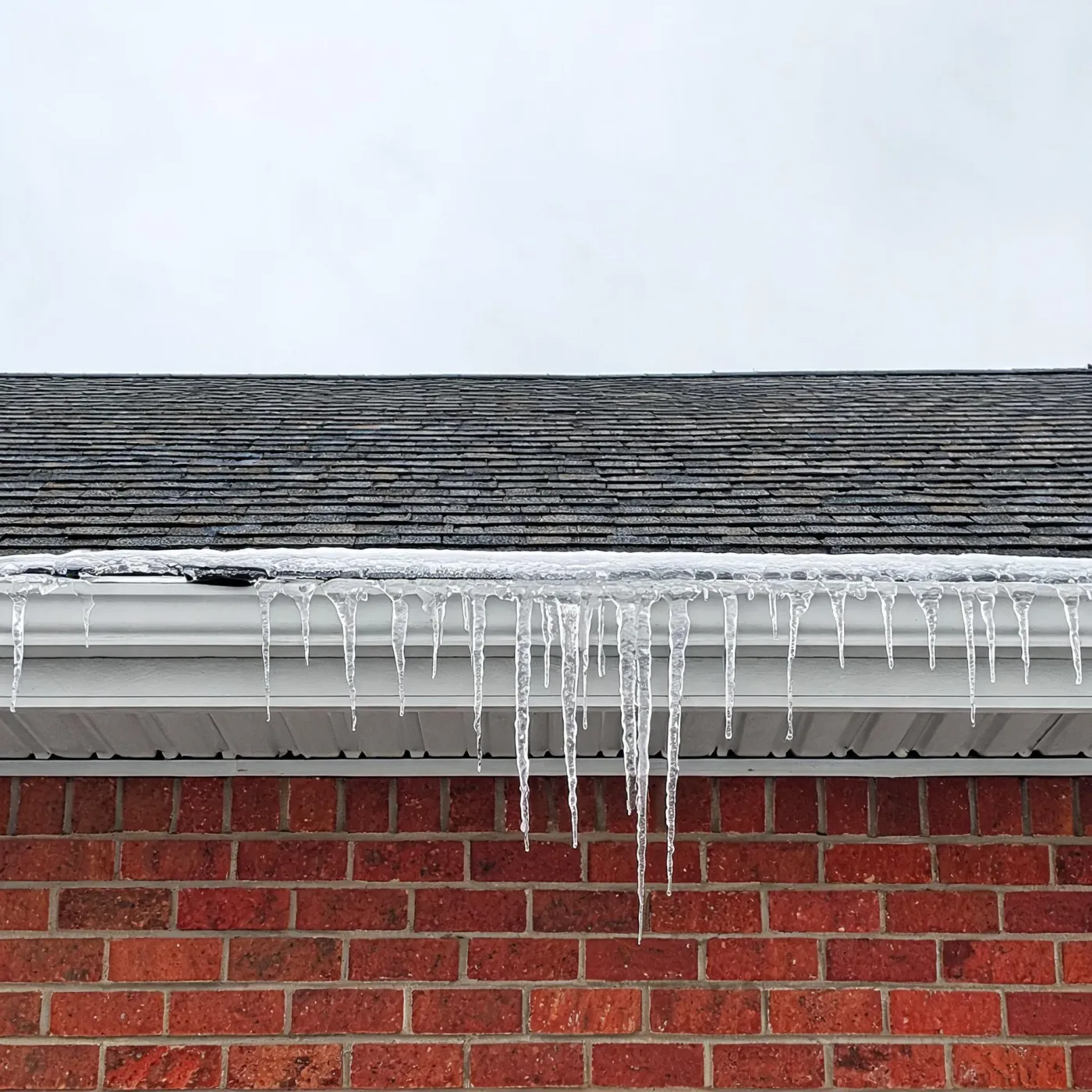
Icicles hang from a white gutter and fascia below an asphalt shingle roof above a red brick wall, under an overcast white sky.

The National Weather Service puts the statewide average winter night at 25°F. A boiler held at temperature through nights that cold doesn't cycle on and off so much as stay running, burner lit for hours at a stretch. Every one of those hours is exhaust moving through the flue, so a vent that's even partly blocked gets far more chances to let carbon monoxide back up into the house than it would on a milder night. You won't feel the cold do this. What you might notice is the boiler running longer than it used to before the house warms up, or the room near it feeling stuffier than it should.

NOAA nClimDiv 1991-2020 county normals weighted by homes

What's that smell near the boiler room

You might catch something faintly sharp or sooty when you walk past the utility room, the kind of smell that wasn't there last winter. Maybe the wall behind the flue pipe looks dingier than it used to, or there's a fine black dust settling on top of the boiler itself. None of that is dramatic. It's also not nothing. A boiler that's been drawing air wrong for weeks will leave these small marks before it leaves a bigger one, and in a house kept shut up tight against a Missouri winter, whatever that flue isn't venting outside has nowhere else to go but the rooms you're standing in.

A smiling man in a dark blue T-shirt sits on a light gray sofa in a living room with a wooden shelf and window behind him, with a laptop edge visible in the foreground.
A bearded man in a plaid flannel shirt stands indoors looking out a frost-covered window, with a steaming dark blue mug on the wooden sill and snow-covered trees outside.

What to do with what you've seen

  • A yellow or orange flame, soot around the flue, or a stained draft hood means the burner needs a look now, not later.
  • None of those signs mean the same thing twice, so a tech checks the flame, the flue pitch, and the vent itself before touching anything.
  • A boiler technician who works these units every winter in Missouri has usually already seen whatever is causing yours to run dirty.
  • You're matched with one licensed local contractor, so you're not fielding calls from three companies while you're trying to figure out what's wrong.
  • Once that match is made, chasing down who's available and who works on boilers stops being something you have to sort out yourself.
  • A carbon monoxide detector near the unit still matters, but it doesn't replace catching the flame or the soot early.

If you've found soot, a yellow flame, or a stain on the flue, that's the boiler telling you something is already wrong with how it's burning gas. None of it fixes itself, and none of it is something to watch for a few more weeks before deciding. A burner pulling air wrong now is a burner pulling air wrong tomorrow, only with more soot built up by then.

What happens next is a tech who works on boilers all winter in Missouri, not someone learning your unit as they go. They've seen a flue pitched wrong, a bird nest half blocking a vent, a burner that was never getting enough air from the day it was installed. Whatever's behind the stain or the color of your flame, there's a decent chance they've already run into it on another unit this season.

You get matched with one contractor, licensed and local, not a list of names to sort through yourself. That means one call back, not three competing for the job, and no explaining your situation over and over to whoever picks up. Finding someone who actually works on boilers, and knows what to check first, stops being on you.

A carbon monoxide detector by the unit is still worth having. It catches what you can't smell or see. But the flame, the soot, the stain on the flue, those show up before the detector ever has a reason to go off. Catching it there is catching it early.

A dark wood cabinet with a paneled door and a ceramic pot of green foliage on top stands in a beige-walled room with white baseboard, a window at left, hardwood floor, and a patterned area rug.
A dark wood glass-front cabinet holding folded towels, woven baskets and a ceramic vase stands in a bathroom corner beside a window, with a potted fern and stacked towels on top and a freestanding tub partly visible at left.
A woven basket holding a green cushion and a cream fringed knit throw sits on a wood floor in a room corner beside a window and a dark wooden cabinet.
Corner of a room with a dark wood cabinet topped by a round vase, a linen curtain at a window, white baseboard, oak plank flooring with sunlight patches, and a woven jute rug in the foreground.
A dark wood sideboard against a pale wall holds a shallow stone bowl and a round ceramic vase with leafy branches, with sunlight from a curtained window falling across the wall, wood floor and woven rug.

Let someone else find the pro

Your request stays with one local pro.

Find a local pro

Sending the form costs nothing.