Boiler keeps shutting off in Florissant, MO
A boiler that keeps shutting off is usually protecting itself from a condition it was built to catch. Low water pressure is the most common cause. A leak or a drop in pressure trips the low water cutoff and the boiler won't fire until it's back in range. A dirty flame sensor or a failing igniter can also make the burner light and then shut right back down, since the control board reads that as a bad flame and stops the cycle rather than risk running unsafe. Thermostat wiring problems and a clogged condensate line on newer high efficiency units cause the same kind of shutdown. None of these are things to wait out through a cold snap here, since a boiler that cuts off repeatedly isn't heating reliably even between shutdowns, and the part causing it usually needs a hand on the system to find.
Why does a Florissant boiler need to run so much of the year?
Winter nights average 26°F
Nights average 26°F here in December, January and February, cold enough that a safety shutoff on a struggling boiler leaves a house cold fast.
Heat runs October through April
Heat runs October through April in St. Louis County, about seven months, so a boiler that trips off and on gets worked hard most of the year.
74.6% of homes heat with gas
74.6% of homes in St. Louis County heat with gas, so a gas boiler tripping off is a problem most of your neighbors could end up facing too.
NOAA nClimDiv 1991-2020 · ACS 2020-2024
Why a boiler cuts the burner off
- A pressure switch checks the draft from the inducer fan before the gas valve is ever allowed to open.
- The igniter has to prove it's hot enough, or glowing hot on a hot surface igniter, before the control board sends gas.
- A flame sensor confirms the burner actually lit within a few seconds, and cuts gas if it doesn't see a flame.
- If the flame sensor is coated with soot, it can misread a good flame as no flame and shut the burner down.
- The high limit switch shuts off the burner if water in the boiler gets hotter than it's set to allow.
- An aquastat reads water temperature and cycles the burner on and off to hold that temperature while the boiler runs.
A boiler shutting off mid-cycle is usually a safety control doing its job, not failing at it. Before the burner ever lights, the inducer fan has to prove it's pulling draft, and a pressure switch checks that before the gas valve opens. Next the igniter has to reach temperature, either glowing hot or heating a surface hot enough to catch the gas. Once gas flows, a flame sensor has a few seconds to confirm a flame is actually there. If it doesn't see one, it cuts gas rather than let unburned gas keep flowing. That sensor is a thin metal rod sitting right in the flame, and over time it collects a layer of soot. A sooted sensor can't read the flame properly, even when the burner is lit and running fine, so the control board shuts the burner down thinking it never lit at all. That's one of the more common reasons a boiler short-cycles without any real fire or draft problem behind it. Past the point of ignition, two more controls keep working while the boiler runs. The high limit switch watches water temperature and shuts the burner off if it climbs past what the boiler is set to allow, protecting the system from overheating. The aquastat does the routine version of that same job, reading water temperature and cycling the burner on and off to hold it steady, which is the normal pattern behind a boiler that seems to start and stop on its own.




Get matched with a boiler pro in St. Louis County
Explain the boiler problem once instead of to every shop in St. Louis County.
A St. Louis County pro who repairs boilers gets your request.
You're not committing to anything by asking.
What are you noticing when the boiler cuts out
You probably catch it in the quiet. The burner stops mid-cycle and the house starts cooling before it should. Radiators or baseboards that were warm go lukewarm, then cold. Some boilers flash a code on the display, others just sit dark and need the reset button pressed before they'll try again. You might hear a click as it attempts to fire and fails, or no sound at all. If this happens overnight with no one awake to reset it, the house can lose heat for hours, and with nights in the mid-20s in December and January, pipes near outside walls are at risk once the house itself goes cold.
It shuts off once and relights
A pressure or flame sensor fault that clears itself usually means the boiler caught something borderline and recovered. It might run clean for days after. Keep an eye on the pressure gauge and the pilot or igniter window if your boiler has one. If it only happens once during a cold snap when the system is working hardest, that is worth noting, not panicking over. Write down the date and what the house felt like when it happened.
It shuts off and stays off
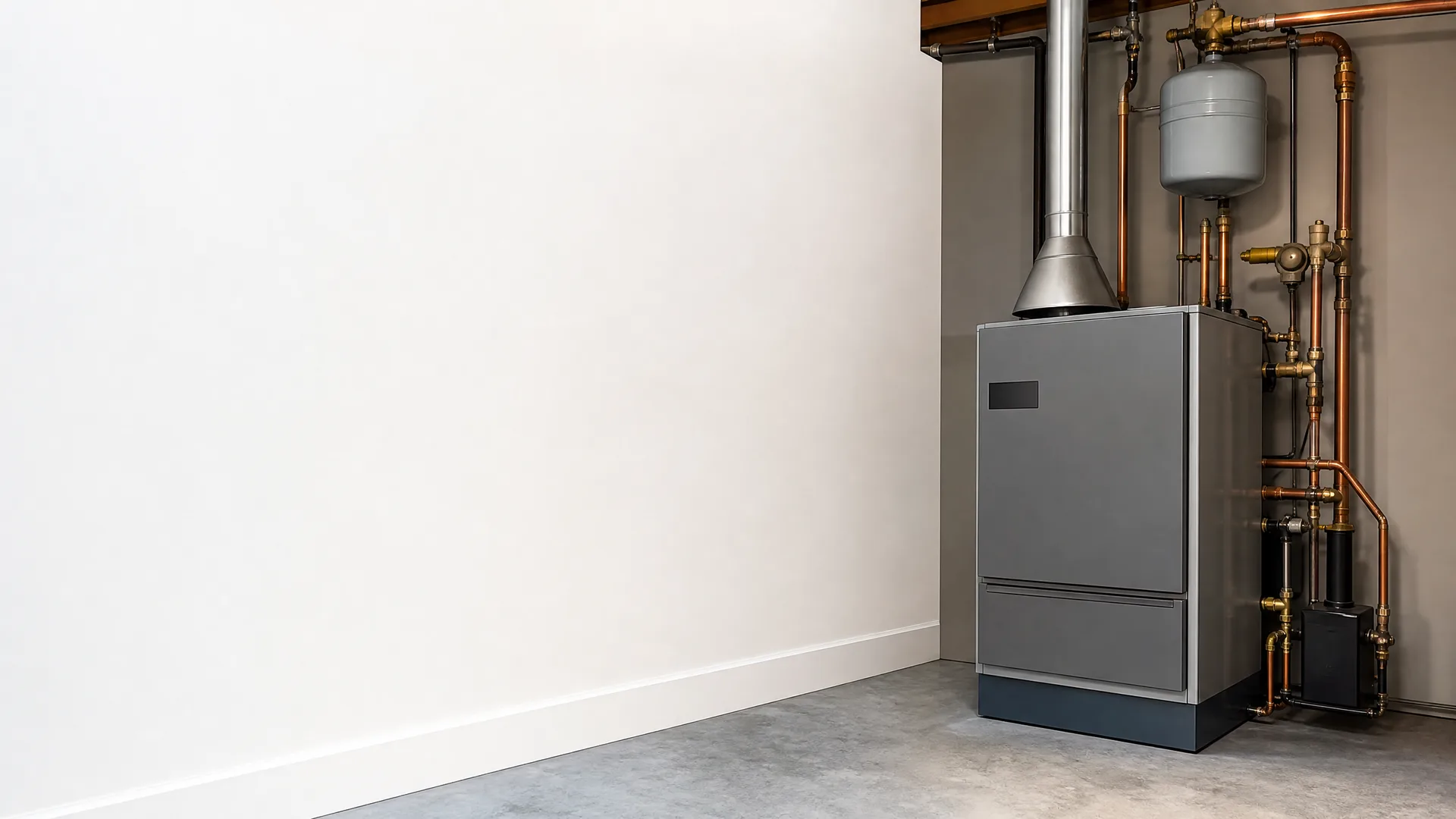
When the boiler won't restart on its own, or it restarts and trips again within the hour, the safety that caught it isn't clearing. That can mean a part is failing rather than a condition passing through. Left alone through a cold week in Florissant, a boiler that won't hold a cycle means rooms losing heat faster than they gain it back. This is the pattern that needs a contractor's eyes on the actual equipment, not a guess over the phone.
Why does my boiler keep shutting off after a few minutes?
You turn the thermostat up, the burner kicks on, and a few minutes later it's off again. It cycles like that all evening instead of running a normal stretch. In a St. Louis County winter, where nights sit near 26°F through December, January and February, a boiler that won't hold a cycle is worth figuring out before the next cold snap, not after.
It's shutting down mid-cycle because a safety switch is tripping
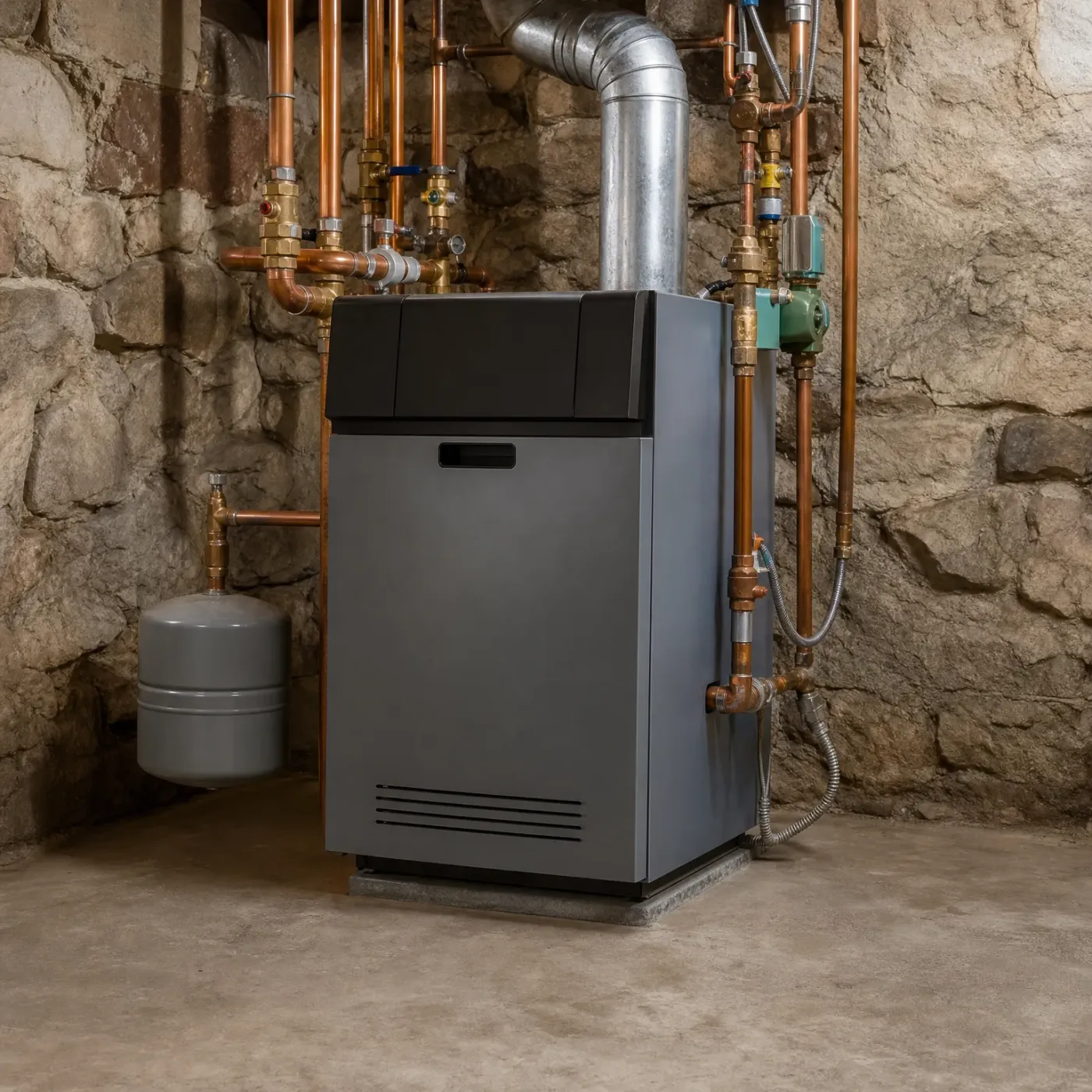
A boiler that runs a few minutes and quits is almost always hitting a safety limit, not just losing fuel or power. The pressure switch, the flame sensor and the high limit switch all watch the burn while it happens, and any one of them can cut the gas valve mid-cycle if what it sees falls outside range. A flame sensor coated with residue reads the flame as weaker than it is and shuts things down early. A pressure switch stuck or wired to a failing inducer motor does the same. None of these are the thermostat or the gas line. They're the boiler doing exactly what it was built to do when something downstream of the burner isn't right.

Thermostat calls for heat and the control board starts its checks.
Inducer fan spins up and proves draft to the pressure switch.
Igniter heats up or sparks to prove it can light the burner.
Gas valve opens only after the igniter and draft both check out.



What this comes down to
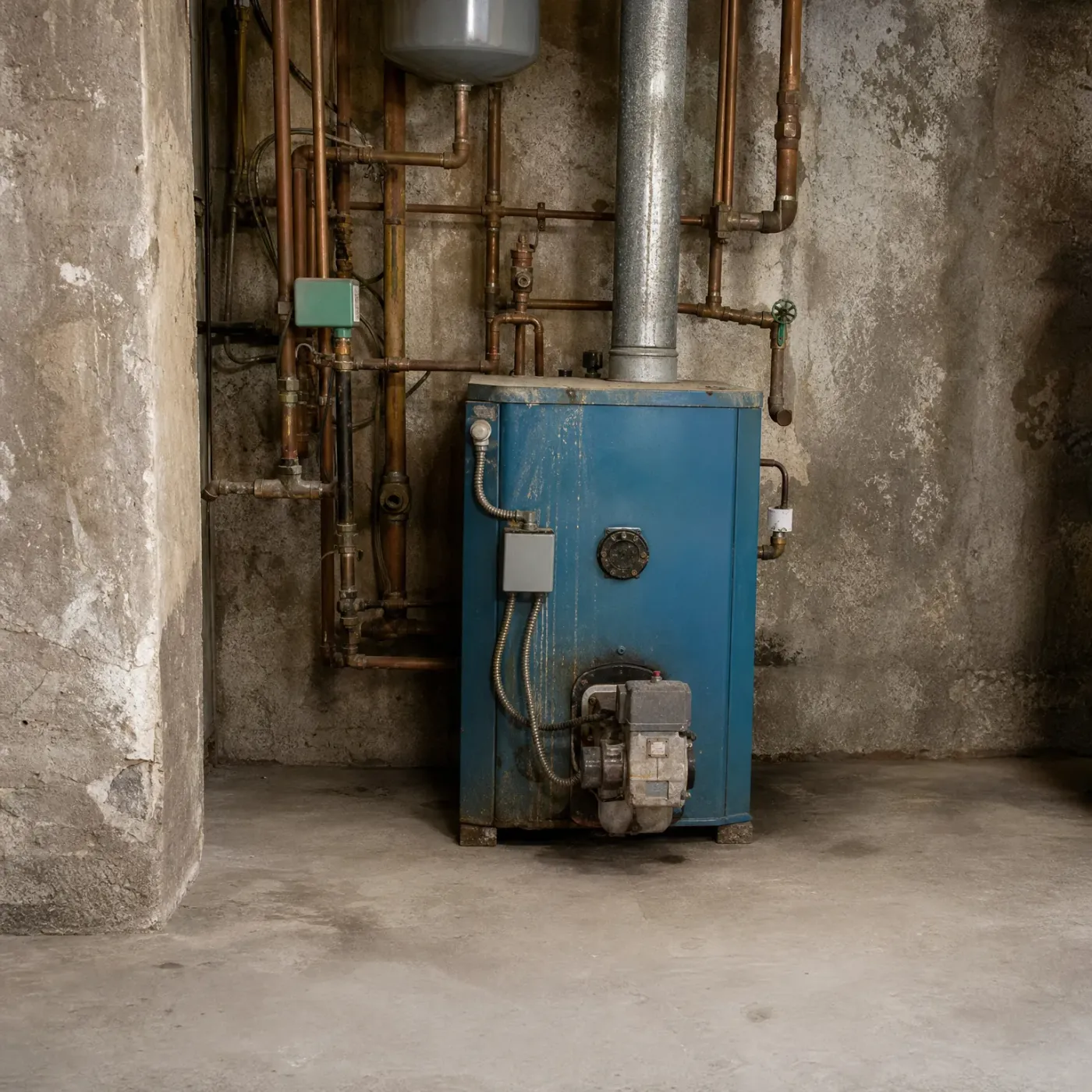
A boiler that keeps shutting off is telling you something specific. Low pressure, a flame sensor that won't confirm the burn, a pressure switch that never sees draft, a flue blocked enough to trip a safety. The symptom looks the same from the living room either way: heat stops, the house cools, you reset it or you don't. What's behind it is different every time, and that's what decides whether it's a five-minute fix or a part on order while it's 26 degrees outside.
You don't have to sort out which one it is before you ask for help. That's the part a licensed contractor who works on boilers in St. Louis County sorts out, not something you diagnose from the thermostat. What you get matched with is someone who already knows what these winters do to a struggling boiler and can tell you, once they're looking at it, what tripped and why. No more guessing at part names or waiting to see if it happens again before you make the call.

Find a boiler repair pro in St. Louis County
Skip calling shops to ask who repairs boilers in St. Louis County.
It costs nothing to send, and you don't have to hire anyone.