Tell us about the job
Takes about a minute. No obligation.
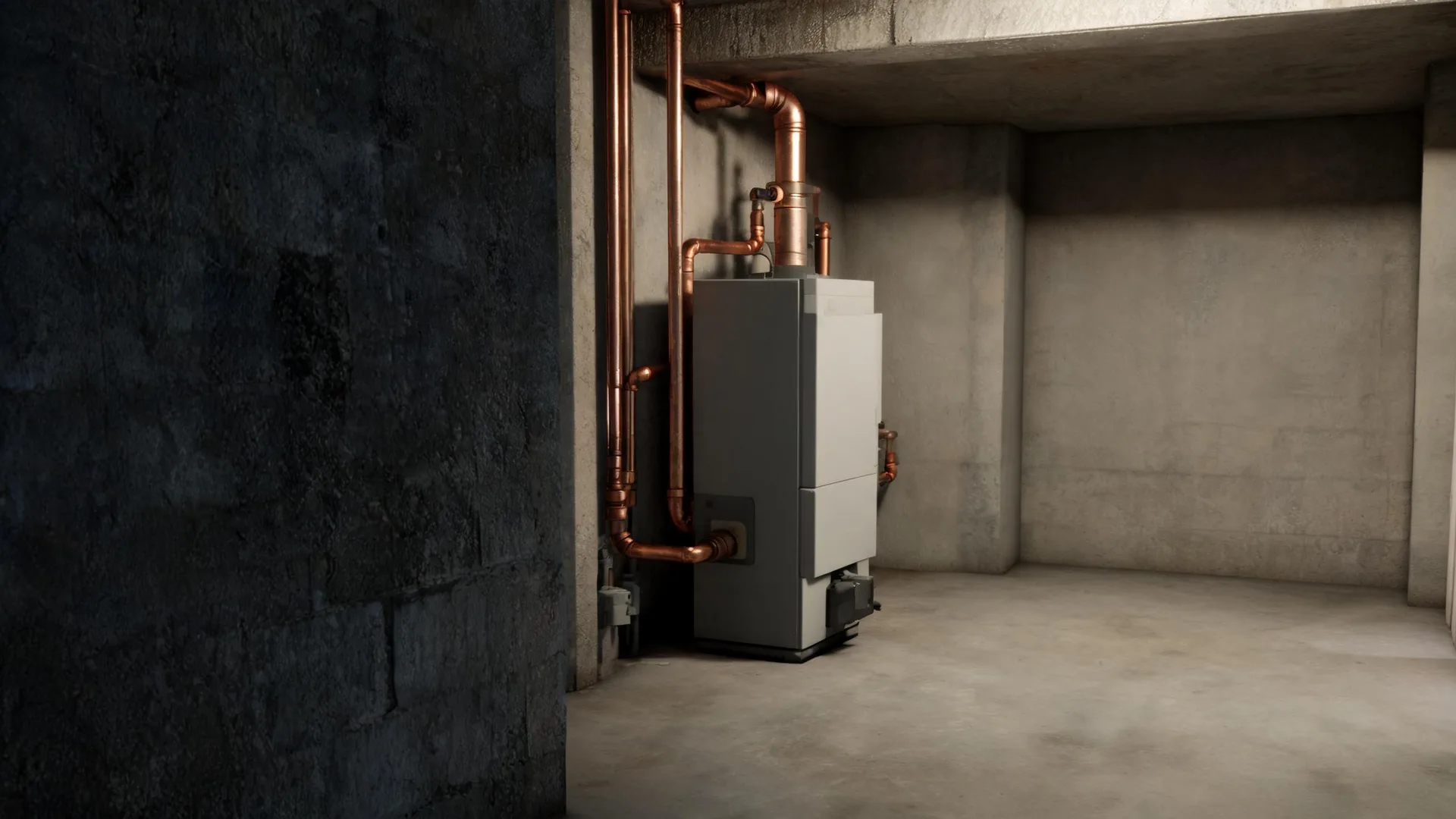
A contractor pricing a boiler repair here starts by auditing the ignition system and burner assembly, because those are the parts that cycle every time the thermostat calls for heat. Homes in Cape Girardeau County, MO run heat about seven months a year, from October through April. Each call to fire stresses the igniter, the gas valve, and the burner ports incrementally, and a long heating season stacks those cycles until something in that chain gives out. The heat exchanger matters, but it fails on a slower schedule. A contractor who jumps straight to it before checking ignition is skipping the component most likely to explain the fault.
Boiler systems in housing stock this old are often running on castings, controls, and valves that manufacturers stopped supporting generations ago. Half the homes in Cape Girardeau County, Missouri were built in 1982 or earlier (2020-2024 ACS 5-year). When a contractor opens a boiler in a house from that era, the first question is whether the failed component can still be sourced, or whether the repair requires fabrication, substitution, or a hard conversation about replacement scope. A gas valve or heat exchanger that fits the original unit may exist only in salvage channels at this point, and a contractor working here needs to know that before quoting any job.
The Parts of a Boiler a Contractor Checks First
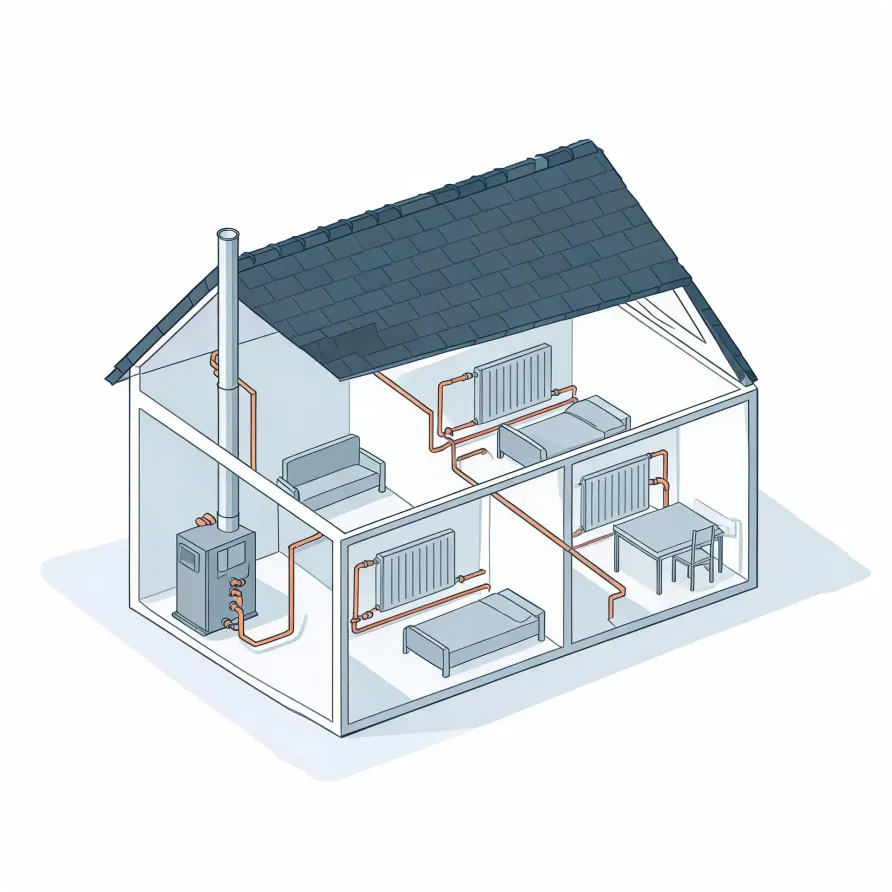
The boiler itself sits in the basement or mechanical room and is where water gets heated before it moves through the house. When heat is uneven, rooms stay cold, or the system short-cycles, a contractor starts here, checking the heat exchanger, the burner assembly, and the pressure vessel for the source of the fault.
From the boiler, supply pipes carry hot water to radiators or baseboard units in each room, and a circulator pump drives that flow. The expansion tank, relief valve, and aquastat controls all sit close to the boiler and each one is a point a contractor examines when something in the system behaves wrong.
The drawing shows a representative layout, and a licensed contractor determines which components and conditions apply to the specific system in your home.
Find a contractor in Cape Girardeau CountyCape Girardeau County, by the numbers
160 severe weather events were recorded in Cape Girardeau County, Missouri between 2015 and 2024.
NOAA National Centers for Environmental Information, Storm Events Database, bulk CSV export, events 2015-01-01 through 2024-12-31.Half the homes in Cape Girardeau County, Missouri were built in 1982 or earlier (2020-2024 ACS 5-year).
U.S. Census Bureau, 2020-2024 American Community Survey 5-Year EstimatesCape Girardeau County, Missouri holds 36,086 housing units (2020-2024 ACS 5-year).
U.S. Census Bureau, 2020-2024 American Community Survey 5-Year EstimatesOwners occupy 66.8% of the occupied homes in Cape Girardeau County, Missouri (2020-2024 ACS 5-year).
U.S. Census Bureau, 2020-2024 American Community Survey 5-Year EstimatesSevere Weather Events in Cape Girardeau County
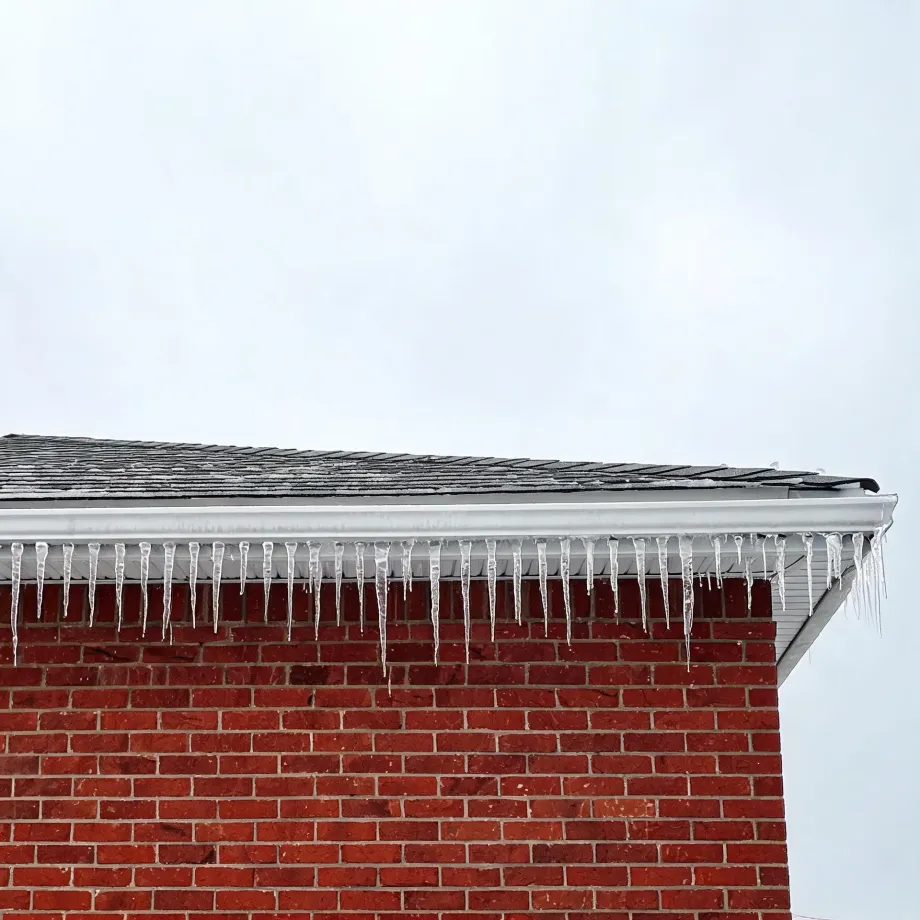
Boilers work hardest when outside conditions push hardest against the building envelope. How often that happens in Cape Girardeau County shapes how much wear a boiler accumulates and how quickly problems surface.
160 severe weather events, 2015–2024. Source: NOAA National Centers for Environmental Information, Storm Events Database.