Tell us about the job
Takes about a minute. No obligation.
A boiler in Stone County cycles its burner, heat exchanger, and ignition system hard through a long stretch of cold months. Homes in Stone County, MO run heat about seven months a year, from October through April. The ignition system fires at every startup, and in a heating-dominant climate, startups accumulate fast. A contractor repairing a boiler here expects to find wear concentrated in those cycling components, not in parts that run continuously, because stop-start stress is what this kind of season produces. Sediment in the heat exchanger and ignition electrode degradation are the places a diagnosis begins.
Boiler repairs here often stall at the parts question. Half the homes in Stone County, Missouri were built in 1992 or earlier (2020-2024 ACS 5-year). A system running in a house that age has likely been serviced several times over, and what a contractor finds once the unit is open may call for components that manufacturers stopped producing years ago. Sourcing substitutes takes longer and costs more than a standard exchange. A contractor who has worked this county knows to check availability before quoting a timeline.
The Parts of a Boiler a Contractor Checks First

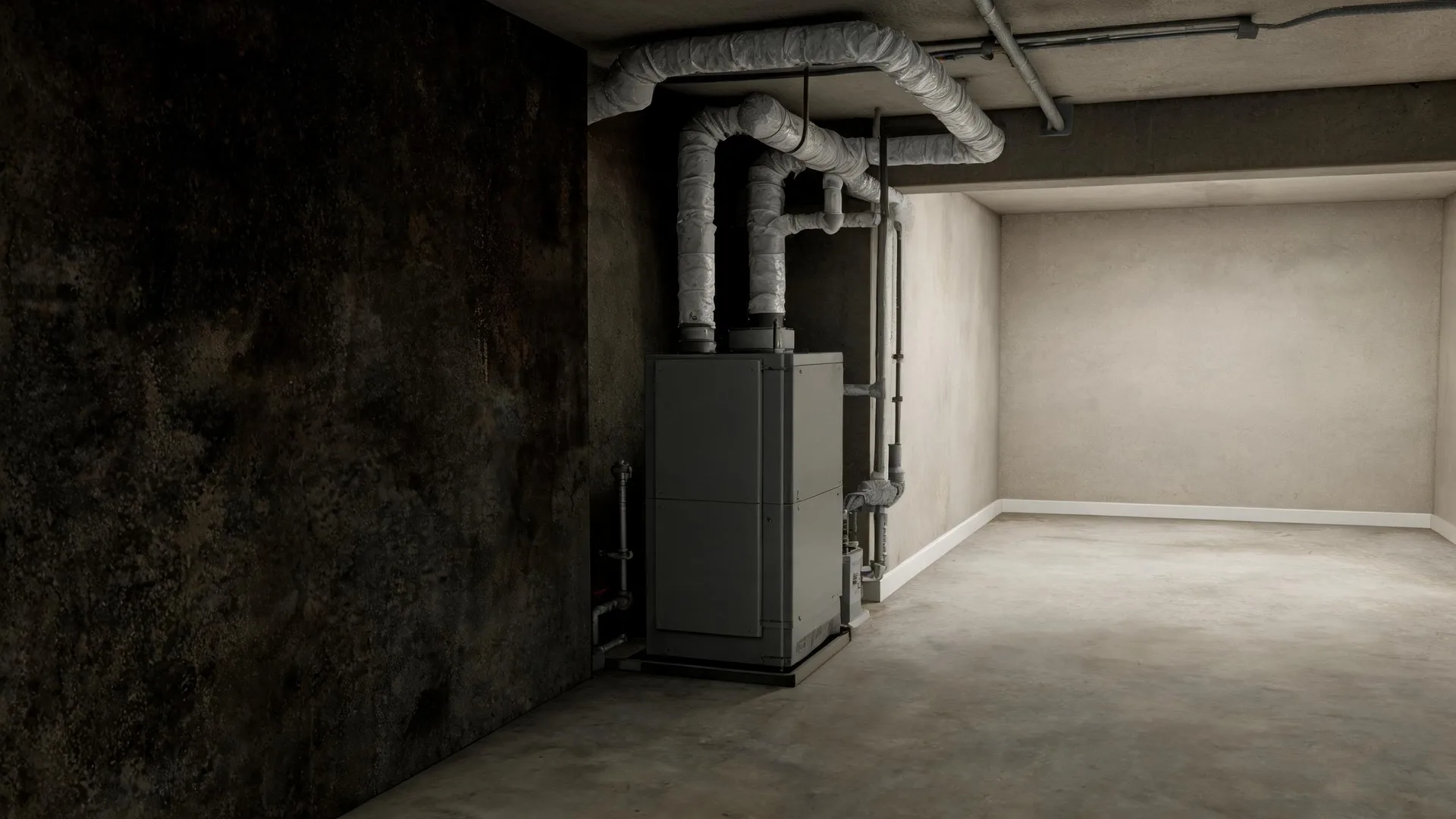
The boiler itself sits in the basement or a mechanical room and is the piece a contractor goes to first. It heats water and pushes it through the system. When it fails, the signs range from no heat at all to strange noises or water pooling beneath the unit. The heat exchanger inside it and the burner assembly are common trouble spots.
Radiators or baseboard units sit in the living spaces and release heat into the rooms. The circulator pump, usually mounted close to the boiler, moves the heated water through the pipes connecting everything. The expansion tank and pressure relief valve sit nearby and keep the system at a safe operating pressure. Any of these can be the source of a problem.
The drawing shows a general layout of a boiler system, and a licensed contractor determines which parts and conditions apply to your specific house.
Find a contractor in Stone CountyStone County, Missouri, by the numbers
190 severe weather events were recorded in Stone County, Missouri between 2015 and 2024.
NOAA National Centers for Environmental Information, Storm Events Database, bulk CSV export, events 2015-01-01 through 2024-12-31.Half the homes in Stone County, Missouri were built in 1992 or earlier (2020-2024 ACS 5-year).
U.S. Census Bureau, 2020-2024 American Community Survey 5-Year EstimatesStone County, Missouri holds 20,464 housing units (2020-2024 ACS 5-year).
U.S. Census Bureau, 2020-2024 American Community Survey 5-Year EstimatesOwners occupy 83.3% of the occupied homes in Stone County, Missouri (2020-2024 ACS 5-year).
U.S. Census Bureau, 2020-2024 American Community Survey 5-Year EstimatesSevere Weather Events in Stone County
Boilers carry the hardest loads when outdoor conditions swing hard, and Stone County has its own weather history that shapes how much that equipment is asked to do. Repair needs here reflect local conditions, not averages drawn from somewhere else.
190 severe weather events, 2015–2024. Source: NOAA National Centers for Environmental Information, Storm Events Database.