Tell us about the job
Takes about a minute. No obligation.
A boiler repair in Randolph County starts with what the burner and ignition system have been through. Homes in Randolph County, MO run heat about seven months a year, from October through April. Cycling that many times across that many months wears the igniter, the flame sensor, and the heat exchanger at a pace that shows up clearly by the time a homeowner calls. A contractor pulling the access panel here expects to find fatigue in those parts before anything else, and pricing the job without inspecting them first leaves the quote short.
Boilers in this part of Missouri have often been running long enough that the parts inside them reflect generations of repair, not original equipment. Half the homes in Randolph County, Missouri were built in 1974 or earlier (2020-2024 ACS 5-year). A contractor who opens a unit here may find valves, controls, or heat exchanger sections that were replaced at some point with whatever was available, which means the repair depends on identifying what is actually in the system before pricing what it takes. Sourcing the right component for a boiler with that kind of history takes longer than ordering for a recent install, and that gap between opening the unit and ordering the part is where the job's real timeline lives.
The Parts of a Boiler a Contractor Checks First
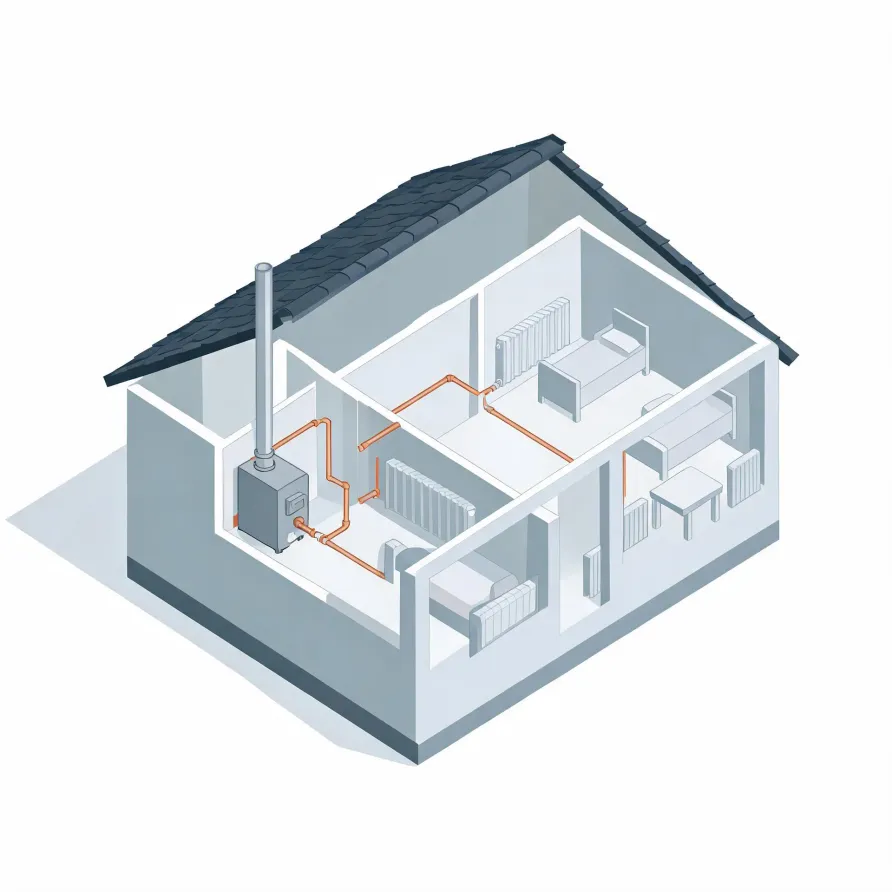
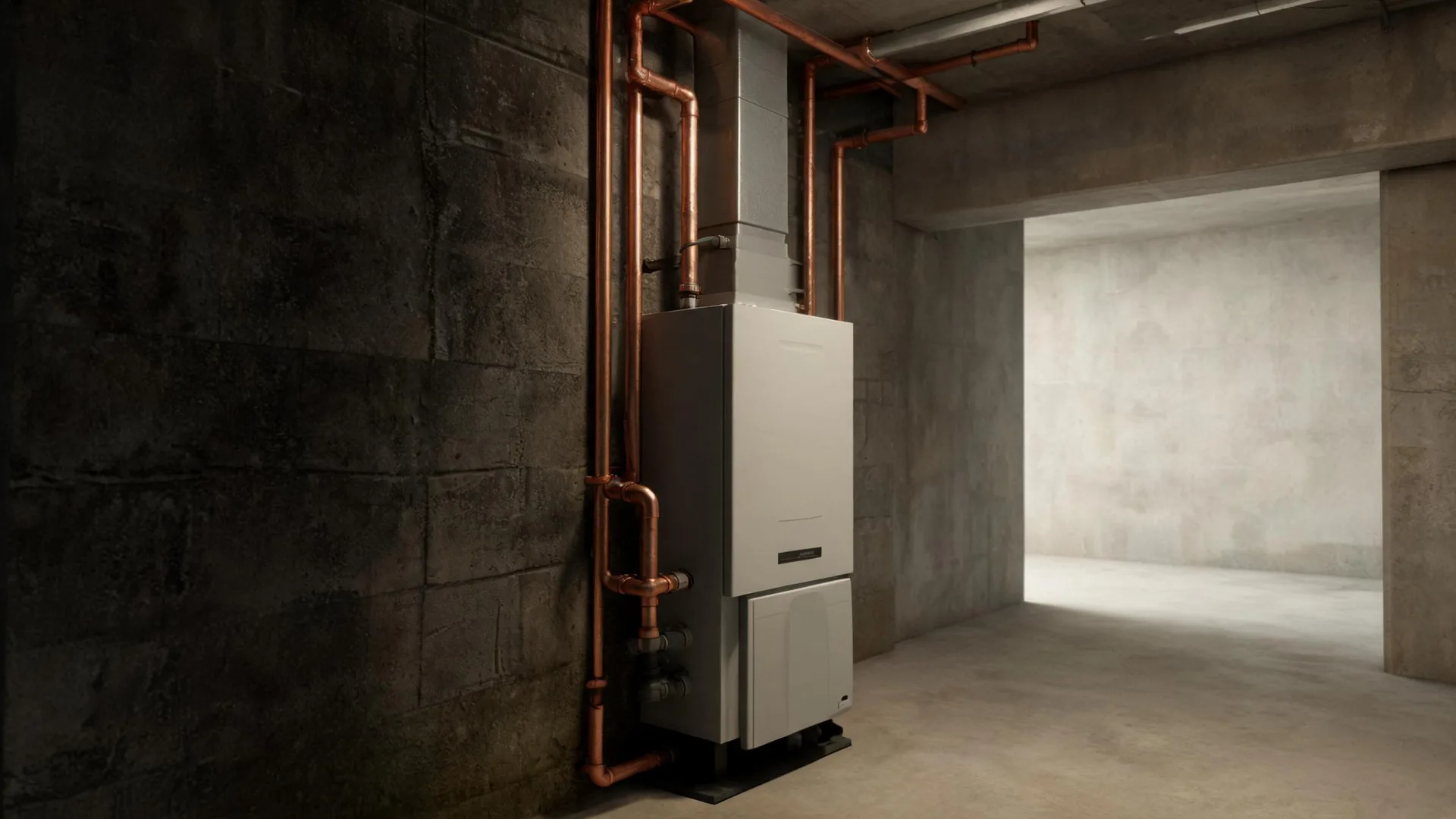
The boiler itself sits in a utility space, basement, or mechanical room and is the unit that heats water and circulates it through the system. When something has gone wrong, the boiler is where a contractor starts: the burner, the heat exchanger, and the controls inside that cabinet are the pieces most likely to be the source of the problem.
Radiators or baseboard units sit in the living spaces and are what actually give off heat to the rooms. The circulator pump, expansion tank, and pressure relief valve connect everything and keep the system balanced. Each of those can produce its own failure pattern, so a contractor works through them in turn.
The drawing shows a typical boiler system layout, and a licensed contractor will determine which parts and conditions apply to this particular house.
Find a contractor in Randolph CountyRandolph County, by the numbers
61 severe weather events were recorded in Randolph County, Missouri between 2015 and 2024.
NOAA National Centers for Environmental Information, Storm Events Database, bulk CSV export, events 2015-01-01 through 2024-12-31.Half the homes in Randolph County, Missouri were built in 1974 or earlier (2020-2024 ACS 5-year).
U.S. Census Bureau, 2020-2024 American Community Survey 5-Year EstimatesRandolph County, Missouri holds 10,862 housing units (2020-2024 ACS 5-year).
U.S. Census Bureau, 2020-2024 American Community Survey 5-Year EstimatesOwners occupy 71.4% of the occupied homes in Randolph County, Missouri (2020-2024 ACS 5-year).
U.S. Census Bureau, 2020-2024 American Community Survey 5-Year EstimatesSevere Weather Events in Randolph County
Boilers work hardest when outdoor conditions push hardest against them. How often that happens in Randolph County shapes how much wear a system accumulates and what repair needs look like over time.
61 severe weather events, 2015–2024. Source: NOAA National Centers for Environmental Information, Storm Events Database.