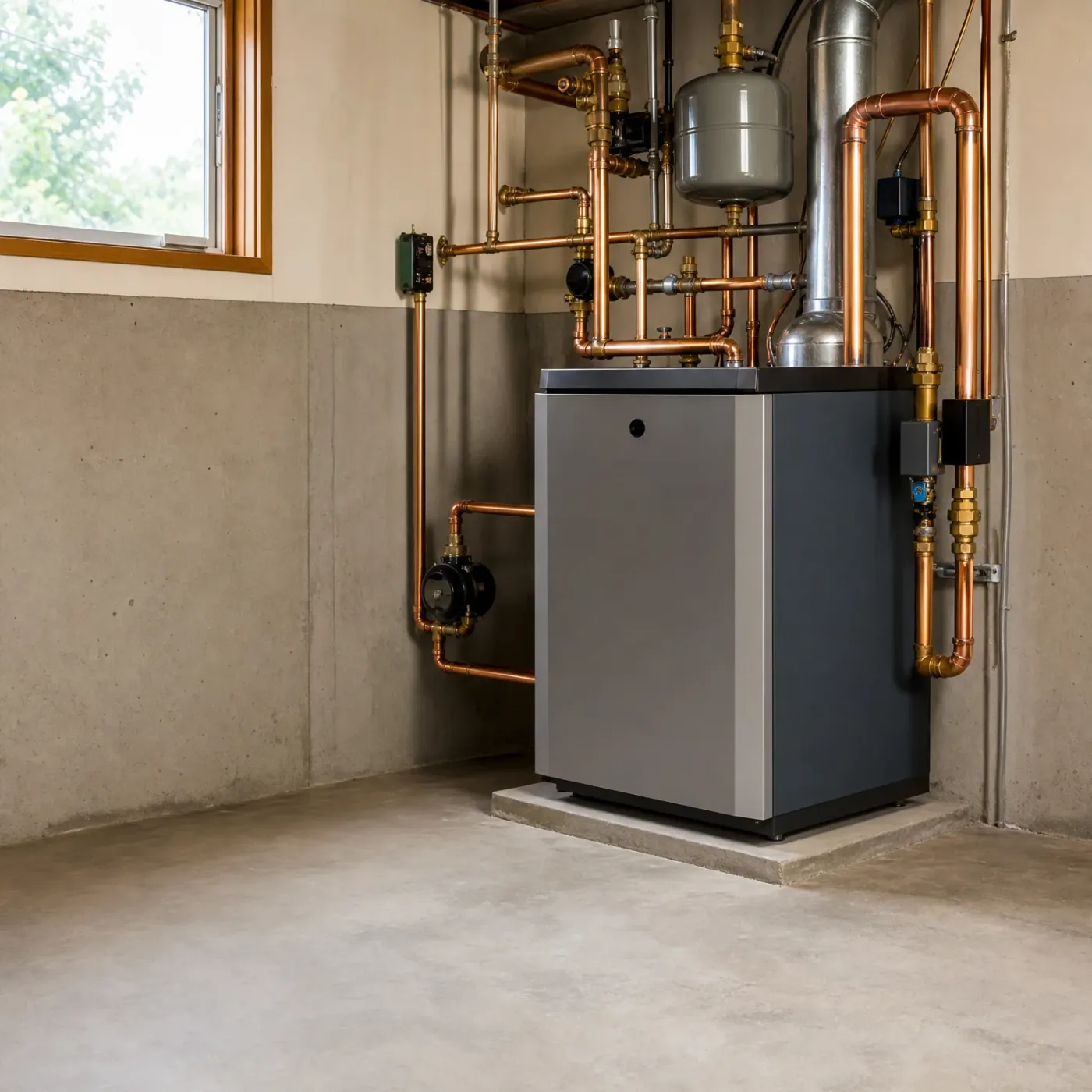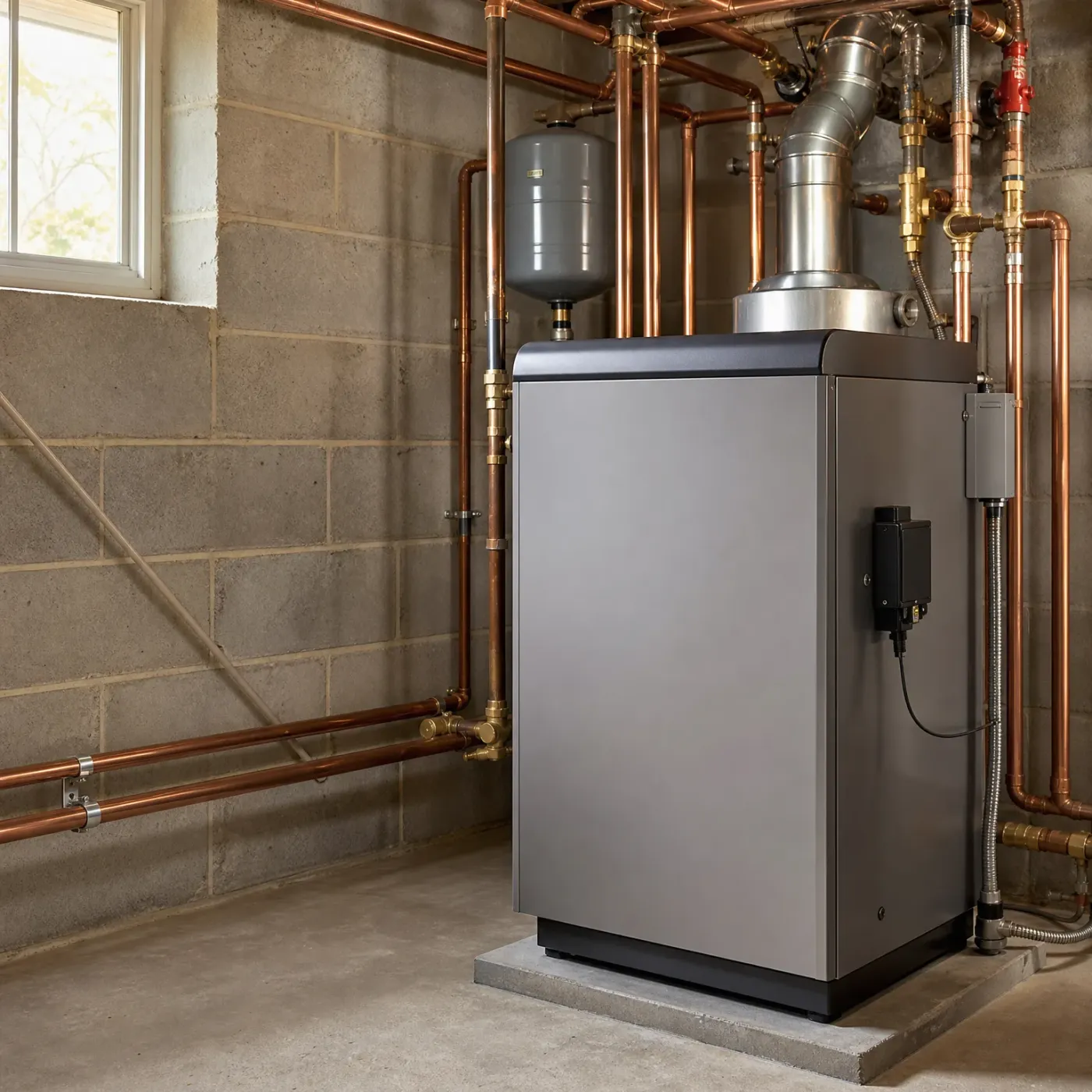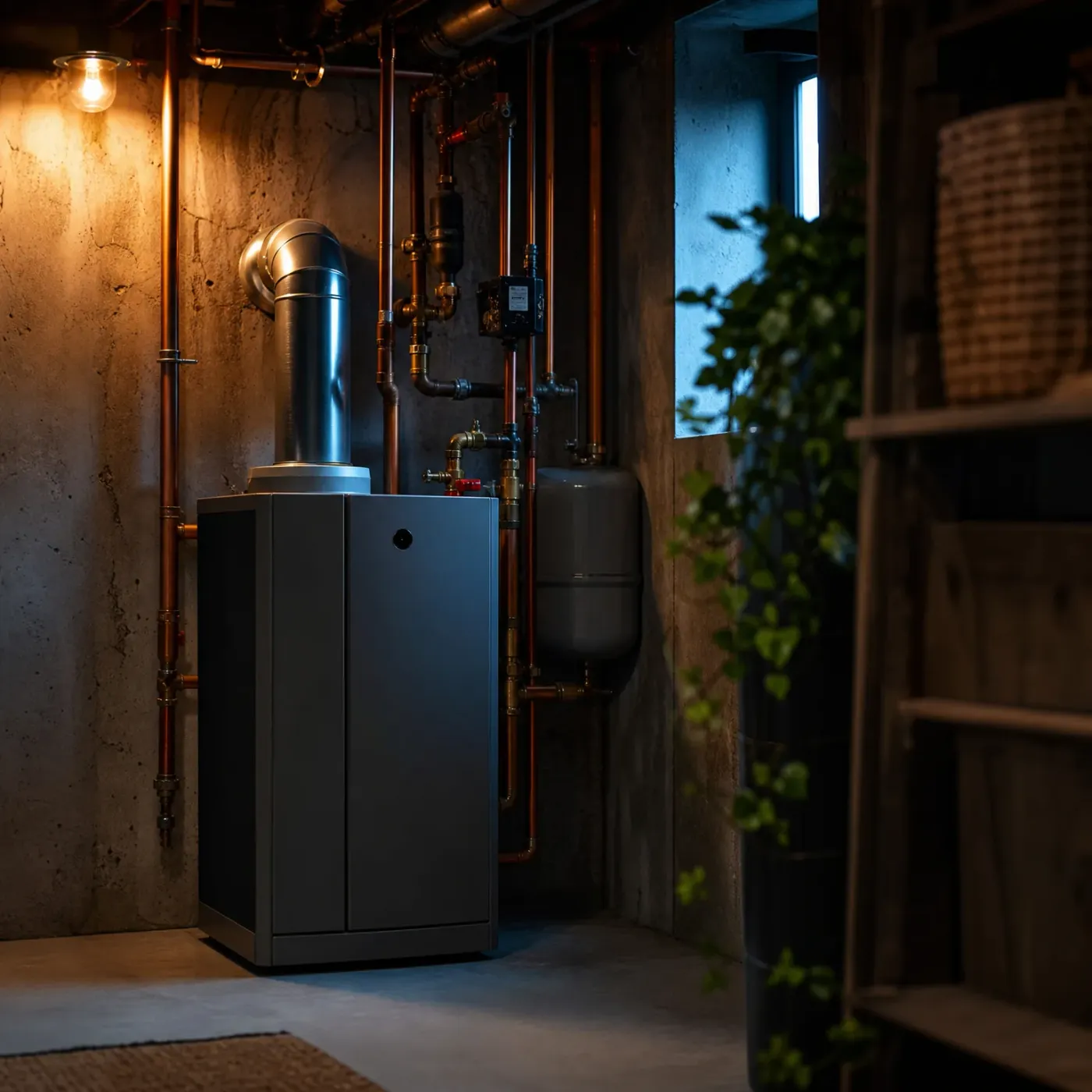
A dark grey floor-standing boiler with a metal flue stands against a concrete basement wall, surrounded by copper pipework, valves and a wall-mounted expansion tank, with ivy and a shelving unit at right.

A pro who works on boilers

How long a boiler lasts in Missouri

A boiler in Missouri can run 15 years or run past 30, and the number that matters is yours, not an average. What's below walks through what actually shortens or stretches that span and how to tell where your own unit stands. When it's time to look at replacement, you can get matched with a contractor who'll look at your system and reach out, so you're not the one calling around for quotes.

Match me with a pro

Most boilers in Missouri last between 15 and 20 years, and gas-fired ones that are kept clean and looked at yearly can run past 25. What ends a boiler's life is usually the heat exchanger cracking or rust working through the tank, not any one part failing. Most homes here heat with gas, and a gas boiler that's never had a tune-up tends to run harder than it needs to, which wears it down faster than age alone would. How hard yours has worked over the years matters more than the number on the install sticker. A boiler installed when the house was built could be nearing the end, or it could have a decade left, depending on how it's been maintained and how it was sized for your home in the first place. If yours is past 15 years, it's worth finding out which one you've got.

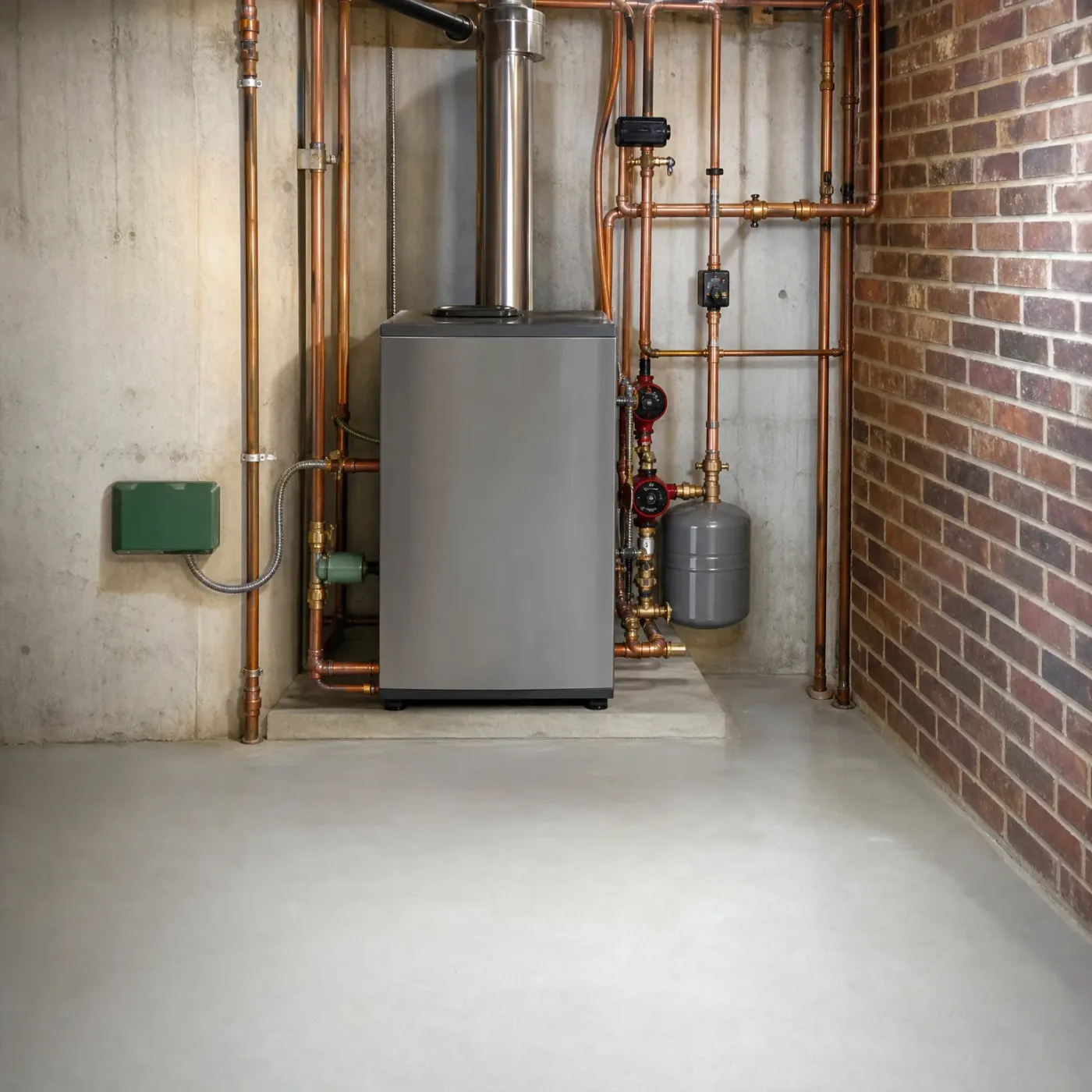
A gray boiler on a concrete pad in a basement, connected to copper piping, valves, pumps and a gray expansion tank, with a concrete wall on the left and a brick wall on the right.

A boiler running clean

This is what you want to see: tight copper joints, a clear pressure gauge, no rust on the tank or the floor around it. A boiler kept like this, flushed and checked once a year, is the one that makes it past 25 years in a Missouri gas-heated home.
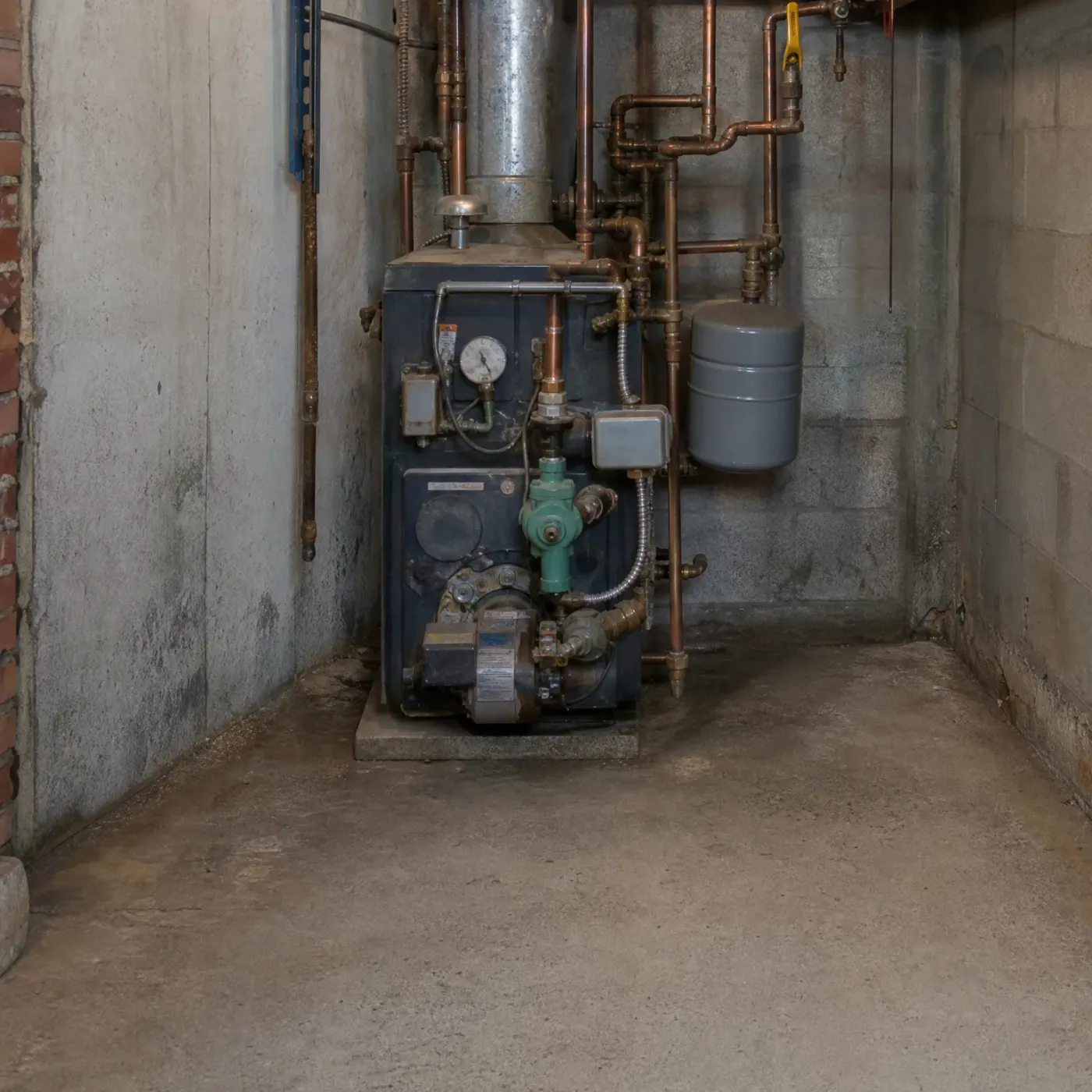
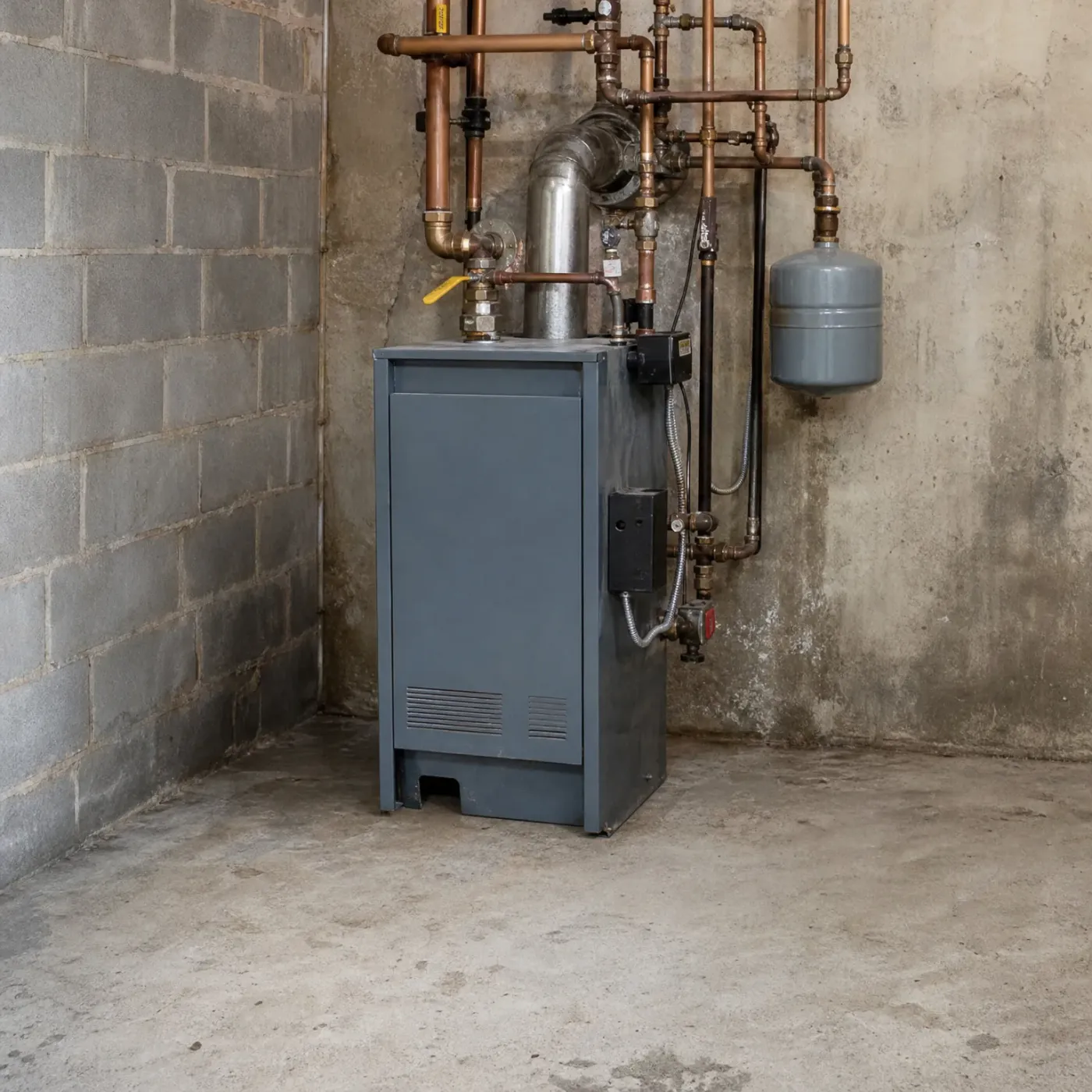
A dark cast-iron boiler with copper piping, pressure gauge, and a gray expansion tank sits on a concrete pad in a basement corner with concrete block and brick walls.

A boiler on borrowed time

Older oil-fired units like this one often show their age in the piping and the gauge before the tank itself gives out. Once you see scale on the fittings or the pressure reading drifting, it's worth having someone look at what's underneath before a cold week in January decides it for you.

What actually makes a boiler stop working after all those years?

You've had the boiler for years and it's still running, but you want to know what the actual failure looks like when it finally comes. Not a vague sense of wearing out, but the real mechanical reason a boiler that ran fine last winter won't start this one. Knowing this helps you tell a minor repair from the sign that it's done.

A cracked heat exchanger or a rusted-through tank, not a single part failing

A boiler doesn't fail because one small part wears out. It fails because the heat exchanger cracks from years of expanding and contracting with every heating cycle, or because water sitting in the tank slowly rusts a hole through the steel. Once either happens, the boiler is done, no matter how well everything else inside it still works. Gas-fired boilers in Missouri homes usually reach this point somewhere between 15 and 20 years in, later if the system was flushed and checked every year. A leak at the tank or rust-colored water at the drain valve is usually the first sign the exchanger or tank itself, not a fixable part, is what's going.

A gray floor-standing boiler in a basement corner with copper and black piping above it, a flue vent, and a gray expansion tank mounted on the concrete wall beside a concrete block wall.
Before you get your boiler installation
A gray floor-standing boiler on a concrete pad in a basement corner, connected to copper piping, brass valves, a circulator pump, an expansion tank, and a metal flue, with a window at upper left.
After you get your boiler installation
A gray floor-standing boiler on a concrete pad in a basement with concrete block walls, connected to copper piping, a flue vent, and an expansion tank.

Get your boiler to the right pro

Skip collecting and comparing quotes for the new boiler.

A local installer who puts in boilers gets your project.

Skip the calls

There's no charge for the request.

Is your boiler telling you something right now?

Walk past it and listen. A knock or a rumble from the tank means sediment is baking onto the bottom, and that spot runs hotter than the metal around it. Water pooling at the base, or rust streaking down the tank, means it's already losing. A pilot that won't hold, a thermostat set at 70 that still leaves rooms cold, or a gas smell near the unit all mean the same thing: don't wait this one out. Keep ignoring it and you risk a flood in the utility room or a shutoff in the middle of a cold snap, with everyone at home feeling it the same night.

A woman with long wavy brown hair in a grey ribbed sweater sits on a couch indoors, looking toward a window, with a potted palm-like plant and fireplace behind her.
A woman with long brown hair wearing a green V-neck top and beige cardigan sits on a light sofa, looking off to the side, with a dining table, lamp and framed picture in the background.
A woman with long dark hair in a cream knit sweater sits on a beige sofa indoors, looking toward a bright window with a houseplant and framed picture in the background.
A woman with long dark hair in a green knit sweater sits on a couch indoors, smiling and looking toward a window with a blurred room behind her.

25 years on a gas boiler

That's the age a well-maintained gas boiler in Missouri can reach. If yours is already past 20, a contractor can tell you how much life is actually left in it.

Answer a few questions

One cracked heat exchanger

That's usually what ends a boiler, not a slow decline. A contractor can check yours and tell you whether you're looking at a repair or a new install.

Answer a few questions
A woman in a cream cardigan and jeans stands with one hand raised facing an open front door of a gray horizontal-siding house, with a black lantern wall light, a potted shrub with yellow flowers, and a stone-faced porch column.

What an old boiler is costing your house right now

A boiler past 20 years doesn't fail all at once. It runs longer to make the same heat, so the rooms farthest from it stay cooler while the thermostat says otherwise. Gas is still the fuel most houses here run on, and a boiler working harder burns more of it for the same warm floor. You may not see a jump in any one bill, but the pattern holds all winter, month after month.

The other cost is what happens if it quits on a January night. You're the one who notices first when a room goes cold, and a dead boiler then means space heaters and a scramble to find someone who can come out fast. Getting matched with a contractor now, while the boiler is still running, means someone already familiar with boilers in your area looks at yours on your schedule instead of theirs.

A living room corner with a beige upholstered armchair holding navy and striped cushions, a small round wooden side table with a carved bowl and a potted green plant, a framed landscape picture on a pale wall, built-in shelving, and a curtained window.

Winter nights average 25°F statewide

Those 25°F nights mean your boiler is firing for long stretches most winter nights, not just cycling on now and then. That steady run time is what wears on the heat exchanger over the years, which is why the yearly checkup matters more here than in a milder state.

NOAA nClimDiv 1991-2020 county normals weighted by homes

Where Your Boiler Stands

  • A gas boiler in Missouri that gets flushed and checked yearly typically runs 15 to 20 years, sometimes past 25.
  • The heat exchanger cracking or the tank rusting through, not a single part failing, is what usually ends a boiler's life.
  • Knocking or rumbling from the tank, rust at the base, or rooms that stay cooler than the thermostat says are signs worth checking now.
  • A boiler past 20 years runs longer to produce the same heat, which shows up as uneven warmth room to room.
  • Long winter nights in the 20s and 30s mean more hours of firing, and that run time is what wears down the exchanger over the years.
  • A contractor who inspects the unit can tell you how much life is actually left in a boiler already past 20 years old.

Fifteen to twenty years is the range most gas boilers in Missouri reach, and a unit that's been flushed and checked every year can push past 25. What ends that run is almost always the same thing: the heat exchanger cracks, or the tank rusts through from the inside. Not a thermostat, not a pump, the tank itself. You don't need a technical reading to know where yours stands. Listen for a knock or rumble when it fires. Look at the floor around the base for rust or water. Notice if the room farthest from the boiler stays cooler than the thermostat claims it should be. Any one of those means the unit is working harder than it used to, even if it hasn't failed yet. That matters more here than in places with milder winters, because Missouri's cold nights keep a boiler firing for long stretches rather than cycling on and off, and that steady run time is what wears the exchanger down year after year. If yours is already past 20, the knocking and the uneven heat aren't things to wait out. A contractor who looks at the unit directly can tell you how much life is actually left in it, which is a better answer than guessing from the age on a sticker. Either way, you'll know where you stand instead of hoping the next winter is the one it gets through.

An older woman with gray hair in a bun and glasses, wearing a beige knit sweater, smiles while looking to the side in a warmly lit kitchen, with a loaf of bread on the counter in the foreground and a snowy scene outside the window.
A woman and a sleeping child wrapped together in a cream knitted blanket on a couch, with a potted plant, framed photo and lit lamp in the background.

Boiler Installation

Matched to your boiler job

Explain the job once and skip repeating it on every call.

A black-framed smartphone standing upright against a plain white background, its screen filled with solid green.
Step 1 of 3: Equipment