 Let a pro reach out
Is a high-efficiency boiler worth it in Missouri
Send the form and the search for an installer is over.
A high-efficiency boiler costs more up front than a standard one, and in Missouri, where gas is the common fuel and power stays cheap, that extra cost takes longer to earn back than it would somewhere with harsh winters and expensive utilities. That doesn't mean it's a bad idea. It means the answer depends on your house, your current boiler, and what you're paying every month from November through March.
A standard boiler runs at somewhere around 80 to 85 percent efficiency. A high-efficiency condensing model can run in the mid-90s. That difference shows up on the gas bill every winter the boiler runs, year after year, for as long as the equipment lasts. If your current boiler is old enough that you're already thinking about replacing it, the gap between what it costs to install a standard unit versus a high-efficiency one is smaller than the gap between what each one will cost you to run.
Missouri summers get sticky, but that's a different system's problem. What matters here is how many months a year your boiler actually runs, and what your gas bills look like in January compared to July. A contractor who comes out and looks at your current setup, your pipe layout, your venting, can tell you whether a high-efficiency model makes sense in your house specifically, and what the payback actually looks like for you rather than in general.
Finding that contractor is usually the slow part. Looking up companies, calling around, explaining your boiler and your house to three or four different people, then sitting with quotes trying to compare them when they're never quite asking the same questions. Send the form on this page and that search is off your plate. You won't be the one tracking down who's available and who knows boilers well enough to give you a straight answer.
A high-efficiency boiler is worth it in Missouri if your old one is failing and you plan to stay in the house long enough to use it. The payback comes slower here than it would somewhere with brutal winters, since gas is cheap and most Missouri winters don't push a furnace or boiler to its limit for long. But a condensing boiler still runs 90 percent or better efficient against 80 percent for a standard model, and that gap shows up on every gas bill from November through March, not just in a hard winter. If your current boiler is old enough to need a major repair, the math changes: you're comparing new-standard against new-high-efficiency, not old against new. That's a narrower gap and an easier call. If it's still running fine, there's less reason to swap it out early just for the rating on the label.




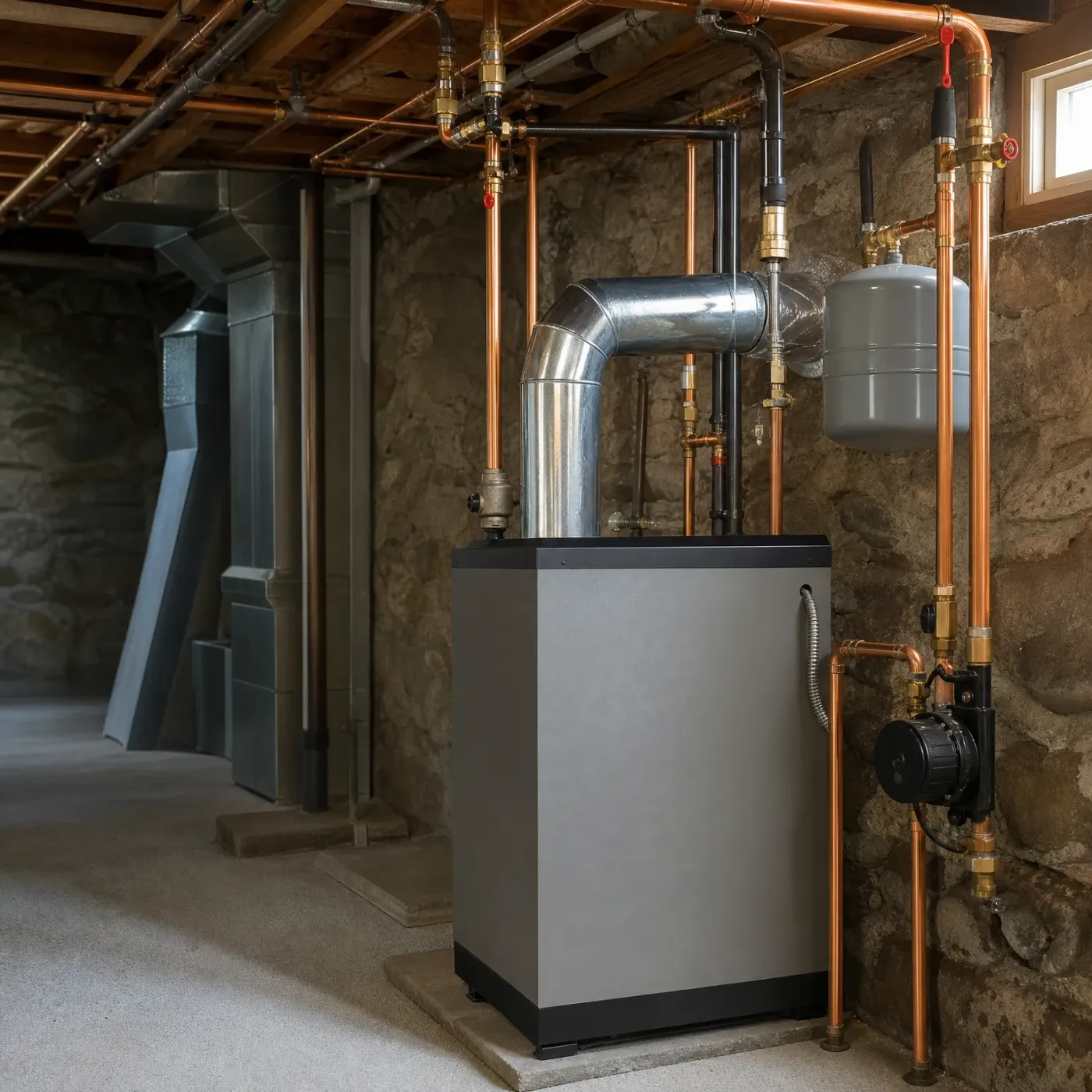
Send one request and you're done looking
Describe the project once instead of to every installer.
Send the form and stop researching installers for the new boiler.
You only hire the pro if you want to.
Standard vs. High-Efficiency Boiler
Standard boiler
- Costs less to install, so the money you save up front can cover a repair fund if the rest of the system is aging too.
- Replacement parts are common and most boiler techs in Missouri have worked on dozens of this type.
- Fuel savings matter less here, since Missouri winters are mild enough that a boiler doesn't run flat out for months straight.
- A straightforward swap if your old unit vented the same way, which keeps the job simpler and the install faster.
- Makes sense if you're not planning to stay in the house long enough to recover a bigger investment.
High-efficiency boiler
- Pulls more heat out of the same amount of gas, which lowers your monthly bill even if Missouri winters are short.
- Often needs a different venting setup since it runs cooler exhaust, so installation can involve more than a straight swap.
- Pays for itself faster the longer you plan to stay in the house and the more winters you put on it.
- Worth it most when your old boiler is already failing, since you're replacing it anyway and the difference in install cost narrows.
- Tends to run quieter and hold steadier temperatures through a Missouri winter, which some homeowners notice as much as the bill.

A standard boiler vents hot exhaust gas straight up a flue.
A high-efficiency boiler cools that exhaust in a second heat exchanger first.
Pulling more heat out means less fuel burned for the same warmth.
The cooled exhaust turns to condensate, an acidic water the boiler has to drain.
Winter nights average 25°F statewide
At 25°F, your boiler is cycling on most nights all winter, not just during cold snaps. That steady run time is where a high-efficiency model actually earns its keep, since it's pulling more heat from every bit of gas burned, night after night, for months.
NOAA nClimDiv 1991-2020 county normals weighted by homes


Where This Leaves You
- A high-efficiency boiler earns its keep in Missouri on a long cold run, not a single setback low.
- If your current boiler still runs fine, swapping it early rarely pays back before you'd have replaced it anyway.
- A failing boiler plus plans to stay in the house for years is the clearest case for paying more up front.
- Cheap power and mild winters slow the payback here, but they don't erase it over the life of the unit.
- Sorting this out usually means calling several boiler contractors, explaining your setup to each one, and weighing quotes that aren't priced the same way.
- Sending one form replaces all of that with a licensed installer reaching out to look at your situation directly.
A high-efficiency boiler makes sense in Missouri when two things line up: the one you have now is on its way out, and you're staying put long enough to let the new one work. Missouri's winters don't demand it the way a harder climate would, and with gas cheap and power cheaper, the payback takes time. That's not a reason to skip it. It's a reason to replace at the right moment rather than the first moment. If your boiler is still running, there's no case for tearing it out early. If it's failing and you're not moving, the math works in your favor over the life of the unit, even if it takes a few winters to show up on paper.
Getting to that answer for your own house usually means tracking down a handful of boiler contractors, walking each one through your setup, and then sitting with quotes that don't break down the same way twice. That part is the slow part, not the install itself. Sending one form skips the sorting. A licensed installer looks at your situation and reaches out directly, so the only decision left is whether the job makes sense for your house, not which contractor to trust with asking the question.
Finding a pro stops being your job
Skip collecting and comparing quotes for the new boiler.