


Missouri Boiler Works

Signs your boiler won't last a Missouri winter

Step 1 of 3: Equipment

A boiler that won't make it through winter usually tells you first with sound and water, not with a sudden no-heat call. Listen for banging or kettling in the tank, that's mineral buildup on the heat exchanger working harder each time it fires. Look for water around the base or rust creeping along a fitting, since a boiler leaking at the seams is losing pressure it needs to run. Watch the pilot or igniter behavior too: if it struggles to stay lit or cycles more than it used to, the components behind it are wearing out. Short cycling, uneven heat between rooms, or a thermostat that can't hold a setting all point the same direction. None of these mean the boiler is done, but each one is a system working against itself, and a Missouri winter with weeks of hard cold is when that shows up as no heat at all.

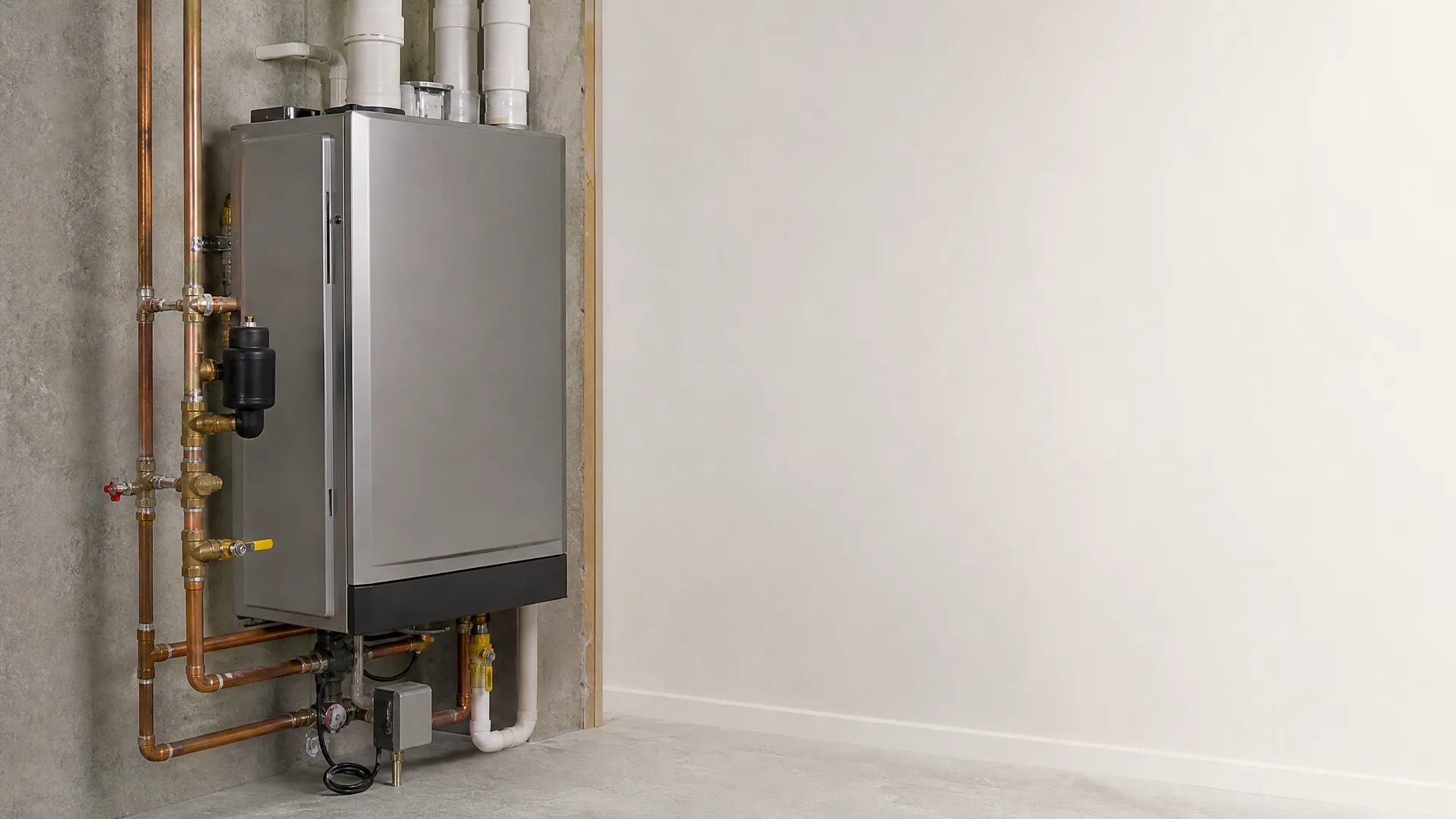
A wall-mounted grey boiler with copper pipework and white flue pipes installed against a concrete wall in an empty room with a plain pale wall to the right.

What kettling does over time

Banging or rumbling from the tank means scale has built up on the heat exchanger and is trapping pockets of steam. Each time the burner fires, that section has to work harder to push heat through the buildup. A boiler can run this way for a while, but the metal underneath is stressing more with every cycle, and that stress is what leads to a cracked exchanger, not the cold snap that happens to be underway when it finally gives out.

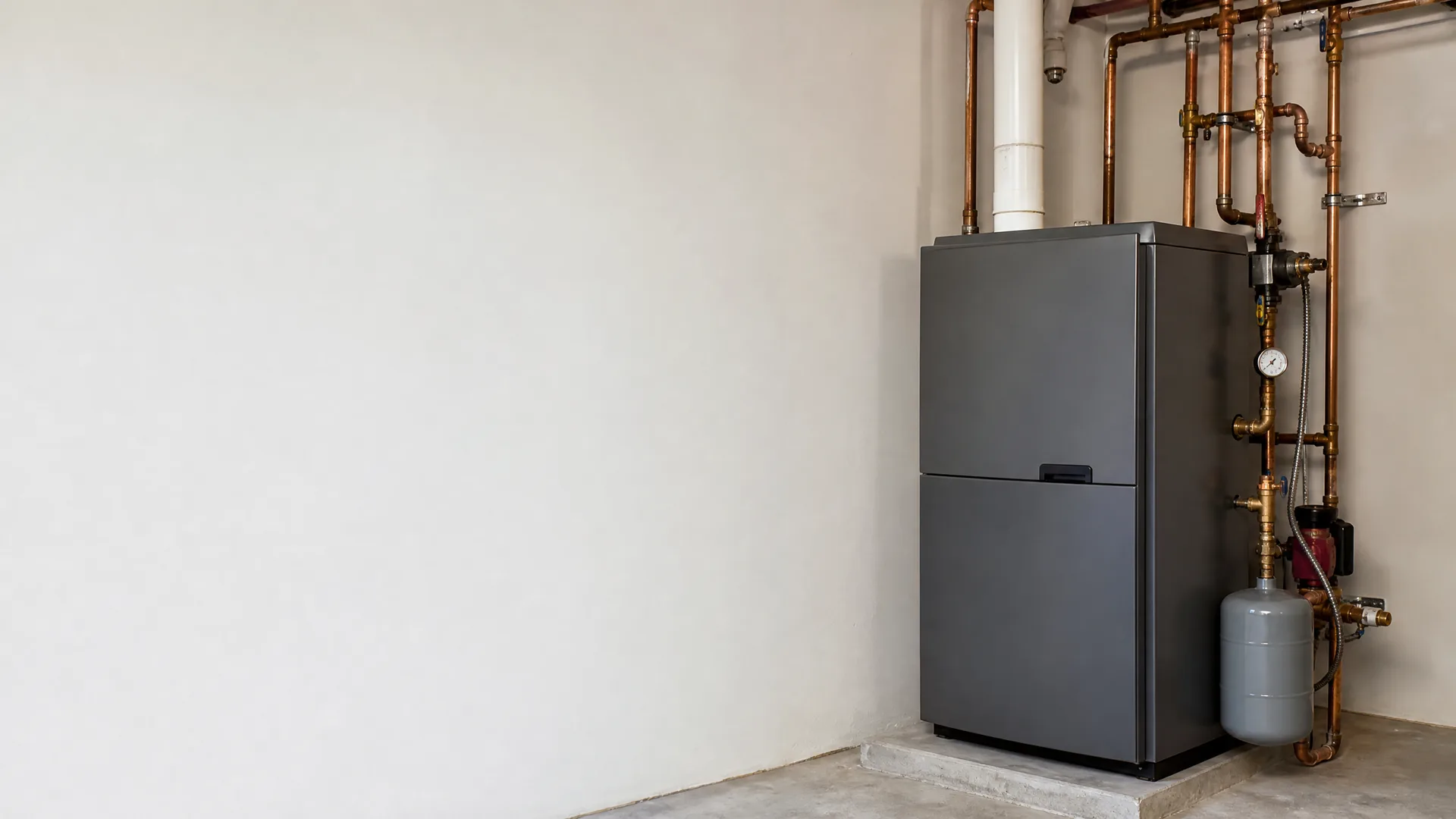
A dark grey boiler unit stands on a concrete pad against a plain light wall, connected to copper pipes, a pressure gauge, a pump and a grey expansion tank.

Why the pilot matters now

A standing pilot that won't stay lit, or a hot surface igniter that takes several tries, points to a flame sensor or thermocouple reading the flame incorrectly. In most Missouri homes that's the only thing standing between you and a January morning with no heat at all. It's a small part, and it's usually the first thing to fail well before anything bigger in the system does.

Why does my boiler smell like metal when it kicks on?

A metallic smell right when the burner kicks on is the kind of thing you notice on a cold January night and can't quite place. It's not gas, it doesn't linger the way a dusty smell does, and it only shows up when the boiler is actually firing. You want to know if that's the heat exchanger telling you something, or just the cabinet warming up.

A hot heat exchanger or a dying circulator pump

That smell is usually metal heating up faster than it should. Scale on the heat exchanger forces it to run hotter in the spots where buildup is worst, and hot metal gives off that sharp, almost electrical smell as it expands. The other common cause is the circulator pump, the motor that pushes hot water through the system. A bearing going bad in that motor heats up and puts off the same kind of smell, usually paired with a faint burning note. Either way, it's heat going somewhere it shouldn't, not normal operation. A no-heat morning in a Missouri January is a hard way to find out which one it was.

  1. Scale coats the heat exchanger, trapping steam pockets inside

  2. Trapped steam collapses and bangs, the kettling you hear

  3. The burner fires longer each time to push heat through

  4. Metal stress from overwork opens a crack in the exchanger

What are you noticing around your boiler lately

Check the floor around the base for a damp patch or a rust-colored ring, even a small one. Look at the pressure gauge, if you're adding water to it more often than you used to, something is letting it out. Notice if one or two rooms stay cold while the rest of the house heats fine, that's a sign heat isn't moving through the system the way it should. A pilot or burner flame that's yellow instead of blue is worth paying attention to as well. None of this means the boiler quits tomorrow. It means the parts that keep it safe and efficient are wearing down, and a Missouri winter is a hard stretch to find that out the hard way, with the whole house and the people in it depending on it.

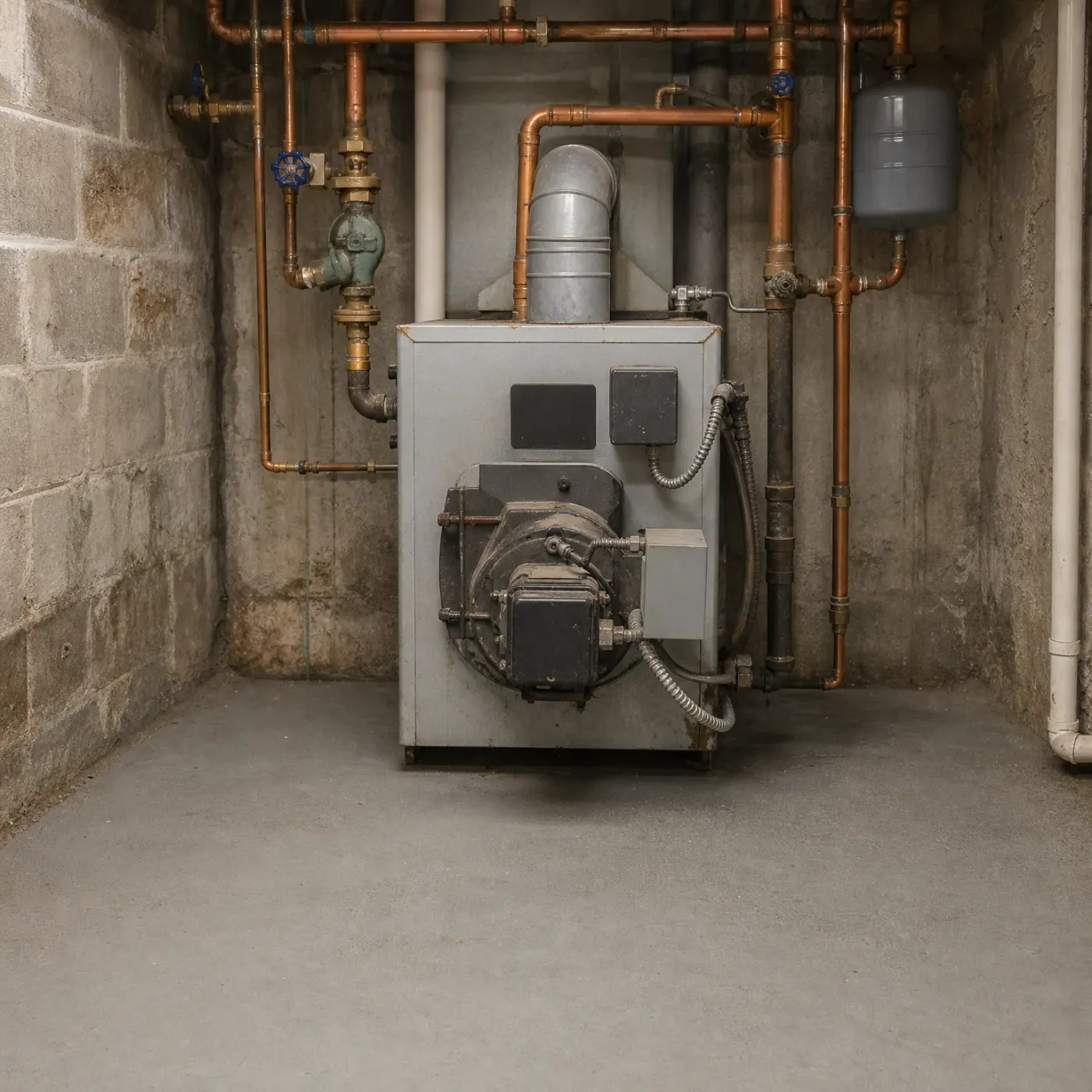
A gray boiler with a flue pipe and burner unit stands against a concrete block basement wall, surrounded by copper and steel piping, valves, and a gray expansion tank, on a bare concrete floor.
Before you get your boiler repair
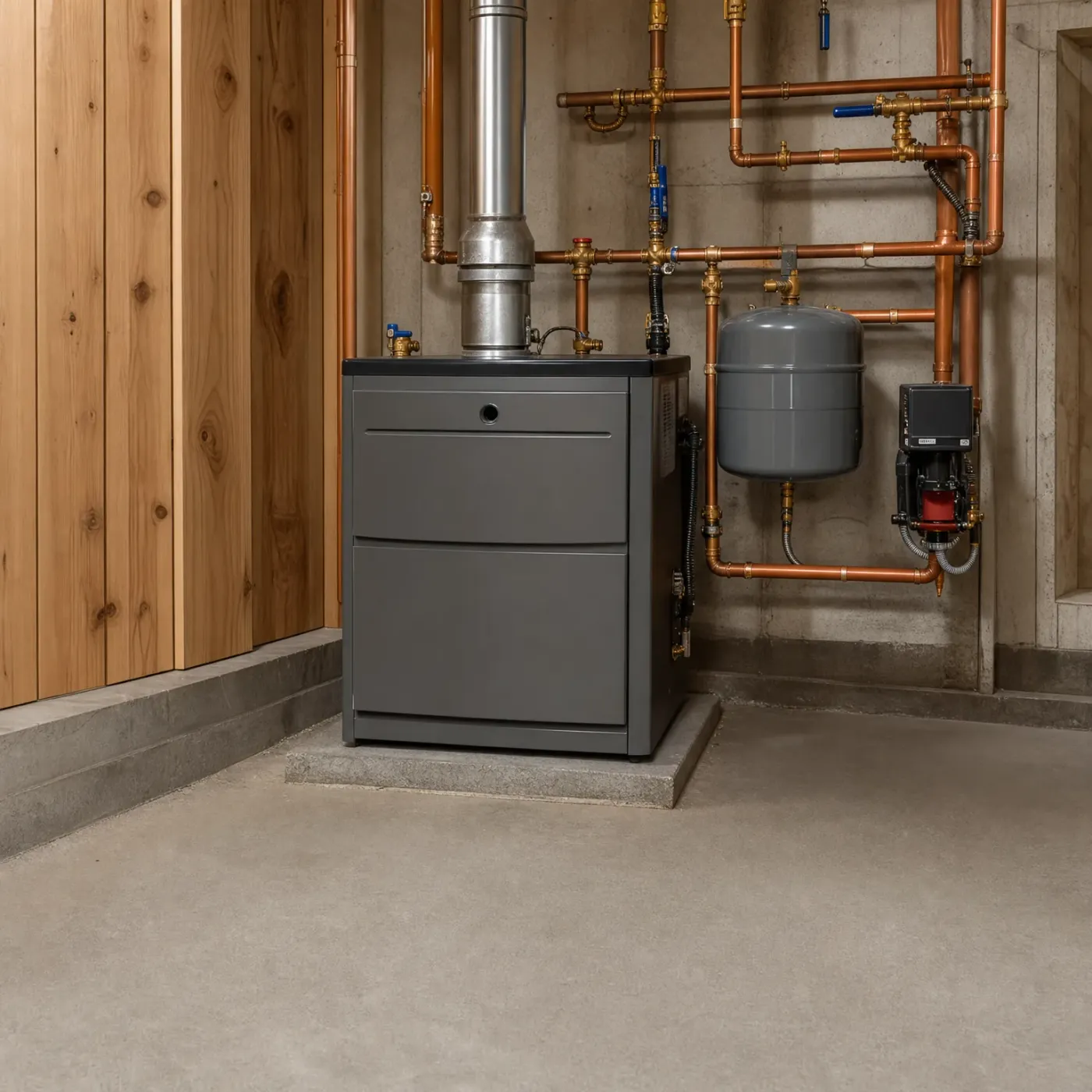
A gray boiler on a concrete pad in a basement, with a metal flue pipe and copper piping, brass valves, a gray expansion tank and a circulator pump mounted on the concrete wall beside wood paneling.
After you get your boiler repair

Hand off the search today

The pro who reaches out is licensed in Missouri.

No charge to send it. You decide if you hire them.

A boiler worth repairing

If the exchanger is sound and the leak is at a valve, a fitting or the circulator seal, a repair solves it. Kettling on its own isn't a death sentence either, if it's caught before the metal cracks, flushing the system and replacing the part under stress can quiet it down and buy years back. Age alone doesn't rule this out. A boiler that's been kept up, with no rust at the base and no metal smell at startup, is usually a boiler worth putting money into rather than replacing outright.
A boiler on its way out

Rust-colored water at the base, a crack you can see or feel in the exchanger, or a smell of metal every time the burner kicks on point to damage that a repair won't reverse. Once the exchanger itself has failed, patching one leak just moves the stress to the next weak spot. If you're already adding water to the system every week and the pressure keeps dropping between fills, that's the boiler telling you it's losing the fight faster than any repair can keep up with.

Winter nights average 25°F statewide

At 25°F overnight, your boiler is cycling on and off most of the night just to hold temperature. Every one of those cycles puts more strain on a heat exchanger that's already fighting scale buildup. A unit in good shape handles that fine. One that's kettling or leaking won't keep up for long.

NOAA nClimDiv 1991-2020 county normals weighted by homes

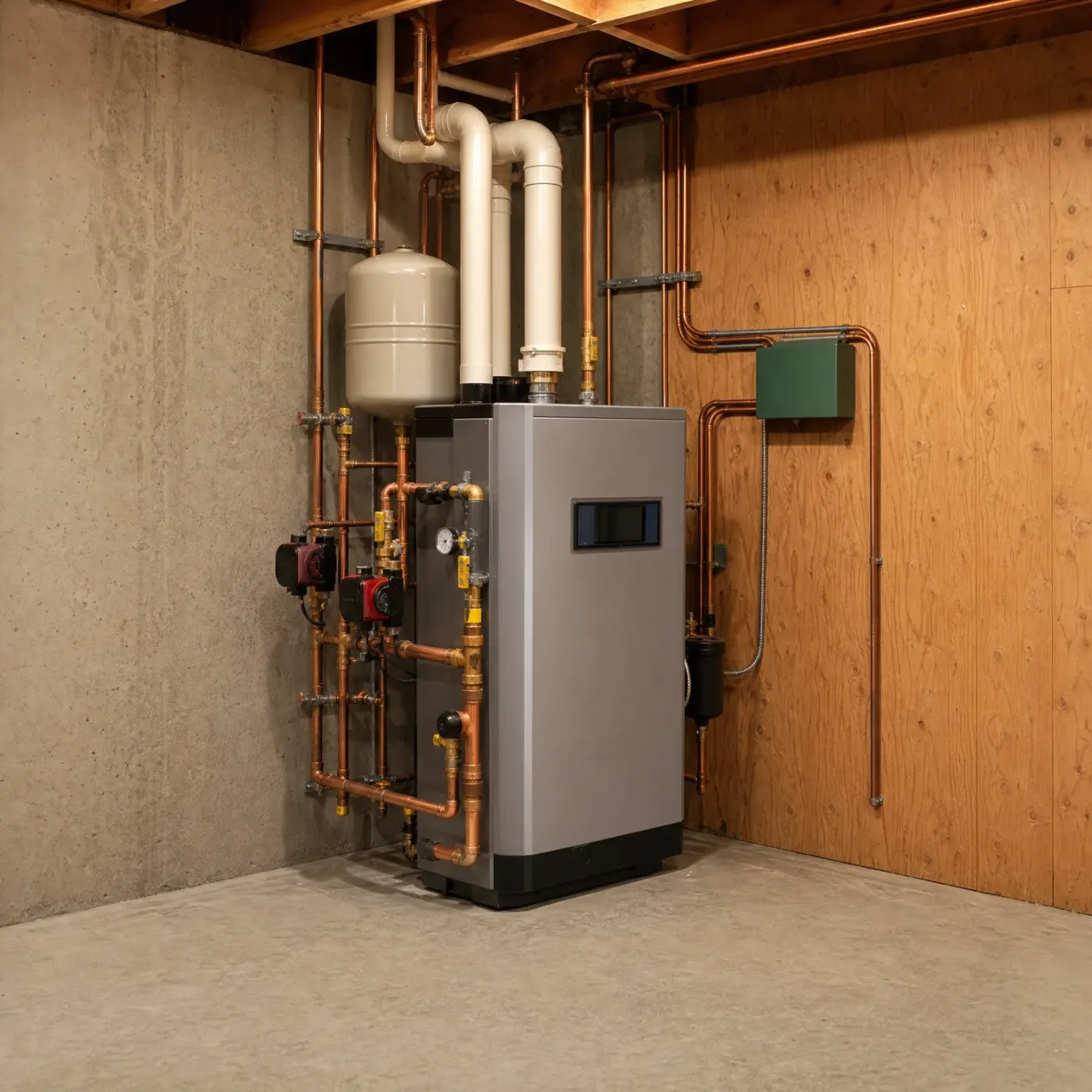
A gray floor-standing boiler in a basement corner with copper piping, two red circulator pumps, a beige expansion tank, white PVC vent pipes, concrete and plywood walls.
Copper lines run clean to a sound exchanger, with a steady pressure gauge and no rust at any joint.
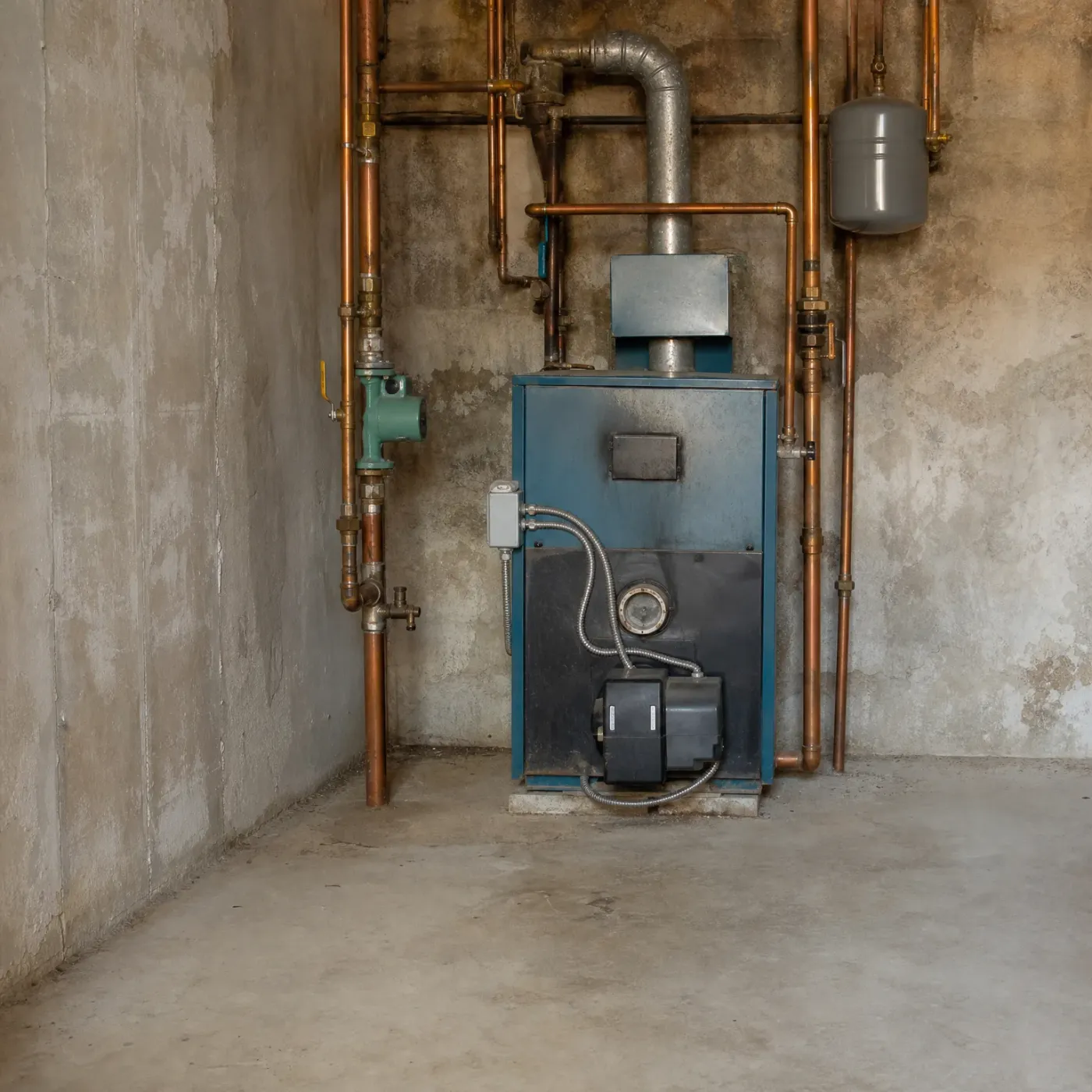
A blue residential boiler with a metal flue, pressure gauge and burner unit stands against a stained concrete basement wall, surrounded by copper pipes, a green circulator pump and a gray expansion tank.
A bare steel housing and galvanized flue on an aging unit, the kind that cracks once kettling goes too long.

What your boiler is telling you

  • Banging or kettling in the tank points to scale buildup that strains the heat exchanger every time it fires.
  • A damp patch or rust-colored ring at the base means water is already getting out somewhere.
  • A rising need to add water or a pressure gauge that won't hold steady signals a leak feeding on itself.
  • A metallic smell right as the burner kicks on can mean the exchanger is already under stress.
  • A boiler cycling hard on the coldest nights is doing the most damage when you need it most.
  • Caught early, scale and minor leaks are a repair; a cracked exchanger usually isn't.

A boiler that's going to struggle this winter usually says so before it quits. Sound comes first, the kettling and banging that means scale has coated the heat exchanger and steam is getting trapped behind it. Water comes next, a damp spot by the base, a pressure gauge you're topping off more than you used to, a ring of rust where there shouldn't be one. Smell can show up too, that metallic edge right when the burner kicks on, which usually means the exchanger is already working harder than it should. None of these on their own means the unit is finished. Scale can be flushed out. A fitting or a valve can be replaced. A circulator seal is a repair, not a replacement. What changes the outlook is a crack in the exchanger itself, and that's what kettling leads to if it runs too long unaddressed. The nights that matter most are the cold ones, when the boiler is cycling on and off for hours just to hold the house at temperature. That's when scale buildup and a strained exchanger show their cost, because every cycle on a bad night is doing more damage than a mild one would. The pattern across all of it is the same. Catch the sound, the water or the smell early, and you're looking at a repair. Wait until the exchanger cracks, and you're not. What you're noticing now is the difference between those two.

A smiling bearded man in a dark green hooded jacket and blue t-shirt sits on a couch in a living room with shelves, a potted plant, and a bowl of popcorn on a wooden table.
A smiling man in a green long-sleeved shirt sits on a beige sofa in a living room, with a bowl of popcorn in the foreground, a large potted plant and shelving behind him.
A smiling man in a dark blue T-shirt sits on a couch in a dimly lit living room with a bowl of popcorn and a remote on a wooden table, a lit floor lamp and bookshelves behind him, and windows showing greenery.
A smiling bearded man in a dark green long-sleeved shirt sits on a leather couch in a living room, with a bowl of popcorn and a remote control on a wooden table in the foreground.

Stop chasing a boiler pro

A Missouri boiler that's kettling, weeping at the base, or needing water more often than it used to isn't going to get quieter on its own. A licensed local contractor who works on boilers all winter can look at the exchanger and the leak and tell you straight whether it's a repair or a replacement. Send the request and a contractor who services your area takes it from there, so you're not stuck making calls on a night it's 25 degrees outside.

Find a licensed boiler pro

Only one pro gets your request, so you hear from one company.

There's no charge for the request.