

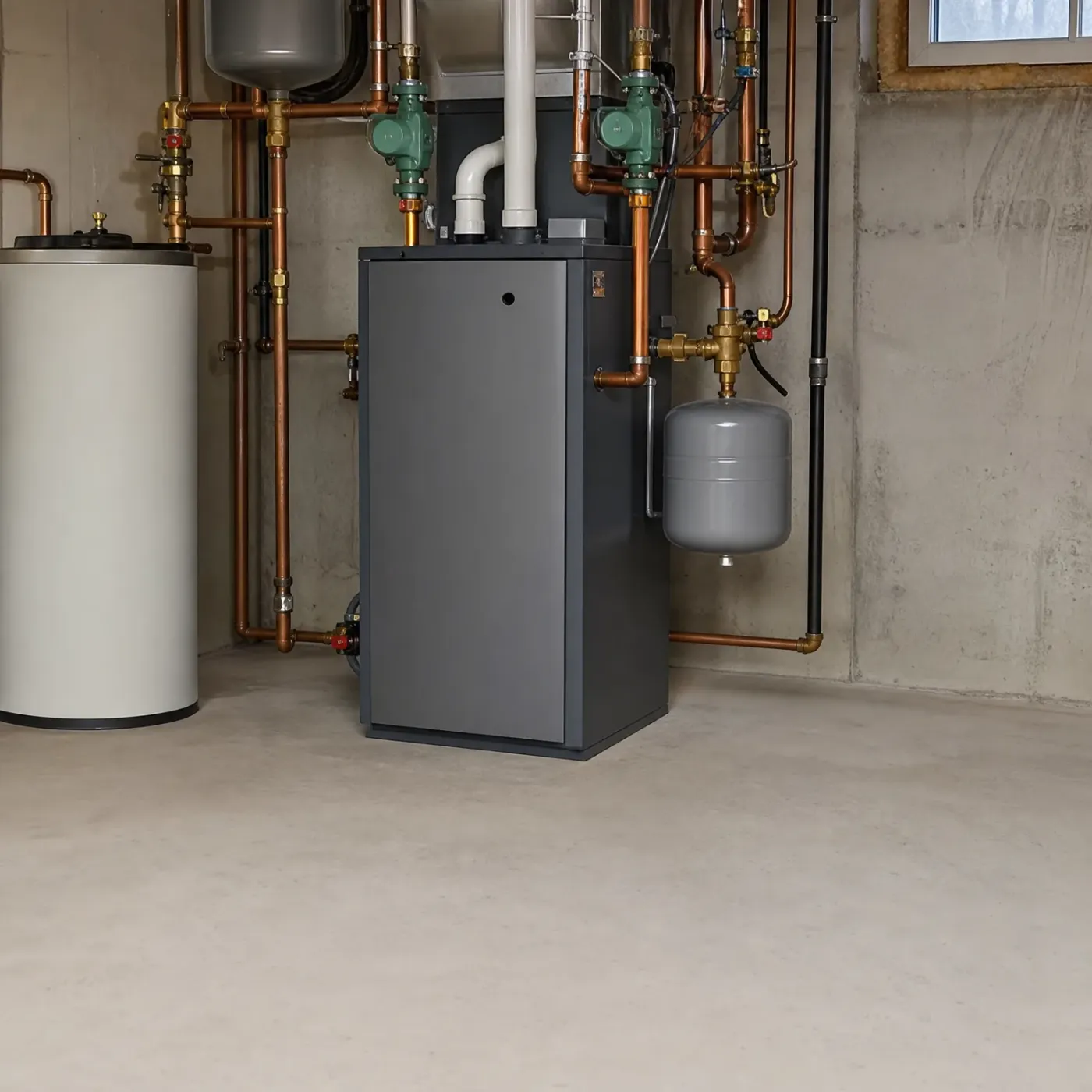
Serviced before winter
This is what a boiler looks like after a contractor has gone through it. Pumps run quiet, the pressure holds steady, and the pipes show no sign of a slow weep at the fittings. Nothing here surprises you in January.
A local pro who services boilers gets in touch about the tune-up.
Get matchedA boiler tune-up before winter means a contractor checks and cleans the parts that keep the system running safely through a Missouri winter. That includes testing the pressure relief valve, checking the expansion tank, bleeding air from the lines, inspecting the burner and flame, and checking the flue for a safe draft. On a gas boiler, that flue check matters because a blocked or weak draft can let combustion gas back up into the house instead of venting outside. The contractor also checks the pressure and water level, since a boiler low on water can overheat or shut itself down mid-January when you need it most. Most of this work catches small problems, a sticking valve, a weak igniter, a clogged line, before they turn into a cold house or a repair call during the first hard freeze. None of it changes how the boiler feels to live with day to day. It just means the system is working the way it's supposed to when the cold sets in.
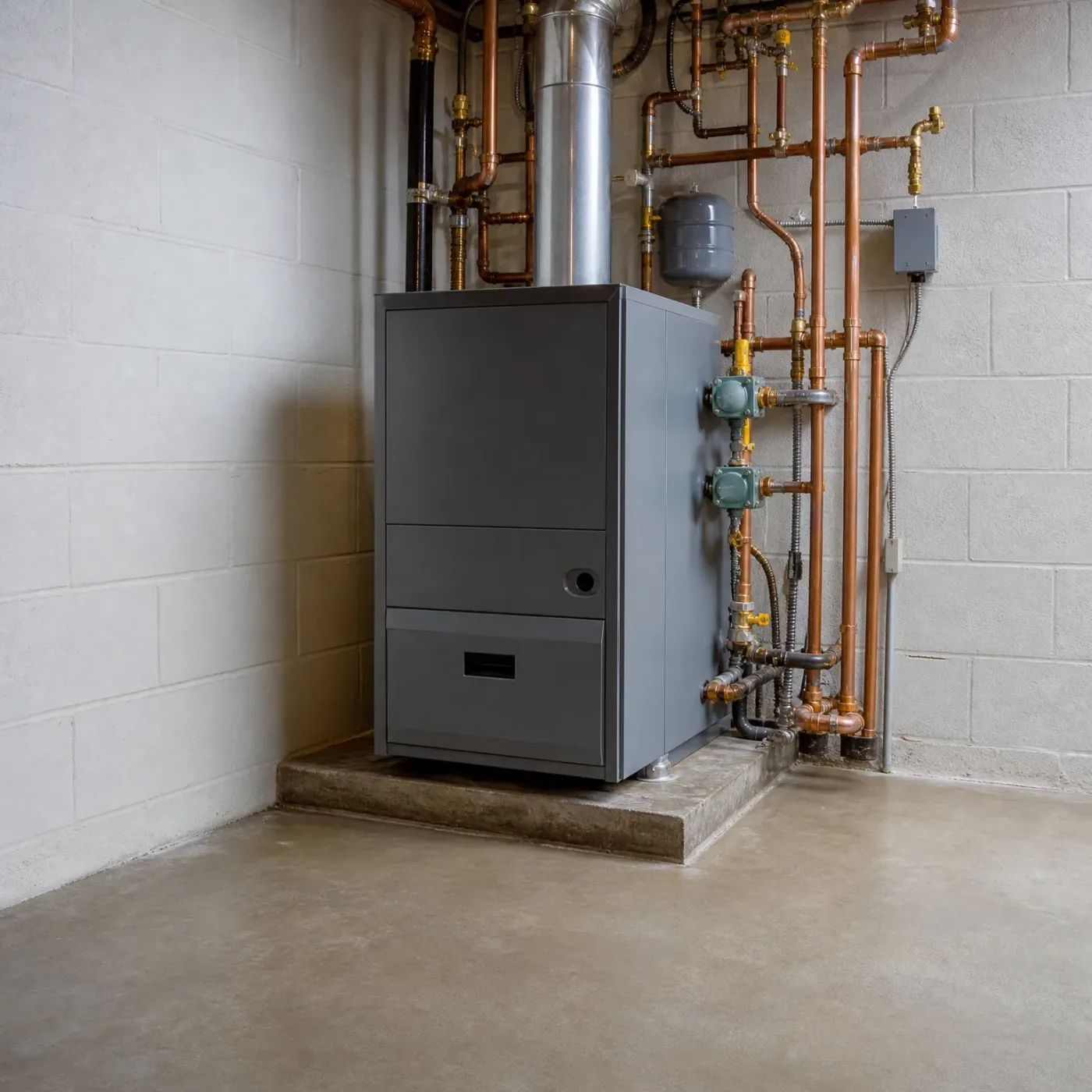
This is what a boiler looks like after a contractor has gone through it. Pumps run quiet, the pressure holds steady, and the pipes show no sign of a slow weep at the fittings. Nothing here surprises you in January.
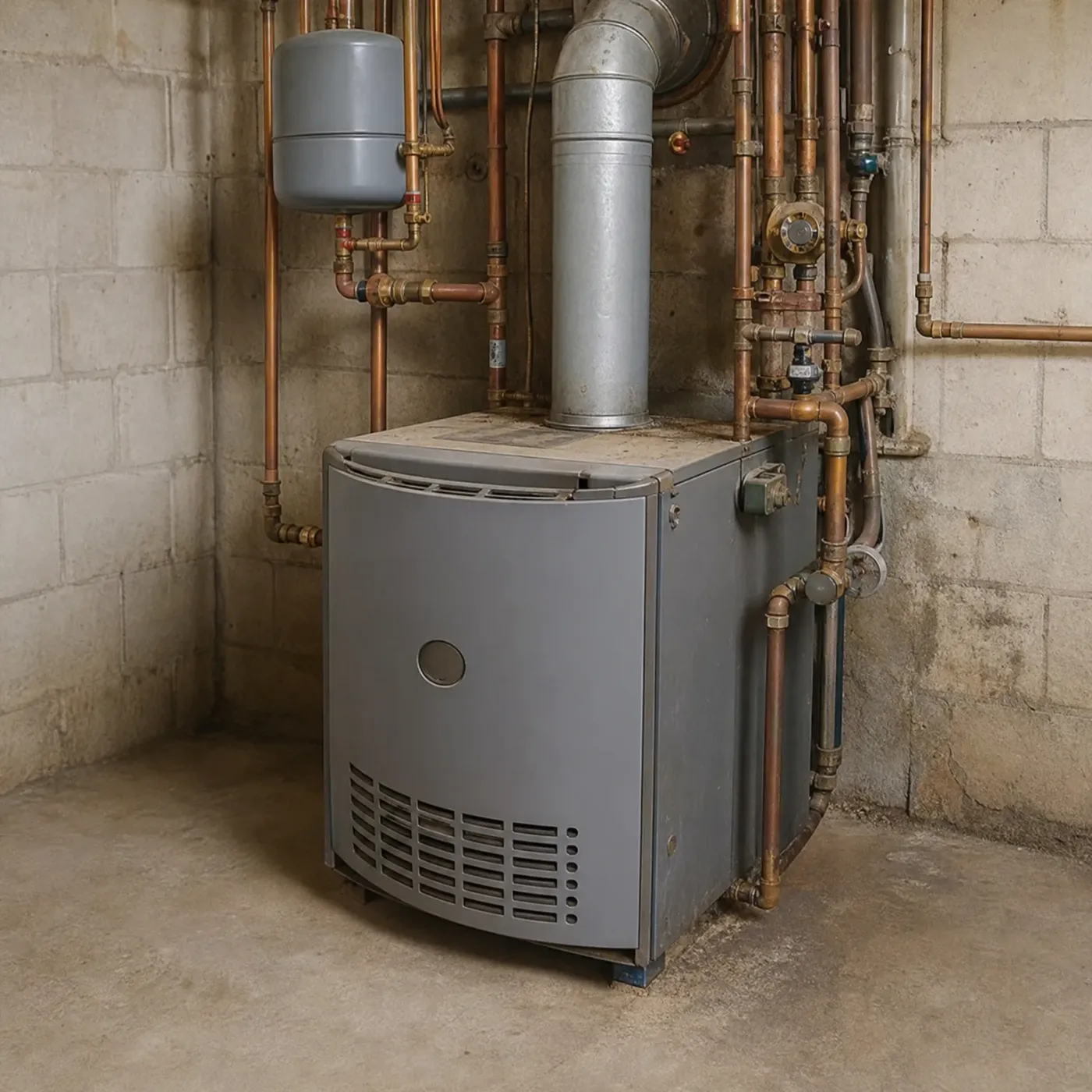
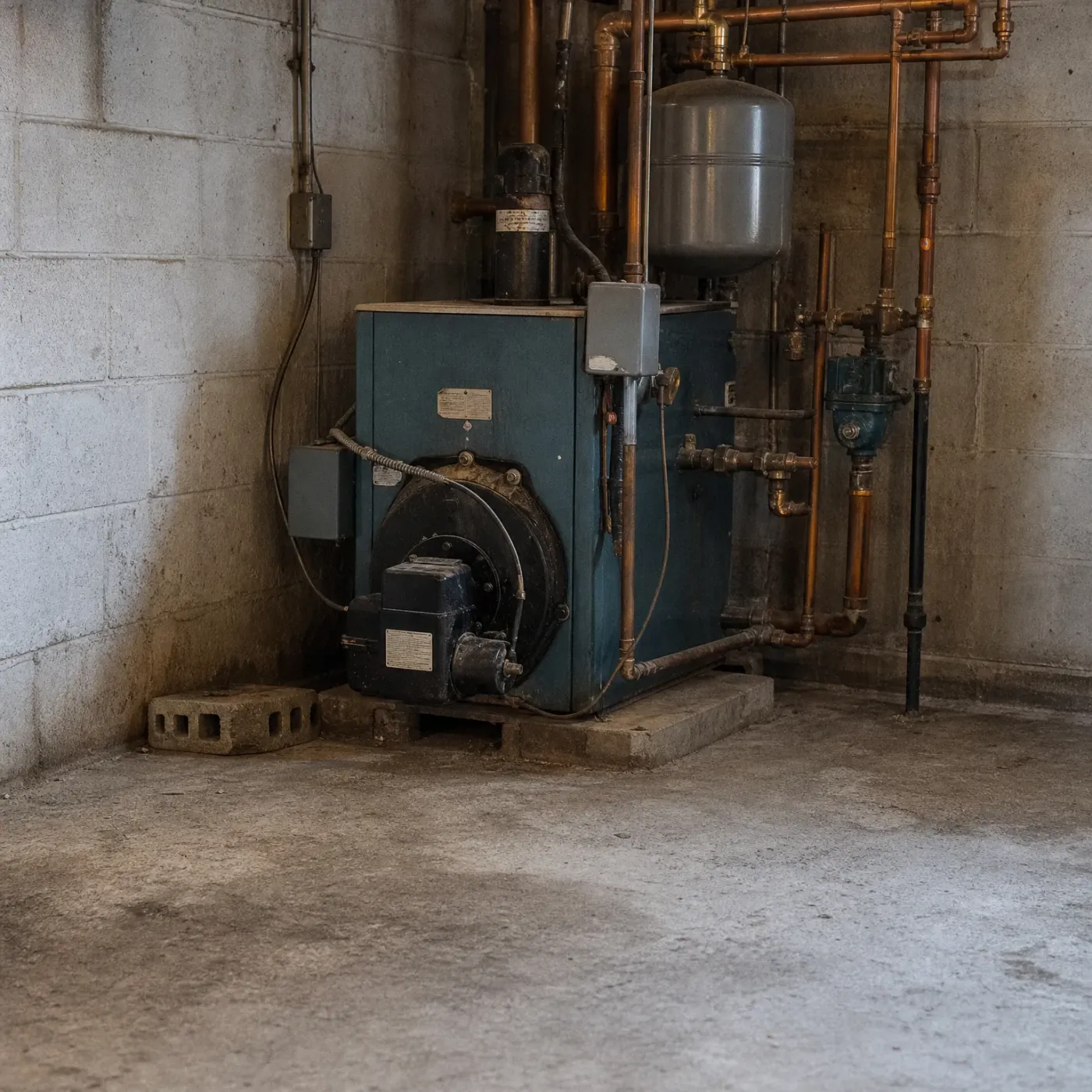
This one hasn't been touched since it last ran. Sediment settles low in the unit, the flue pipe collects dust nobody checked, and the expansion tank never got tested. It may start fine on the first cold night. Whether it keeps running through February is the question.
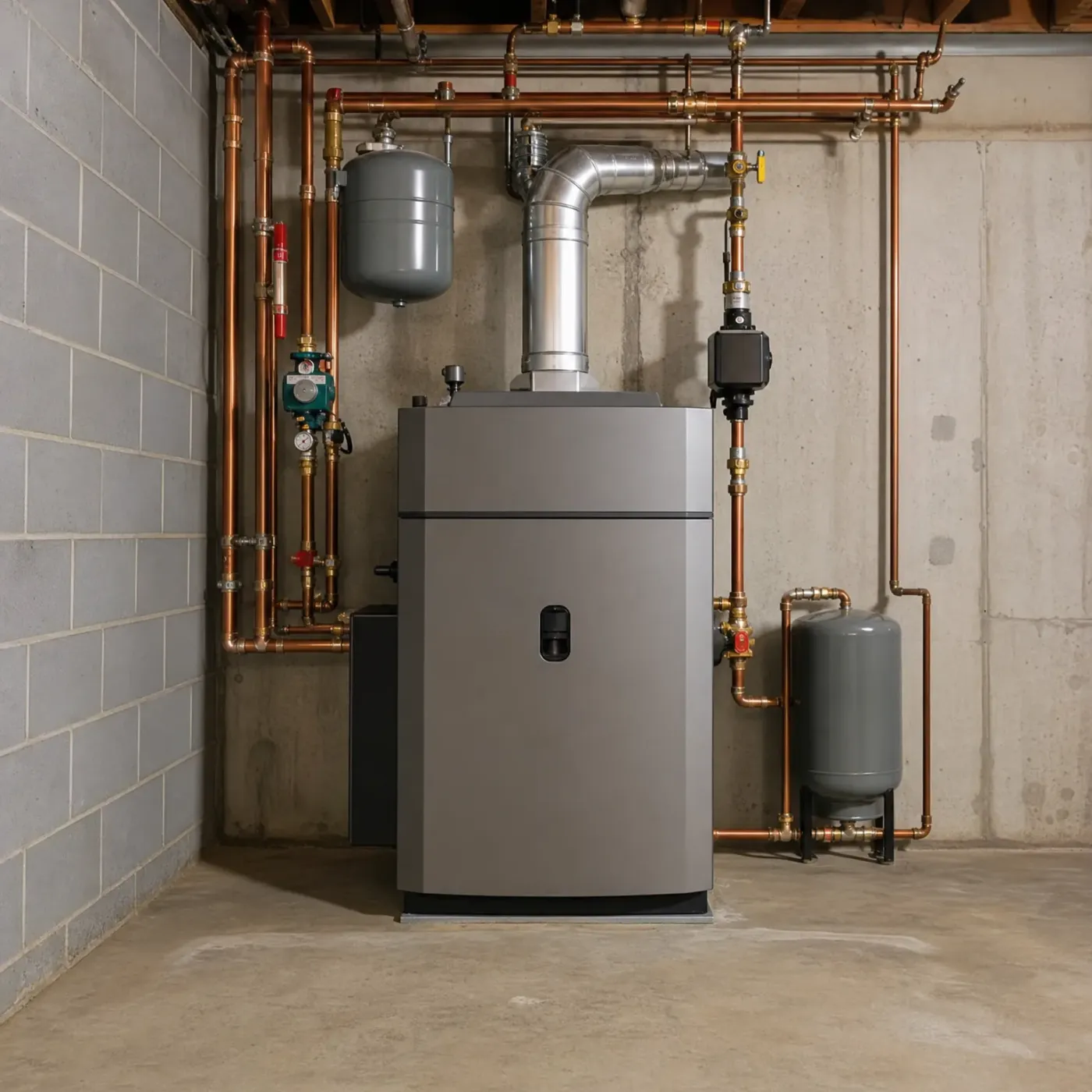
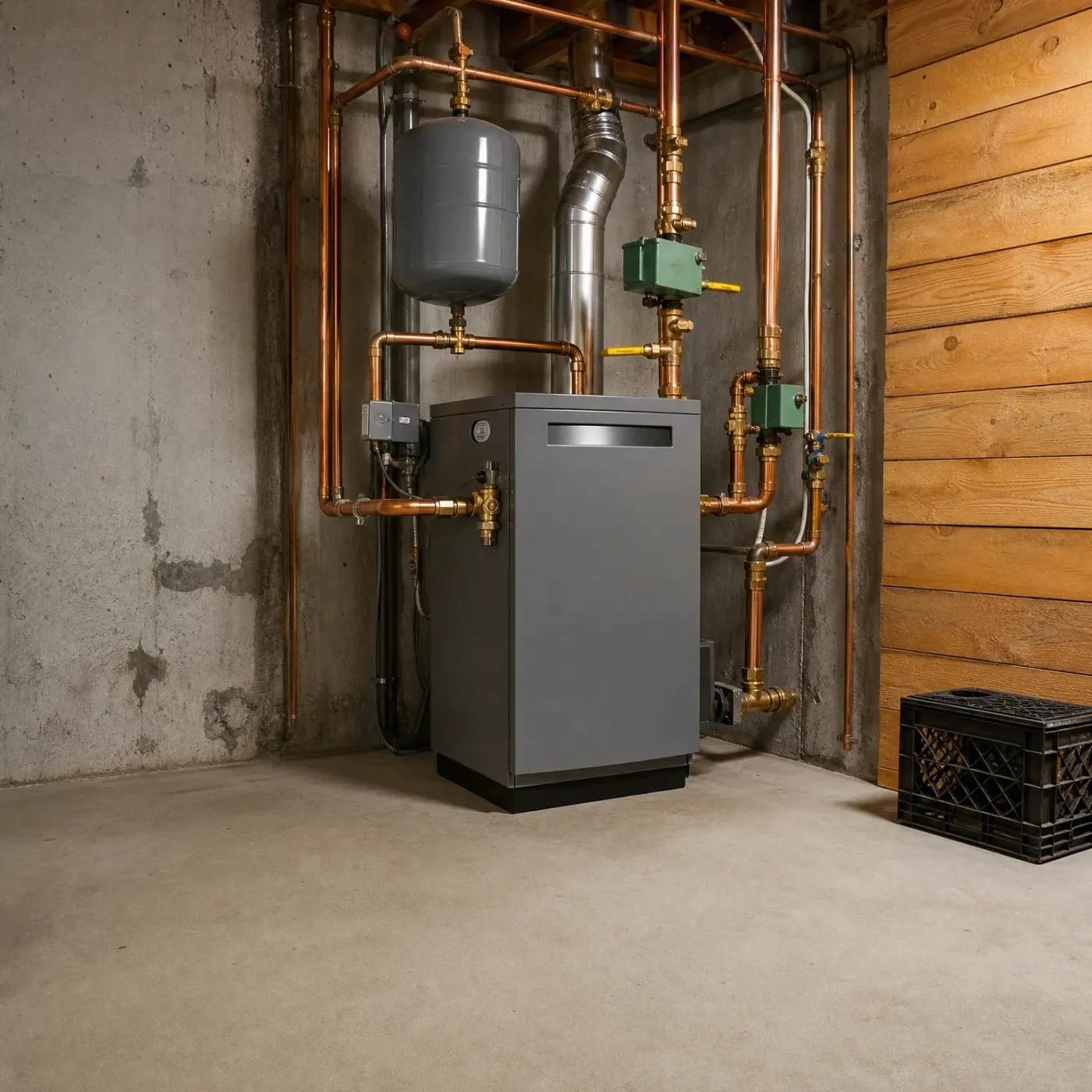
This is a boiler that's had its service done. The copper lines are dry at every joint, the gauges read where they should, and the expansion tanks are holding air the way they're supposed to. A contractor who was just in here would tell you there's nothing to flag before the cold sets in.
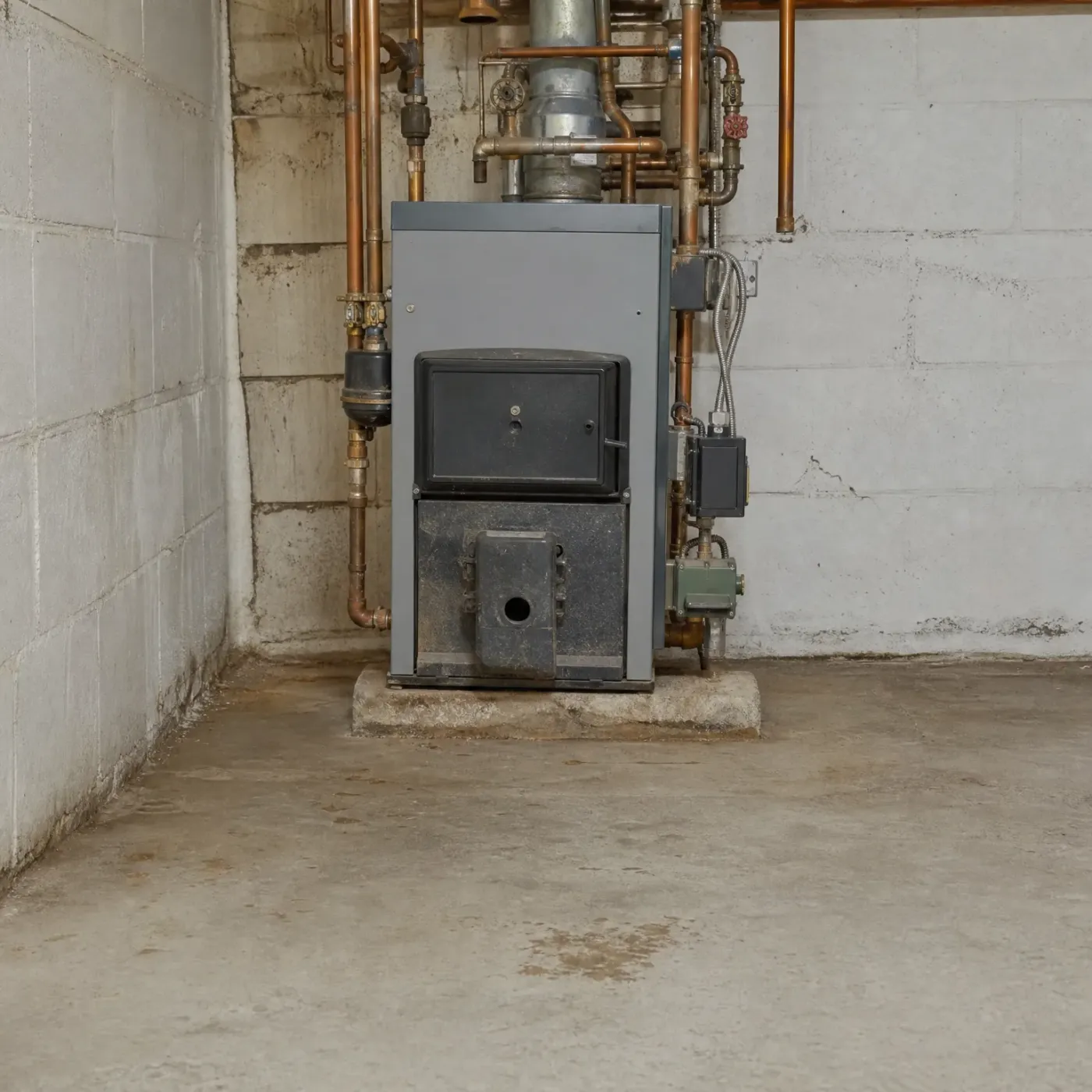
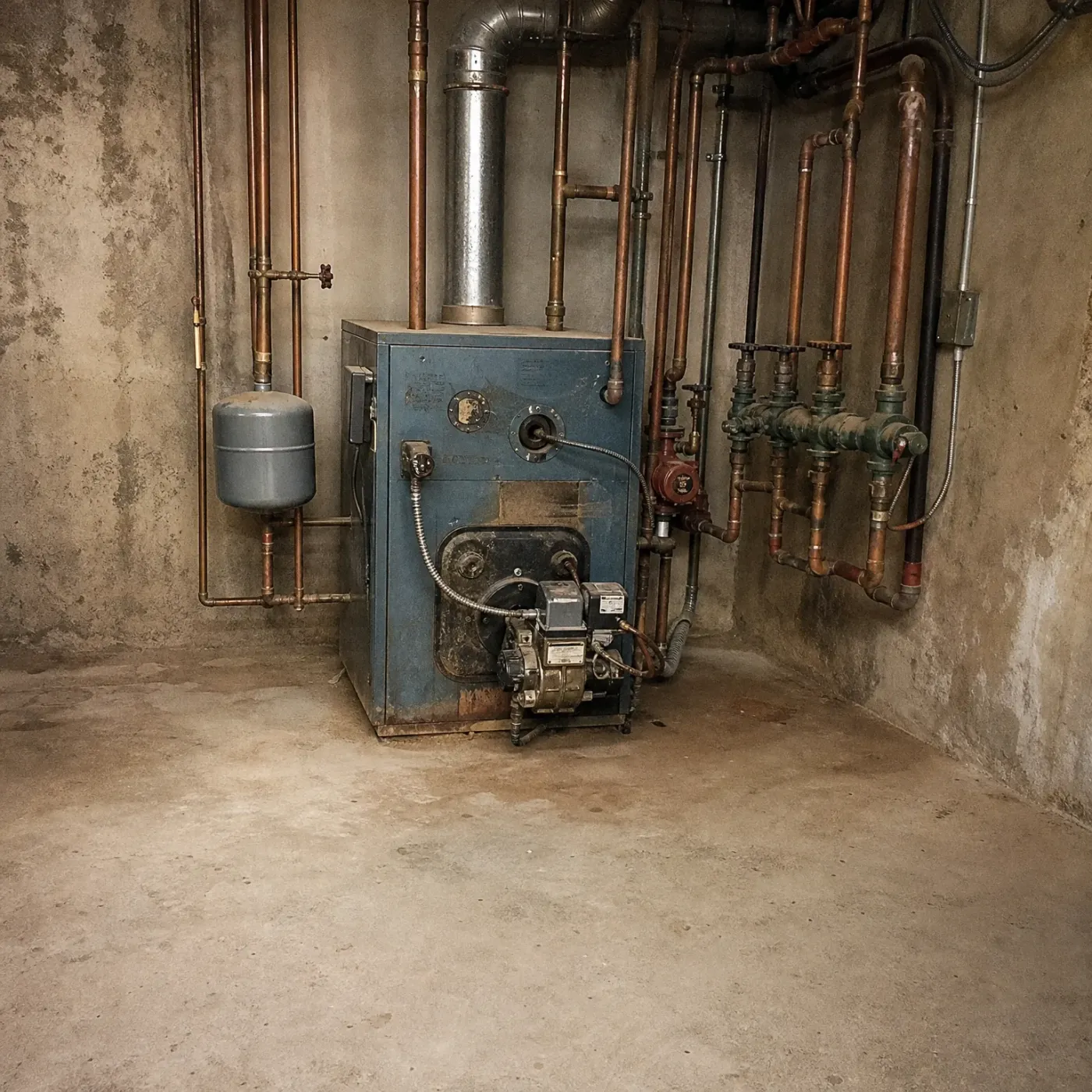
This one hasn't seen a contractor in years. The flue pipe has pitted, the control box wiring looks original to the unit, and nobody's checked the pad or the pipes for a slow leak. It may still fire fine tonight. That's not the same as knowing it'll make it through a Missouri winter.
A tune-up before winter goes past what you can see from the outside. A contractor opens the burner compartment and watches the flame itself. Yellow, or lifting off the burner, means it isn't burning clean. The combustion chamber gets checked for soot, since soot on the heat exchanger slows heat transfer and makes the burner run longer than it should to heat the same water. The igniter or pilot assembly gets tested under load rather than just looked at, because some fail only after they've been running a few minutes, not at startup. Flue piping gets checked at every joint for a solid connection, since a loose section lets combustion gases spill back into the room instead of venting outside. The low water cutoff gets drained down to confirm the boiler actually shuts off before it runs dry, not just assumed to work because the switch looks fine. The circulator pump gets checked for play in the bearings too. A worn pump will still run, but it won't push water through the loop as hard, and you'll feel that as cold spots once the cold really sets in.


A licensed local pro takes the request for your boiler tune-up.
Sending the form costs nothing.
Nobody notices a boiler until it stops working, and it tends to stop on the night you'd least want it to. Most of what goes wrong starts small. Sediment settles in the bottom of the tank and air gets trapped in the lines, and the pump has to push harder to move water through the system. You won't see that happening, but your gas bill will, all winter, every month the boiler runs. A pressure relief valve that's started to stick or corrode usually gives some warning before it fails outright, a little moisture at the base of the boiler, a damp spot on the floor nobody's explained yet. Left alone, that's the kind of thing that turns into a real leak once the system is working hard in January. The igniter and flame sensor wear down slowly too, and a part that's been struggling all year is the one that gives out the first time the temperature really drops. Even water pressure matters more than people think. A slow leak that drops pressure over weeks can trip the boiler's own safety switch, and the house goes cold until someone works out why. None of this is dramatic on its own. It's the kind of wear a contractor who works on boilers all season knows to look for, and catching it in the fall means replacing a part on your schedule instead of finding out about it on a night when the temperature's dropped and the house has gone cold.
Winter nights average 25°F across Missouri, according to NOAA climate data. That's cold enough that your boiler is running long stretches overnight to hold the house steady, not just cycling on for a few minutes here and there. The longer a run, the more it matters that the pump isn't straining and the pressure isn't creeping past where it should sit. A boiler that's gone into those nights without a fall check is the one more likely to trip out around 2 a.m., when the water in the lines has had all night to cool and the burner has to work hardest to catch back up.
NOAA nClimDiv 1991-2020 county normals weighted by homes
You keep hearing that a tune-up includes bleeding the lines, but nobody explains what that means in practice or why a contractor bothers with it. You want to know what's actually happening at each radiator or baseboard unit, and why it matters for how the system runs once the cold sets in.
Every radiator or baseboard loop has a bleed valve, usually a small square-head fitting near the top. The contractor turns it with a key or screwdriver until the hiss of escaping air turns into a thin stream of water, then closes it. Air collects at the high points of the system over a season of heating and cooling, and it stops hot water from filling the radiator all the way. That's why some rooms run warm and others stay cold even with the boiler working fine. Once the air is out, water fills the whole radiator and the heat spreads evenly across it. A contractor checks every zone this way, not just one, since air can sit in any loop depending on how the pipes run through your house.




At 25°F, your boiler isn't cycling, it's holding a steady burn for hours at a stretch. That's when a weak pump or an air pocket in the lines shows up, usually around two or three in the morning.
NOAA nClimDiv 1991-2020 county normals weighted by homes

You came here asking what a fall tune-up covers, and now you know. A contractor goes through the pressure relief valve, the expansion tank, the lines, the burner and the flame itself, and fixes what's off before the cold sets in and asks more of the system than it can give.
Every boiler is different, and so is every house it's heating. The contractor who comes out to look at yours works on this equipment all winter in Missouri and has seen what tends to go first in a system like yours. You'll hear from one contractor, not a handful calling at once, and whatever they find, you'll know where you stand before the next cold night rolls in.


A pro who works on boilers