



Profile view of a bearded man wearing a black baseball cap and a dark gray T-shirt against a plain light background.

What your boiler pressure should be in Missouri

Step 1 of 3: Equipment

Your boiler should read between 12 and 15 psi when the system is cold, and up to about 20 psi once it's running and the water has heated up. Most residential boilers are built to operate in that range, and the gauge on the front of the unit will usually have the normal zone marked in a different color so you can check it at a glance. If the needle sits below 12 psi, the system is low on water and the boiler may shut off or struggle to heat the house evenly. If it reads above 25 to 30 psi, the relief valve may open and leak water near the unit, which is its way of protecting the system from damage. Since gas heat runs most of the winter in Missouri, that pressure gets tested daily, and a boiler that's been drifting low or spiking high is worth having looked at before the cold settles in for good.

A gray-haired bearded man in a dark coat and scarf dusted with snow stands smiling in a dimly lit entryway with a white front door, a side table with a lit lamp, an oval mirror, and a patterned rug.
An older bearded man in a dark snow-dusted coat and gray scarf stands just inside a dimly lit home entry, with a framed picture, lit table lamp, and an adjoining room with a fireplace behind him, and snow visible through the open door.
A gray-haired, bearded man in a dark snow-dusted coat stands smiling in a dimly lit entry hall with a staircase, a lit table lamp, a framed picture, and a living room visible through a doorway.
An older man with gray hair and a beard, wearing a dark jacket dusted with snow, stands smiling in a dimly lit hallway with lamps and a living room visible behind him.
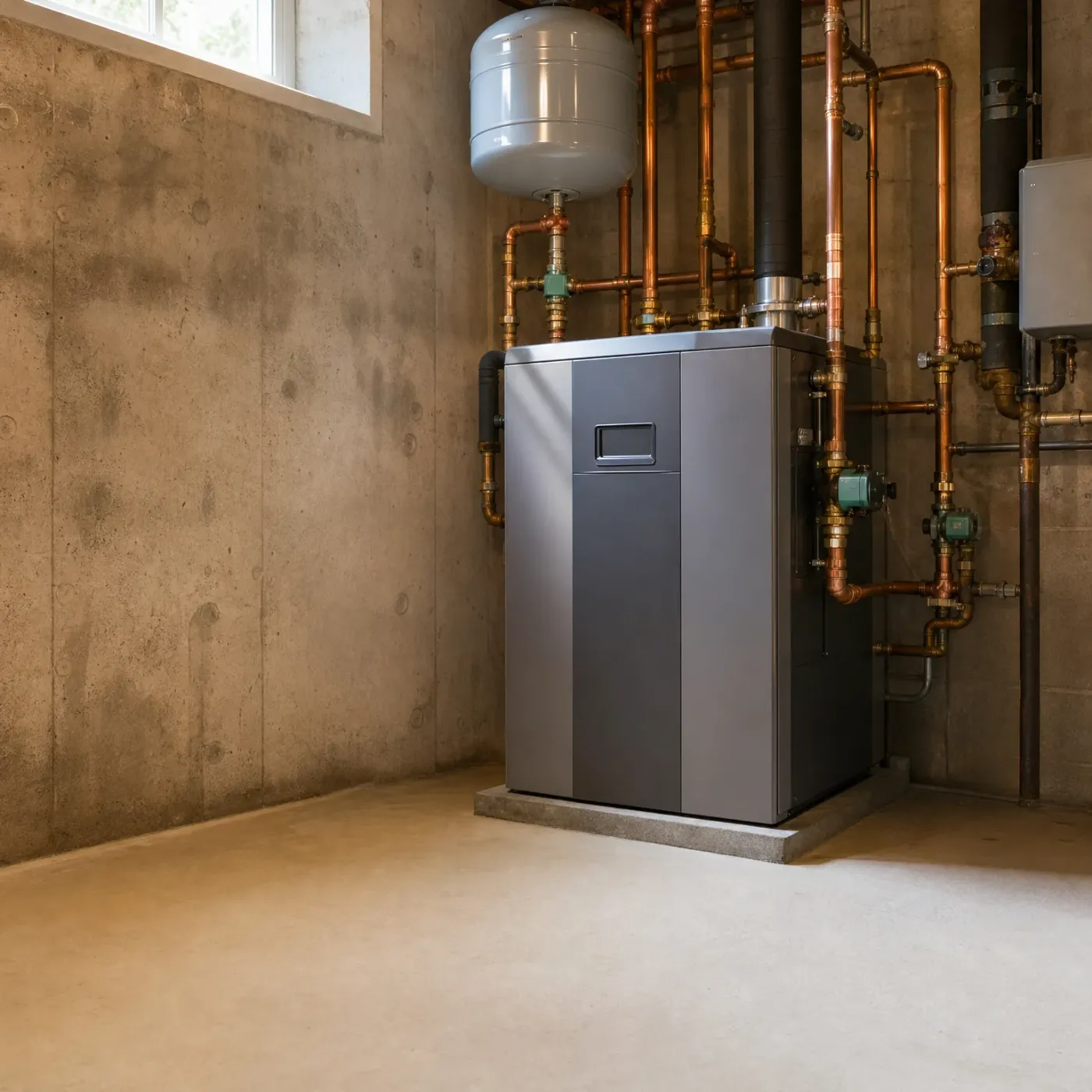
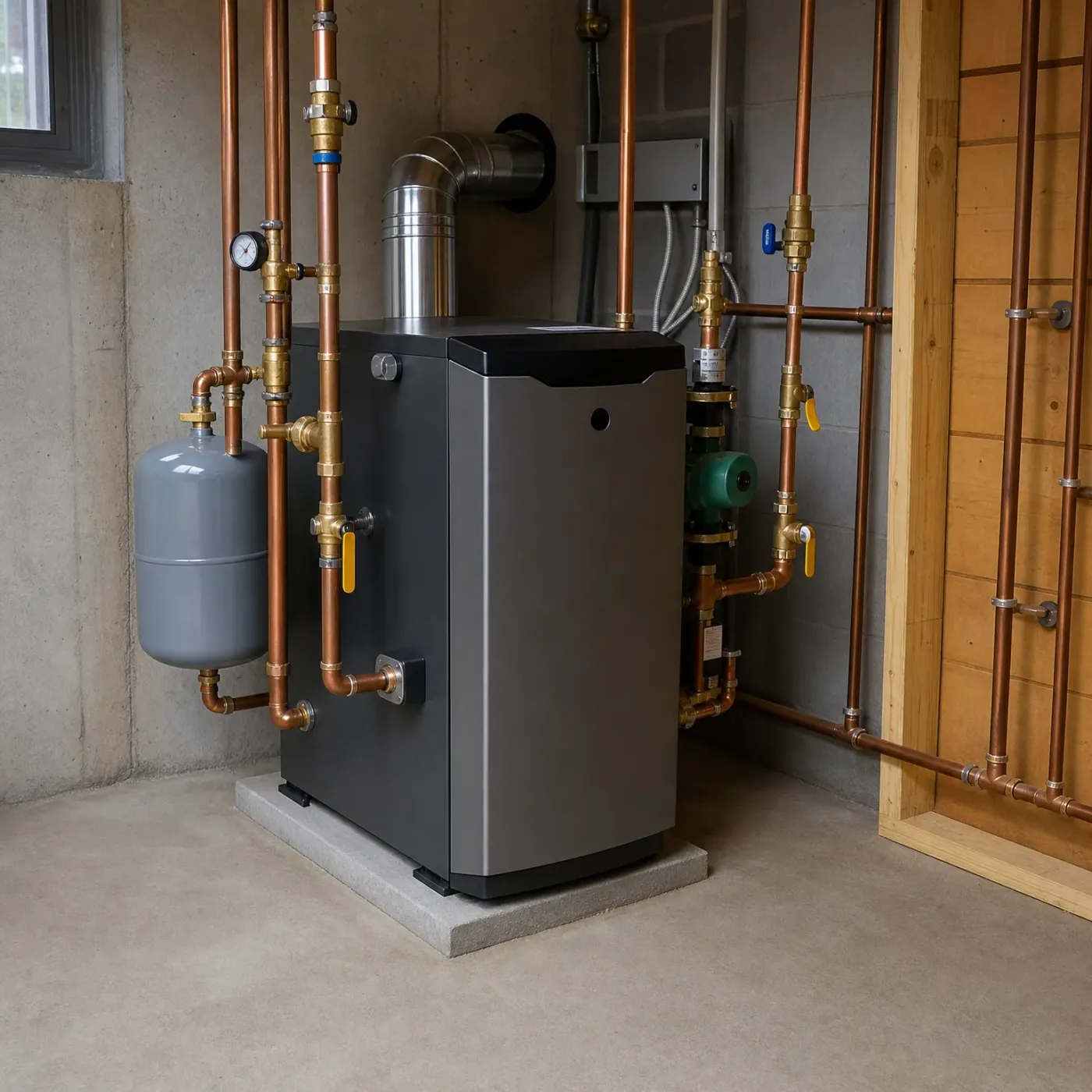
A dark gray floor-standing boiler on a concrete pad in a basement, surrounded by copper piping, brass valves, a gray expansion tank, a circulator pump, and a metal flue pipe against concrete block walls.

Pressure holding steady

A gauge sitting in the right range, quiet pipes, and a pump that runs without strain. This is what a boiler looks like when the pressure stays where it should, cold or running. Nothing to bleed, nothing to top off, no calls to make.
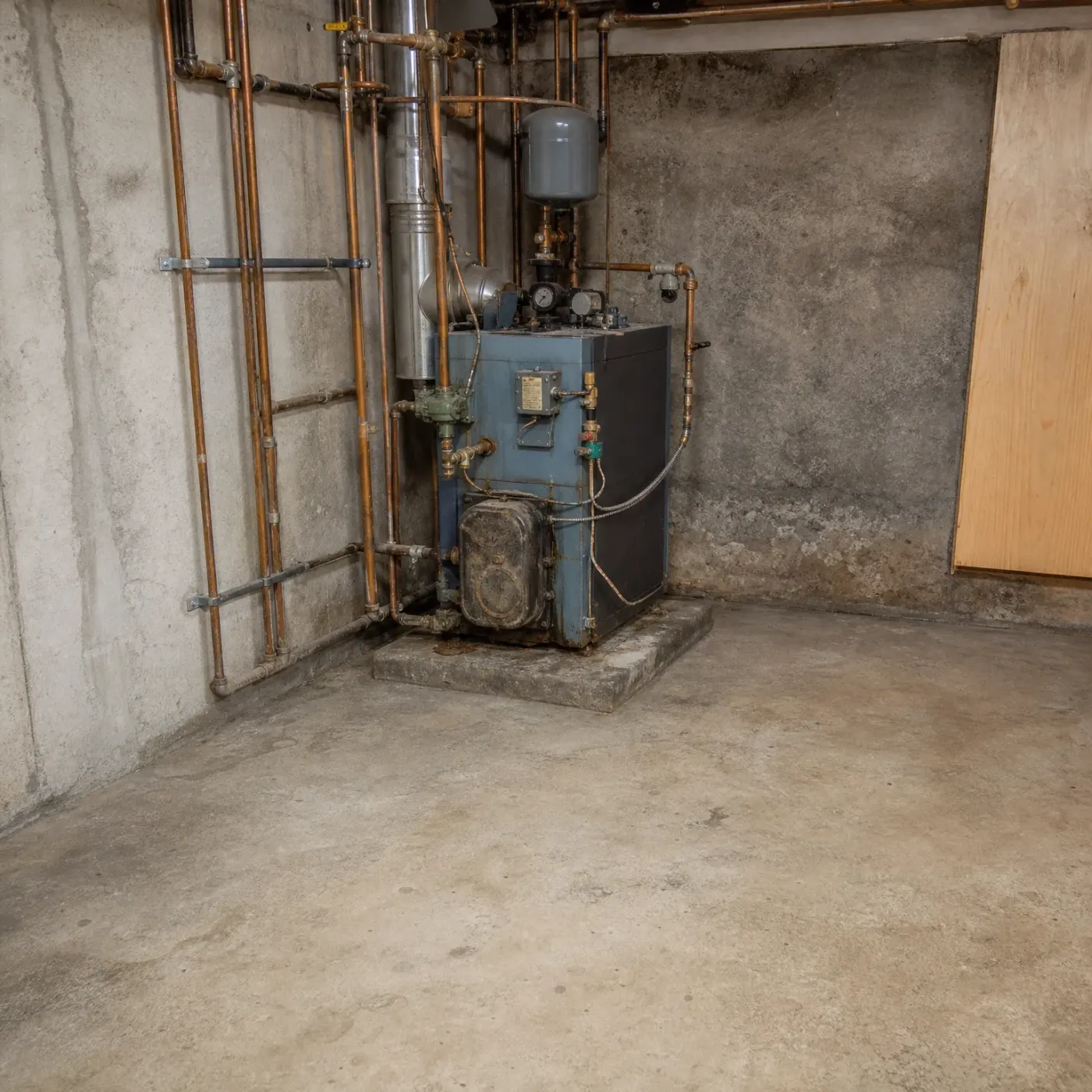

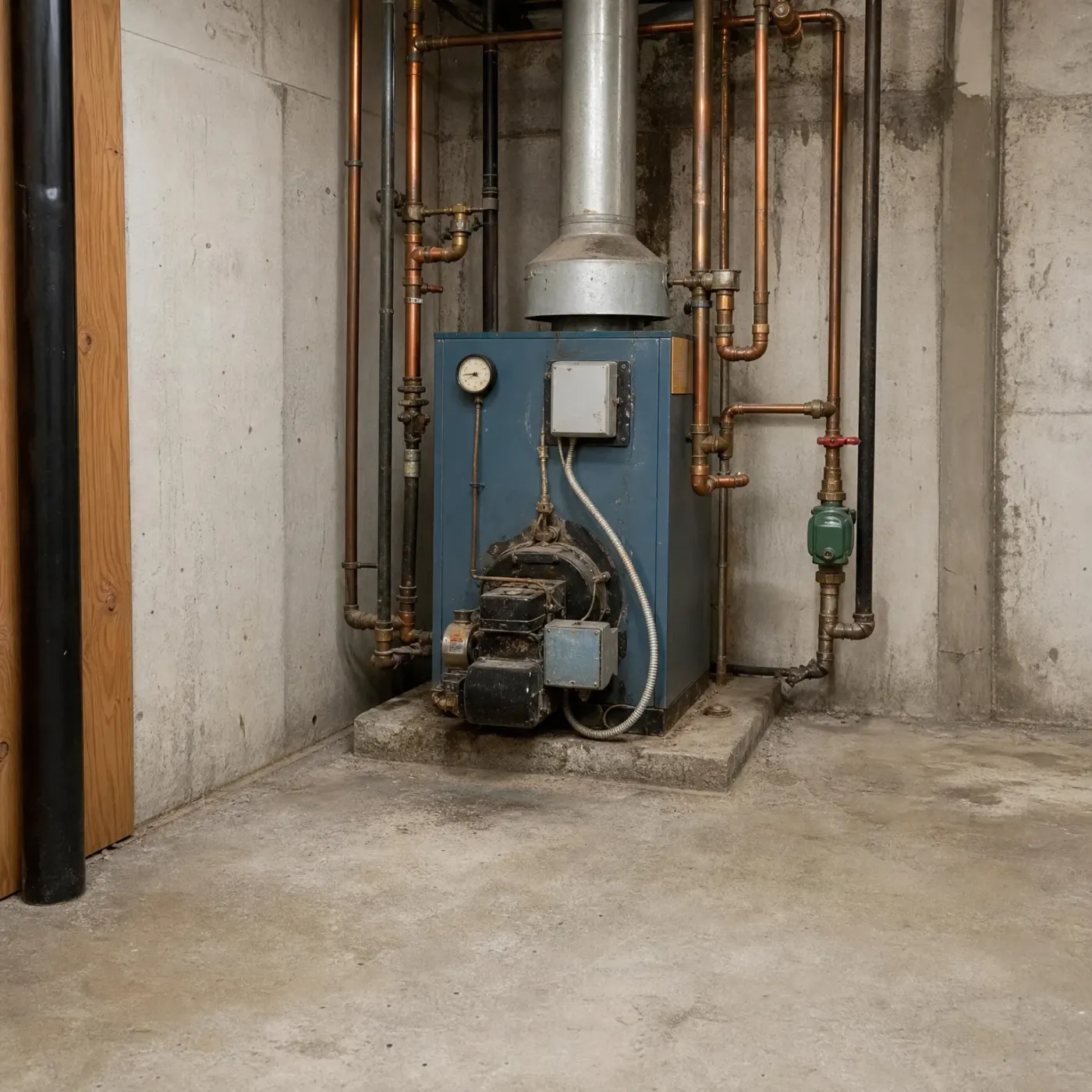
A blue boiler on a raised concrete pad in a basement corner, with copper and steel pipes, a gauge cluster, an expansion tank, and a metal flue running up the bare concrete walls.

Pressure drifting off

A needle that's crept below 12 psi or won't hold once the system heats up usually means a slow leak somewhere in the pipes or a fault at the expansion tank. Left alone, it's how a boiler ends up losing heat on a cold morning.

A man seen from behind raises his hand to wave at a woman standing in the open front doorway of a single-story house with gray shingle siding, white columns and a gabled porch entry.

What low pressure does to your heat

If your gauge sits below 12 psi, the boiler may shut itself off before it fires, or it'll run and push air through the radiators instead of hot water. You'll notice a cold spot at the top of a radiator that should be warm all the way across, or a room that just doesn't come up to temperature with the rest of the house. Missouri winters don't leave much room for a system that's only half heating.

Letting it ride low for a season instead of catching it isn't free either. A boiler working to push water through air pockets runs longer to do the same job, and on Missouri gas rates that shows up on the bill before it shows up as a breakdown. A licensed contractor who services boilers in your area regularly can tell you in one visit whether it's a simple refill or something feeding on a slow leak, and reach out to get it sorted before the cold snap finds the weak spot for you.

A gray upholstered sofa with a textured cushion sits beside a dark round side table holding a vase of green foliage, with a table lamp and sheer-curtained window behind.
  1. Water in the system cools and loses volume overnight.

  2. The gauge drops below 12 psi as pressure falls.

  3. You open the filling loop to add water back in.

  4. Pressure climbs past 15 psi, so you shut the loop.

Topping Off vs Calling for a Leak

You top it off yourself

  • You already know where the filling loop is and you're comfortable opening and closing both valves in the right order.
  • A drop below 12 psi a few times a season is normal, and adding water back in takes a few minutes.
  • You check the gauge every so often, so you catch a slow drop before the boiler locks out.
  • You're not dealing with a leak, just the normal loss of a little water over weeks of running.
  • If the pressure climbs back to the same spot every time within a day or two, nothing else needs attention.

You get someone to look at it

  • You're topping off the loop every week or more, which means water is leaving the system somewhere it shouldn't.
  • The gauge won't hold even after you've added water and bled the radiators, which points to a fault past what topping off fixes.
  • You can't find the filling loop, or you're not sure which valve closes first and don't want to guess on a sealed system.
  • A contractor who works on boilers all winter can trace a slow leak or a failing valve faster than you'll find it on your own.
  • One local contractor takes the call instead of several companies competing for it, so you're not fielding multiple quotes for the same job.
A gray boiler unit on a concrete pad in a basement corner, connected to copper piping, circulator pumps, and a ceiling-mounted expansion tank against bare concrete walls.
The pump runs quiet behind a gauge that's holding steady, with no sign of rust or a leak anywhere on the fittings.
A blue oil-fired boiler with a pressure gauge, burner unit and metal flue sits on a concrete pad in a basement corner, surrounded by copper and black pipes against bare concrete walls.
A pressure gauge reading low or bouncing around, next to a burner and flue that have been working harder than they should.
A woman wrapped in a thick beige fleece blanket sits on a sofa with an open book on her lap, beside a lit table lamp, with a frost-covered window behind her.
A gray-haired woman in a cream knit sweater stands in a dimly lit kitchen at night, looking to her right, with a round loaf of bread in the foreground and a dark window and potted plant behind her.

A local pro for your boiler maintenance

A licensed local pro takes the request for your boiler tune-up.

It costs nothing to send, and you don't have to hire anyone.

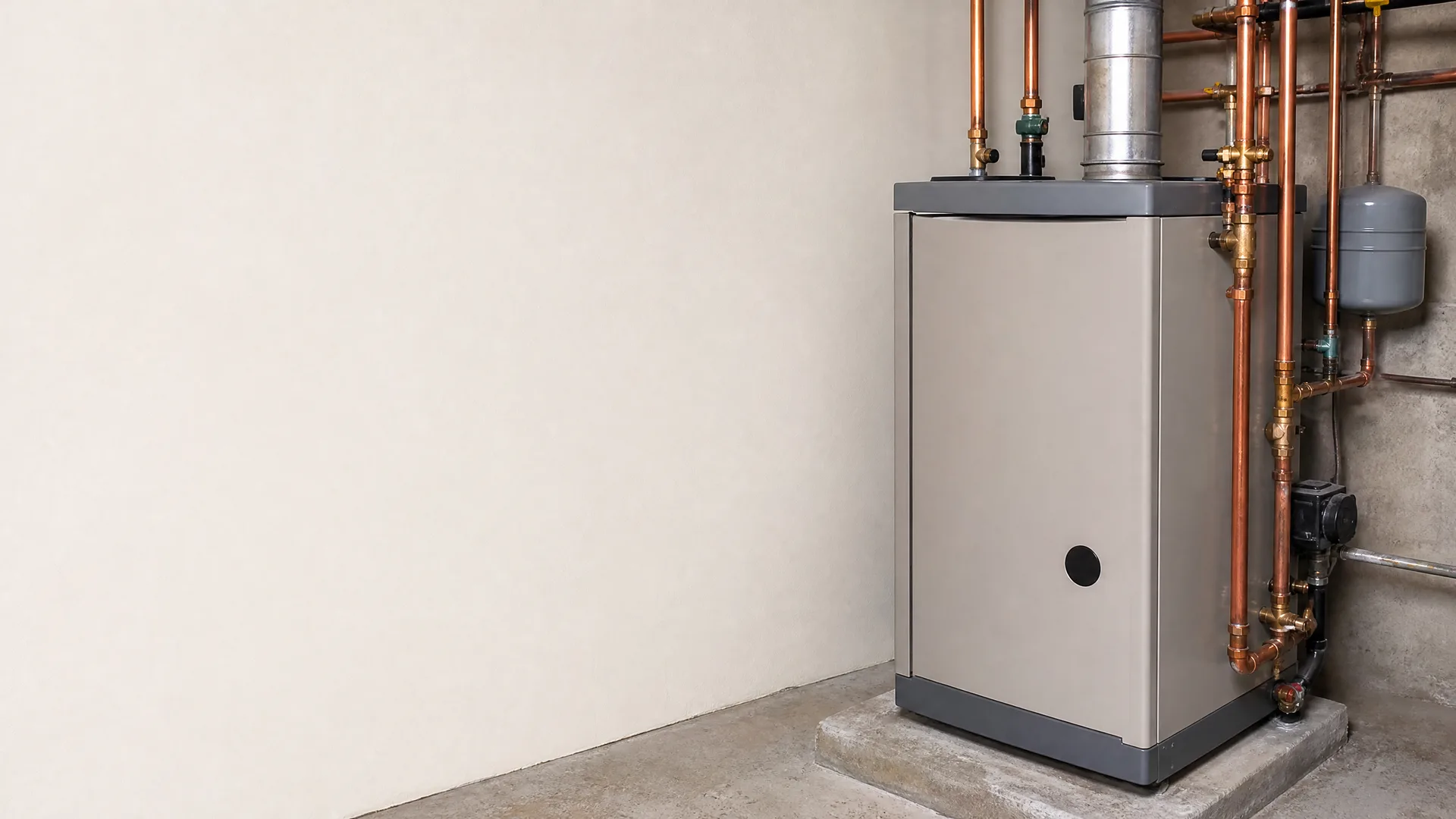
A gray floor-standing boiler with a metal flue pipe, copper piping, a circulator pump and a gray expansion tank, installed against a concrete wall.

What the relief valve does

Every boiler has a pressure relief valve set to open around 30 psi, well above the normal running range. It's there for the rare case where pressure climbs past what the system should hold, venting water out through a small pipe before anything is stressed further. A valve that's opened on its own and left a trace of water underneath it is telling you the system ran higher than it should have at some point.

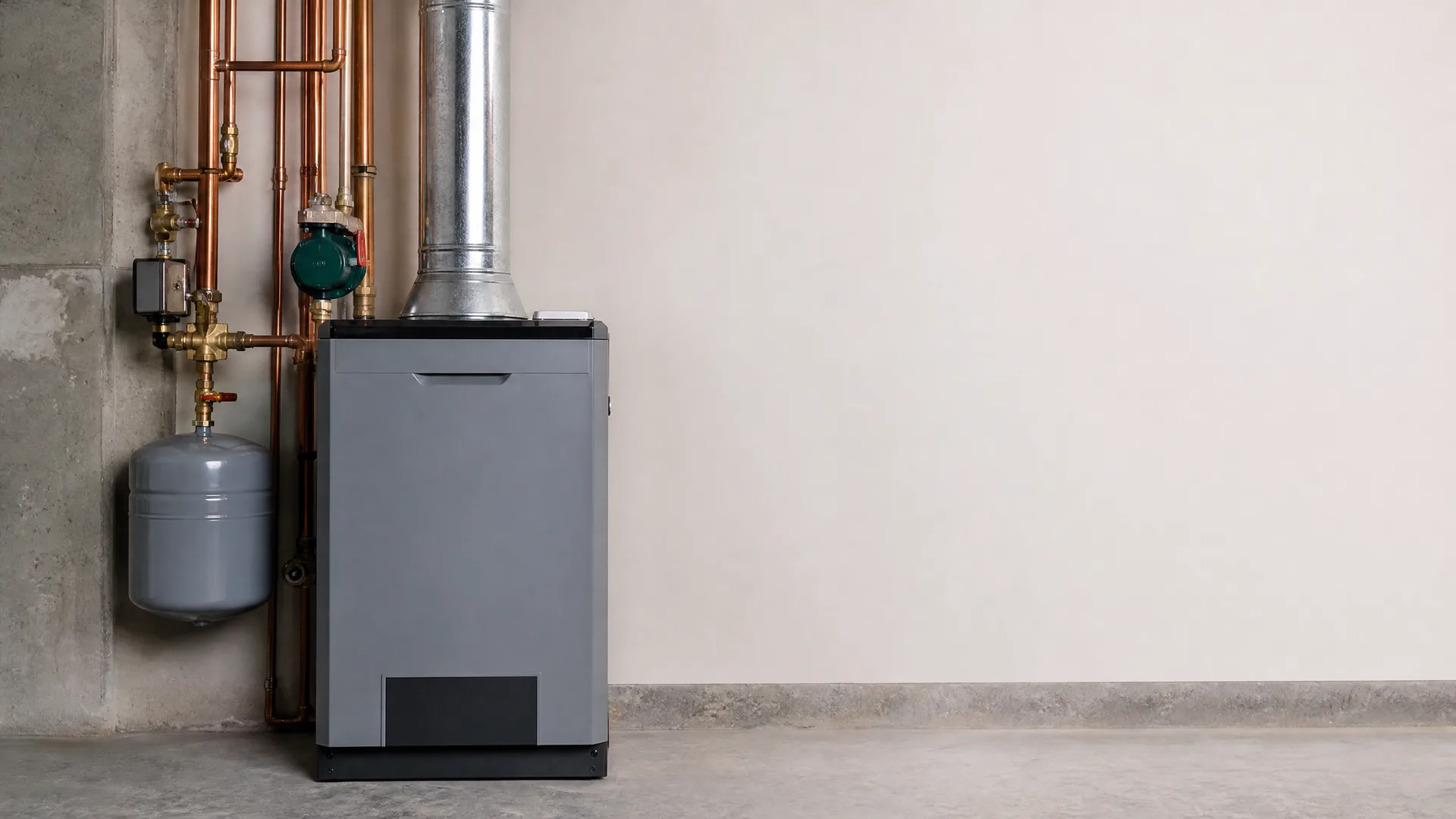
A tall grey floor-standing boiler on a concrete plinth in a corner of a room, with copper pipework, a flue, a circulator pump and an expansion vessel to its right, beside a plain cream wall.

Why the gauge has two numbers

The gauge face usually shows a cold range and a hot range because water expands as it heats. A system filled to 12 psi cold will climb on its own once the burner's been running, and that rise is normal, not a sign of a leak. An expansion tank absorbs most of that movement. If the tank's bladder has failed, the same system will climb higher and faster than it used to, even with nothing else changed.

Winter nights average 25°F statewide

Nights here average 25°F in December, January and February, so your boiler is working through most of the night, not just kicking on now and then. That makes the cold reading on your gauge the one worth trusting. Check it before the system fires in the morning, when the water's had all night to cool.

NOAA nClimDiv 1991-2020 county normals weighted by homes

Where your gauge should sit

  • A cold reading between 12 and 15 psi and a running reading near 20 psi means your boiler is set up right.
  • Pressure that drops below 12 psi a few times a season is normal and just needs water added back through the filling loop.
  • Pressure that won't hold, or keeps climbing past where it should, points to a problem worth having looked at rather than topped off again.
  • A gauge that's hard to read or a filling loop you're not sure how to work is reason enough to have someone else check it.
  • A local contractor who services boilers all winter knows which models in Missouri homes tend to lose pressure and why.
  • You'd be matched with one contractor for your boiler, not a handful of companies competing for the job.

Cold, your boiler should read 12 to 15 psi. Once it's running and the water's heated up, somewhere near 20 psi is normal. That's the range this whole page has been pointing to, and if your gauge sits there, there's nothing to do but check it again next cold morning.

A drop below 12 psi now and then isn't a problem, it's just water loss, and the filling loop fixes it in a few minutes. What's worth paying attention to is pressure that won't hold after you've topped it off, or keeps pushing past 20 and staying there. That's not a top-off problem. That's a sign something in the system, a valve, a leak at a fitting, the expansion tank, isn't doing its job.

If you're staring at the gauge and not sure what you're looking at, or you don't know which valve is the filling loop, that's reason enough to have someone come look rather than guess. A boiler tech who works on these systems all winter in Missouri has seen which models hold pressure fine and which ones give homeowners trouble year after year, and they'll know within a few minutes which one yours is. When you put in a request here, it goes to one contractor, licensed and local to you, not a handful of companies calling at once.

A wooden front door with six small glass panes and a narrow sidelight, set in a shingled house entry with white trim, reached by stone steps flanked by a planted urn with purple flowers and leafy branches in the foreground.
Exterior corner of a house with beige horizontal lap siding and a black-framed window, with white hydrangeas, ornamental grasses and low plantings along a flagstone patio.
Corner of a house with tan lap siding and a window, a brick step edge, flowering white hydrangeas and green shrubs beside a flagstone walkway leading to a white picket fence and a tree in backlit sunlight.
House exterior with cream horizontal lap siding, a dark-framed window, a black wall lantern beside a wood door, potted shrubs on stone steps, and white and pink hydrangeas in the foreground garden.
Corner of a cream lap-sided house with a white-framed window and dark shingled roof, beside a white-flowering hydrangea shrub, a clipped hedge, mulched bed and lawn.

Get the right pro for your boiler

Your request goes to one pro, not a list of companies.

Get a local pro

No charge to send it. You decide if you hire them.