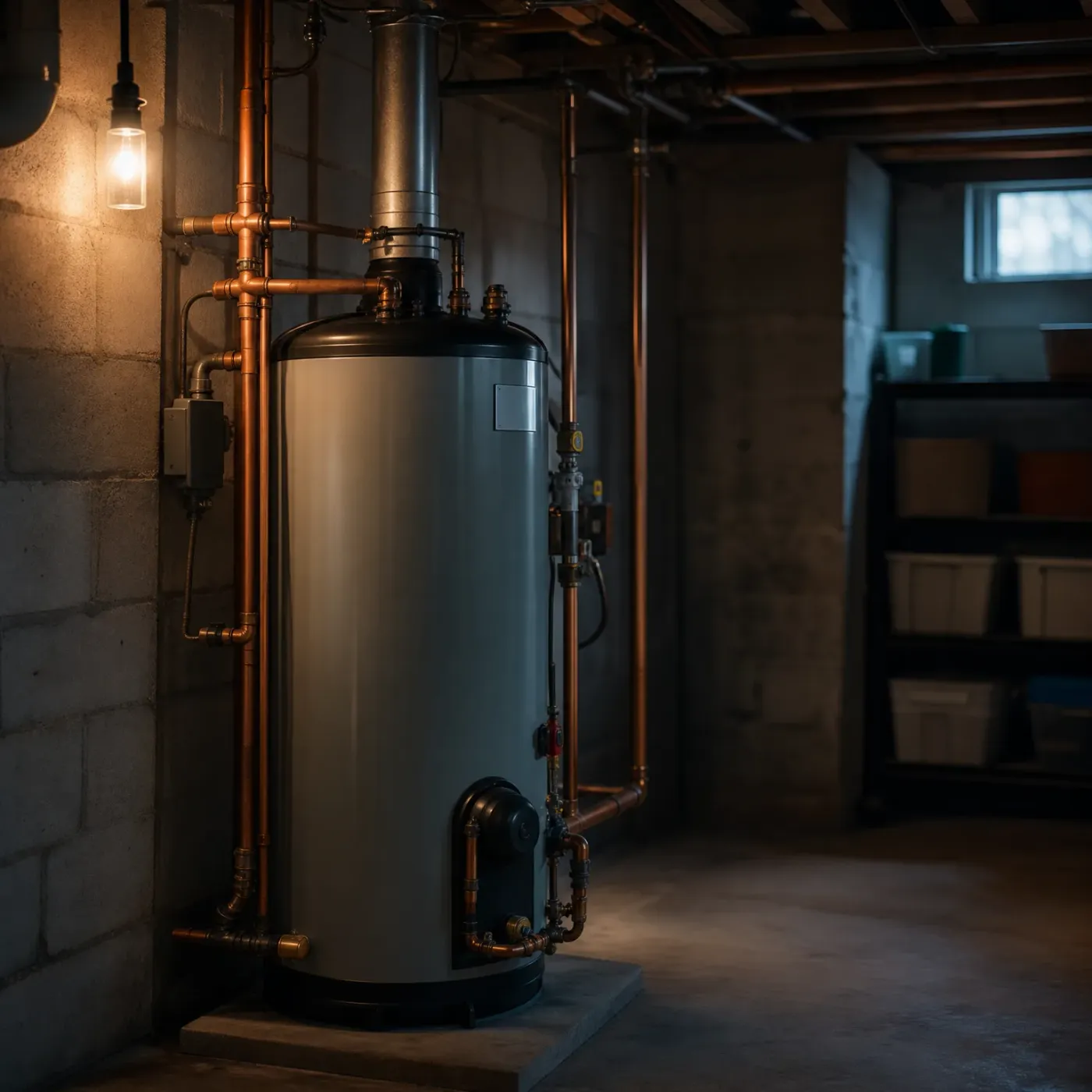
A cylindrical water heater or boiler with a flue pipe and copper piping stands on a concrete pad in a dim basement with concrete block walls, a hanging bulb at left and a shelving unit with bins at right.

Explain it one time

Why one radiator stays cold in a Missouri winter

One cold radiator while the rest of the house heats fine usually means trapped air, a stuck valve, or a circulator that isn't pushing hot water where it needs to go. This page gets into what causes it and what a boiler tech checks first. Skip the search for who in Missouri even works on boilers, the calls to different shops, and explaining the same cold radiator story twice. One licensed local contractor who deals with this gear every winter takes it from here.

Start one form

A cold radiator with hot ones nearby usually means water isn't reaching it. One common cause is trapped air stuck in that radiator, keeping hot water from filling it, which is why bleeding it fixes a lot of these cases in older boiler systems. Another is the inlet valve, closed partway or stuck from sitting still over the summer. If the radiator is far from the boiler or on an upper floor, a circulator pump too weak to push water that far can leave it cold while rooms closer to the boiler stay warm. Sediment built up inside the radiator over years can block flow the same way. None of this means the boiler itself is failing. It means something between the boiler and that one radiator is stopping the water, and which one it is changes whether the fix is a few minutes with a bleed key or something inside the system a boiler tech needs to open up and look at.

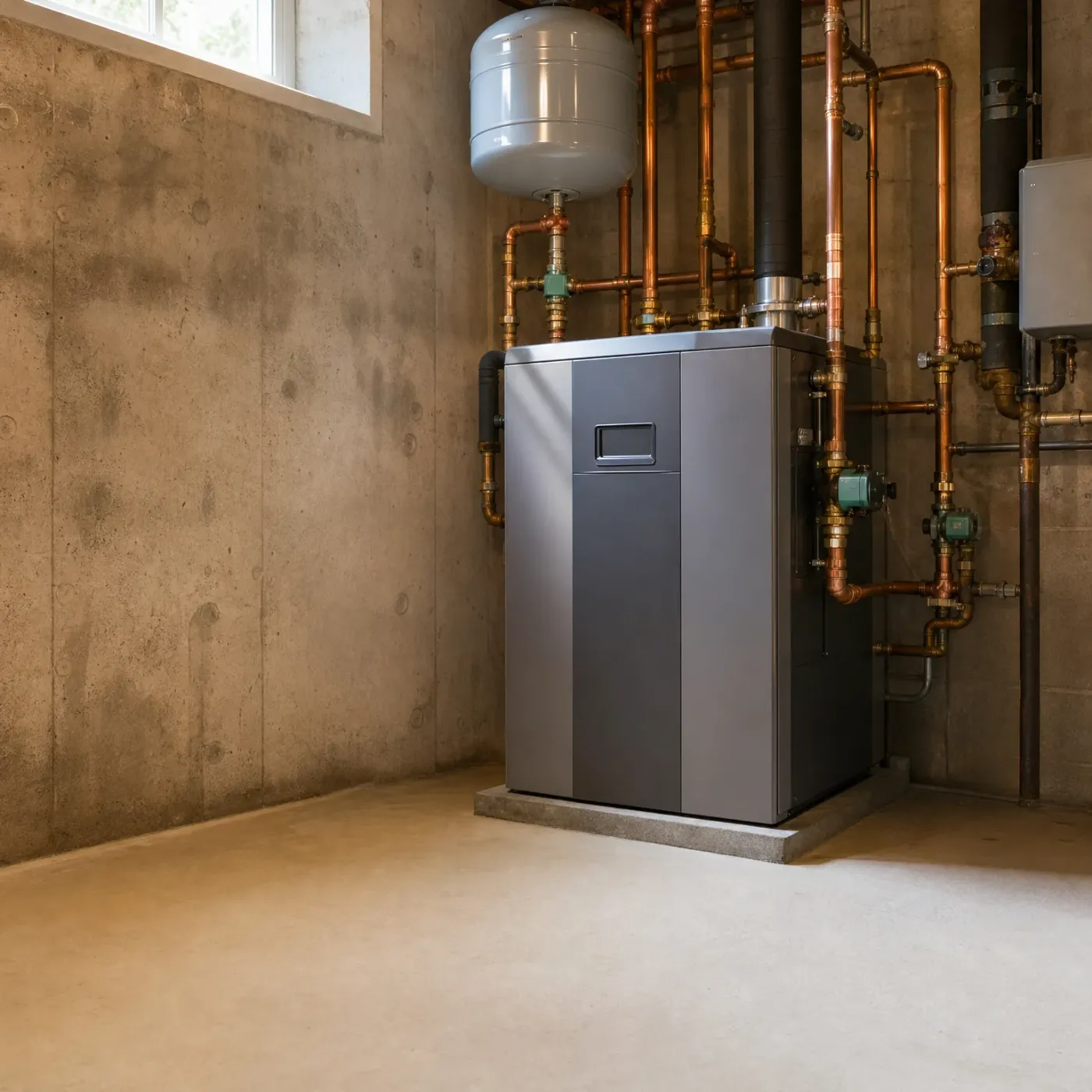
A gray boiler unit on a concrete pad in a basement corner, connected to copper piping, circulator pumps, and a ceiling-mounted expansion tank against bare concrete walls.

Every radiator getting its share

Water moves through the loop and reaches every radiator in the house, upstairs and down. The pump is doing its job, the valves are open, and the system holds pressure the way it should. No corner of the house gets left out in the cold.

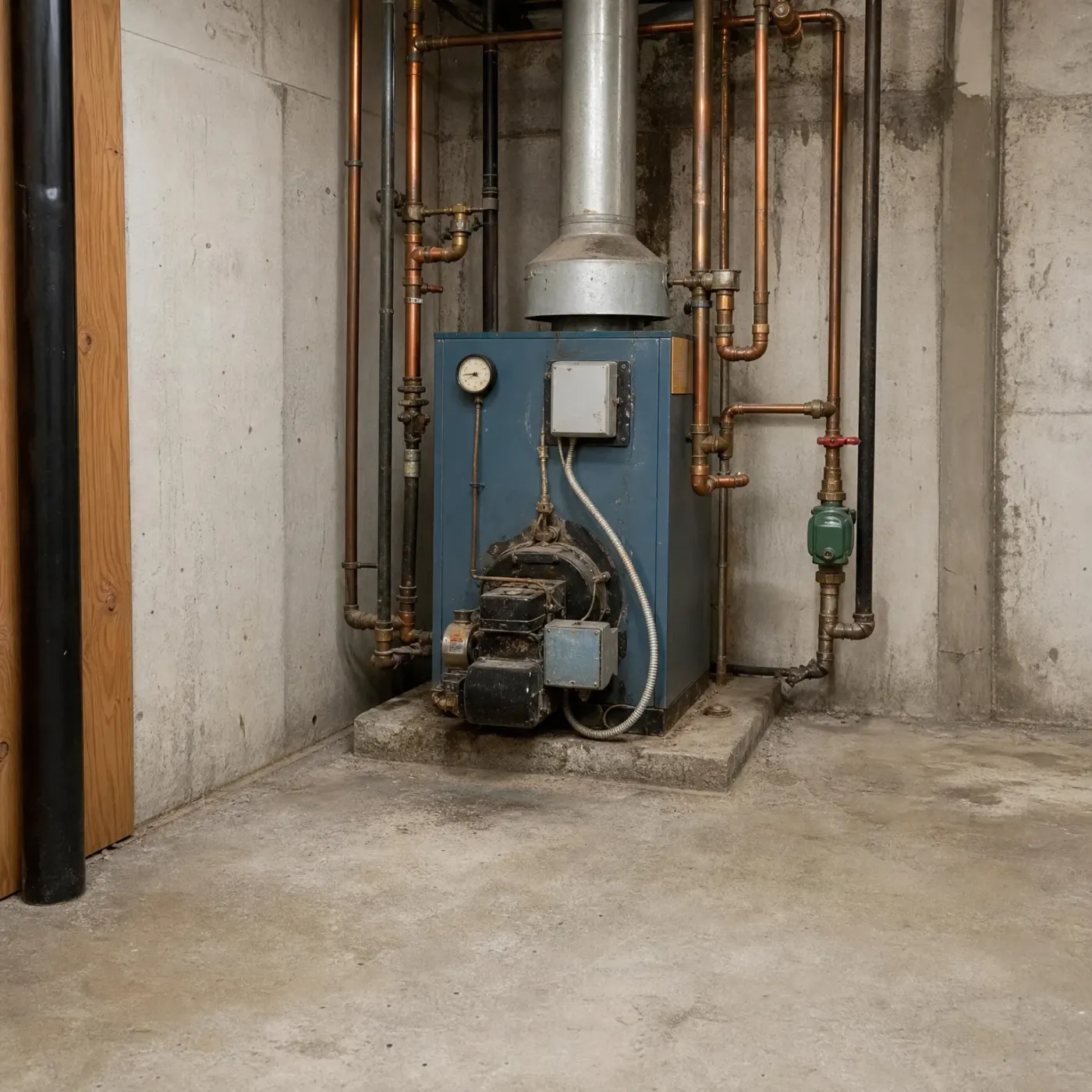
A blue oil-fired boiler with a pressure gauge, burner unit and metal flue sits on a concrete pad in a basement corner, surrounded by copper and black pipes against bare concrete walls.

One radiator not getting its share

The gauge may still read normal and the burner may still fire on schedule, but somewhere past this point the water isn't making it to one radiator. A boiler tech can trace it to a stuck valve, a jammed vent, or a pump that's lost strength.

A closed dark laptop and a ceramic mug of coffee on a wooden dining table, with wooden chairs, a dark kitchen cabinet with cutting boards and a potted plant, and a leafy plant by a window in the background.

One cold room you keep working around

You know which room it is. You've probably started closing the door to keep the cold in there from spreading, or you run a space heater on the coldest nights and tell yourself it's fine. It isn't costing you much in gas, since that radiator barely takes any hot water to begin with. What it costs you is the room. A bedroom you keep shutting off, a den nobody sits in past six in the evening.

If you've already bled the radiator and it's still cold at the bottom or cold all over, the fix is past what a homeowner can do with a radiator key. That's a boiler tech's job, someone who can tell a stuck valve from a circulator problem by feel and by watching the system run, not by guessing. Instead of calling around Missouri to find someone who still works on boilers, explaining the cold radiator over and over to whoever picks up, you get matched with one licensed local contractor who already knows what to check first.

Interior corner of a living room with a beige upholstered sofa and dark cushion in the foreground, a ceramic vase of leafy branches on a dark side table by a curtained window, a framed picture on the wall, and a wood-surround fireplace at right.
A smiling woman with dark shoulder-length hair in a cream V-neck sweater sits at a marble counter with a glass of red wine, with a kitchen and softly lit living room behind her.
A woman in a dark green sweater laughs while seated at a marble kitchen island with a glass of red wine, with open shelving, cabinets and a living room visible behind her.
A woman with long dark hair in a cream knit sweater laughs while looking off to the side, seated at a counter with a glass of red wine, in a dimly lit living room with a sofa, lamp, framed pictures and houseplant behind her.
A smiling woman with long dark hair in a beige sweater sits at a marble kitchen counter with a glass of red wine, with a dimly lit living room behind her.

Bleed It or Call a Tech

Bleed it yourself

  • A radiator key on the bleed valve lets trapped air hiss out until water comes through steady, and that alone fixes a lot of cold radiators.
  • If the radiator warms up within a few minutes of bleeding and stays warm, air was the whole problem and nothing else needs attention.
  • This only works if water can reach the radiator in the first place, so a stuck valve or a circulator problem won't respond to bleeding.
  • You need to catch the water in a small container and know when to close the valve, but there's no risk of damage if you take your time.
  • If the same radiator keeps needing air bled out every few weeks, something upstream is letting air back into the system.

Call a boiler tech

  • A stuck valve, a failing circulator, or buildup inside old piping won't clear with a bleed key, and only a tech can tell which one it is.
  • Someone who works on boilers all winter in Missouri has usually seen this exact cold-radiator problem on systems your age before.
  • A local contractor can look at your specific setup instead of guessing from a description over the phone.
  • Going with one contractor means one visit and one diagnosis, not several companies calling back with different guesses.
  • If the radiator valve itself has failed closed or the circulator isn't moving water, those are repairs a homeowner can't do with a wrench and a bucket.
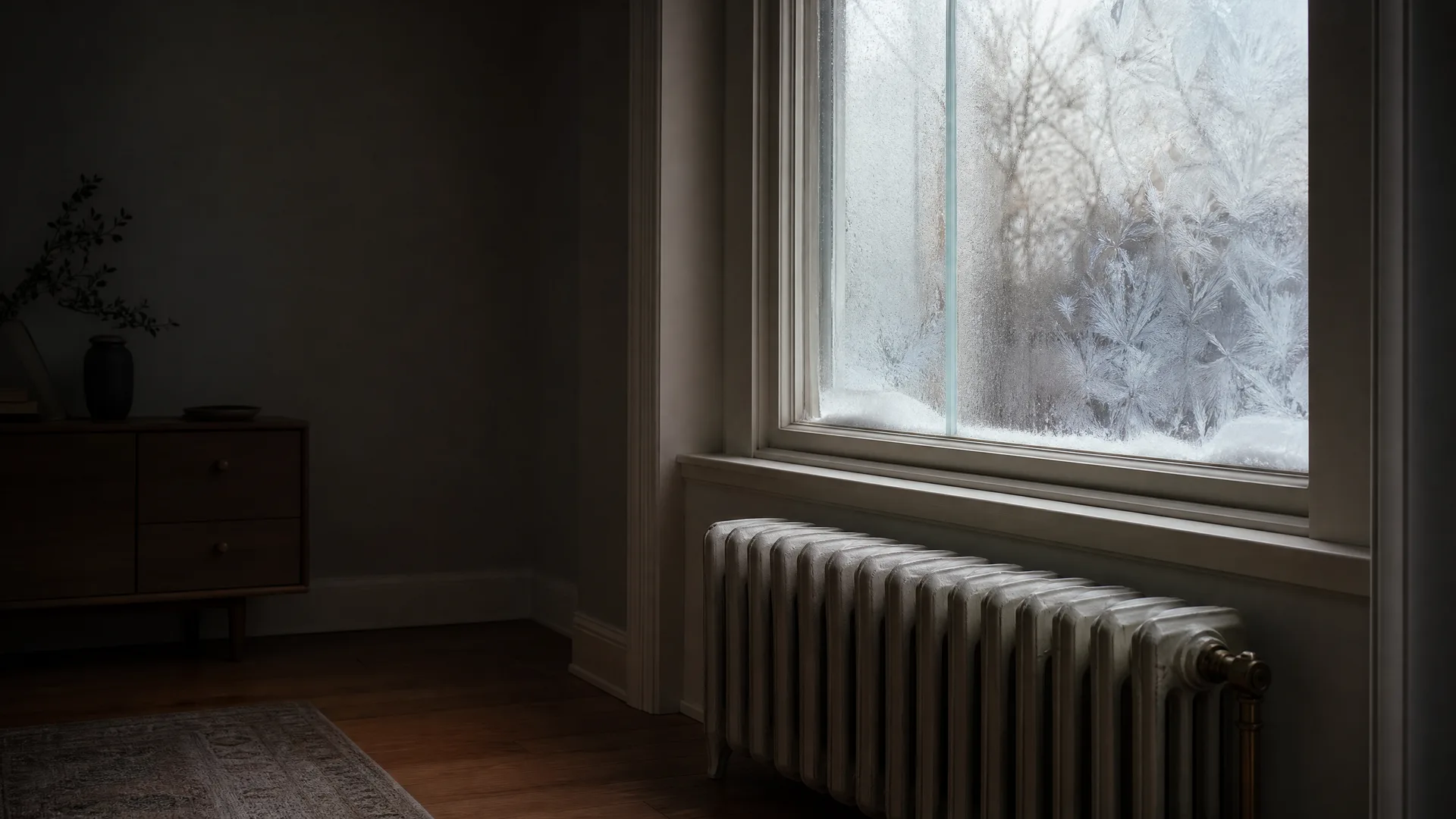
A cast-iron column radiator beneath a frost-covered window in a dim room, with a wooden sideboard, vase of dried branches, wood floor and rug on the left.

Seven in the morning, still dark outside, and you're the first one up. The living room is cold enough that you can see your breath near the window. Frost has crept across the inside of the glass overnight, and under it the radiator sits dead, not even warm to the touch, while you can hear the pipes ticking in the next room where the heat's working fine. You put your hand flat on the top of it anyway, out of habit, hoping it changed overnight. It didn't. Outside, the Missouri cold that's been settled in since December isn't letting up, and this is the room everyone avoids now, the one where you keep the door shut to hold the heat in the hallway.
Skip the calls to every shop

Your request goes to one pro, not a list of companies.

You're not committing to anything by asking.

Why bleeding doesn't always work

Trapped air sits near the top of a radiator, so opening the bleed valve lets it out and water takes its place. That works when air is the only problem. It doesn't work when the radiator has a stuck valve, because no amount of bleeding opens a valve that's seized shut. It doesn't work when a circulator is weak, because the water reaching that radiator was never enough to begin with, air or no air. A radiator that stays cold after a proper bleed, with water running steady out the valve, is telling you the problem is somewhere else in the loop.

What a stuck valve looks like

Every radiator has a valve at one end controlling how much hot water gets in. In an older boiler system, these valves can seize from mineral buildup or just years of sitting in one position, usually open or shut partway. A valve stuck shut starves the radiator no matter how well the rest of the loop is running. You can sometimes feel it: the valve won't turn, or turns with no effect on how warm the radiator gets. A boiler tech checks this before anything else, because it's a common cause and quick to rule out.

A smiling bearded man in a navy crewneck sweater sits at a dinner table with a glass of red wine, plates and glasses in the foreground, in a dimly lit room with a lamp and framed picture behind him.
A woman in a dark gray sweater reclines on a light sofa with eyes closed and a slight smile, under a textured gray blanket with an open book resting on her lap, with a lit table lamp and plant in the background.

A boiler doesn't send separate supply to each room. It pushes water around one loop, and every radiator taps into that same loop through two valves, an inlet valve and a lockshield valve that sets how much water that radiator gets compared to the others. Close or bump either one, even partway, and that radiator can go stone cold while the rest of the house heats on schedule, because the loop doesn't care that one branch is shut off. That's different from a circulator problem. A pump that's lost strength shows up as several rooms running warm but not hot, since it's weakening flow everywhere at once, not cutting it off at one spot. Sediment tells its own story too. Years of rust and scale settle at the bottom of a radiator and can block it even with both valves open all the way. That's why a tech starts at the valves by hand before touching anything else. A valve that's stuck or barely cracked open explains a single cold radiator faster than a pump issue or anything upstream in the loop ever would.

How one valve stops one radiator

  • A boiler system moves water in one loop, so a closed valve at one radiator doesn't stop flow anywhere else in the house.
  • Two valves control each radiator, one that lets water in and a lockshield valve that balances how much flow it gets compared to the rest.
  • If someone bumped or closed that inlet valve, the radiator can go completely cold while every other one in the loop heats normally.
  • A circulator pump pushes water through the whole system at once, so a weak pump usually shows up as several rooms running lukewarm, not one room stone cold.
  • Sediment and rust build up inside a radiator over years and settle at the bottom, blocking water from filling it even with both valves wide open.
  • A tech checks both valves by hand first, since a stuck or barely-open valve explains a single cold radiator faster than anything else on the loop.
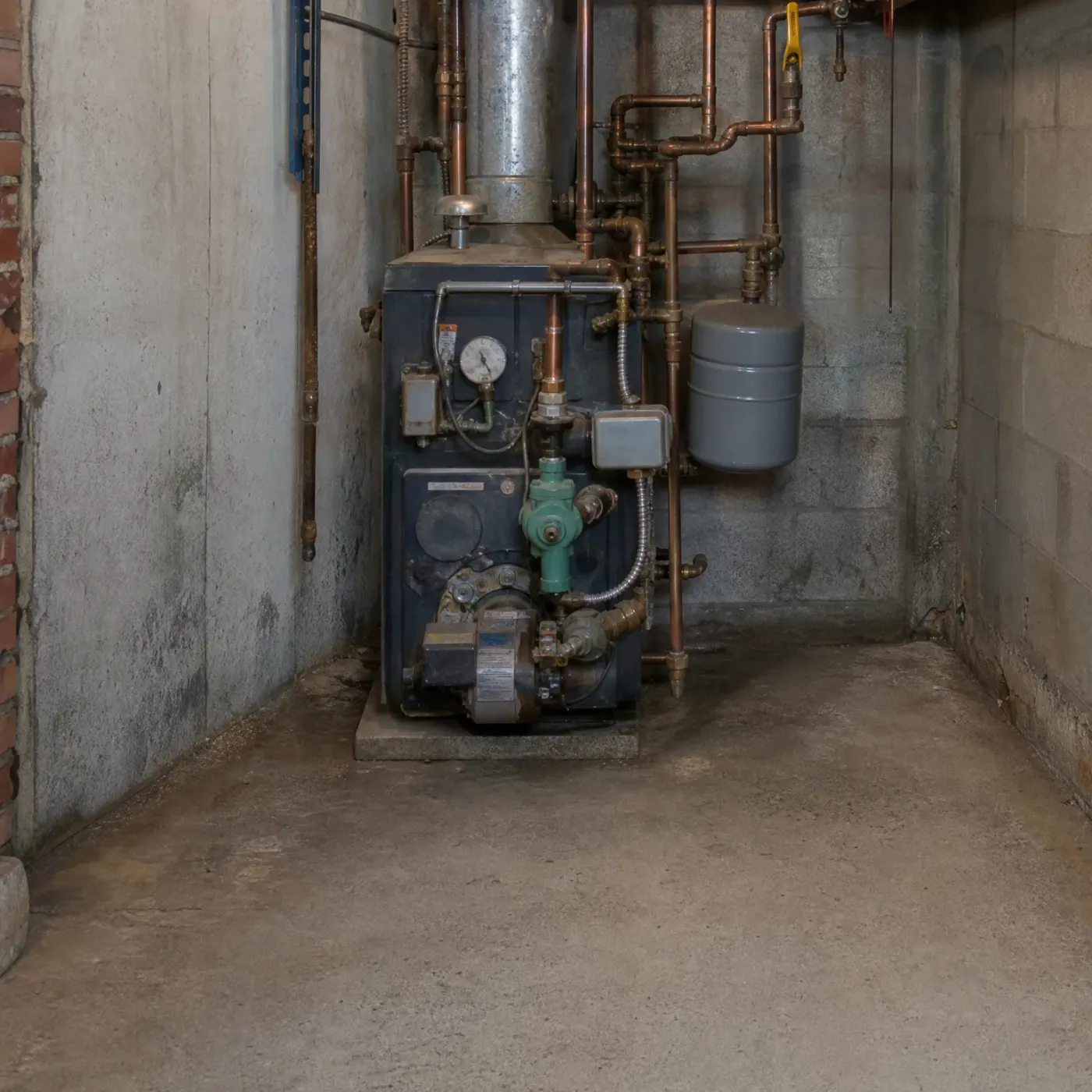
A dark cast-iron boiler with copper piping, pressure gauge, and a gray expansion tank sits on a concrete pad in a basement corner with concrete block and brick walls.
Before you get your boiler repair
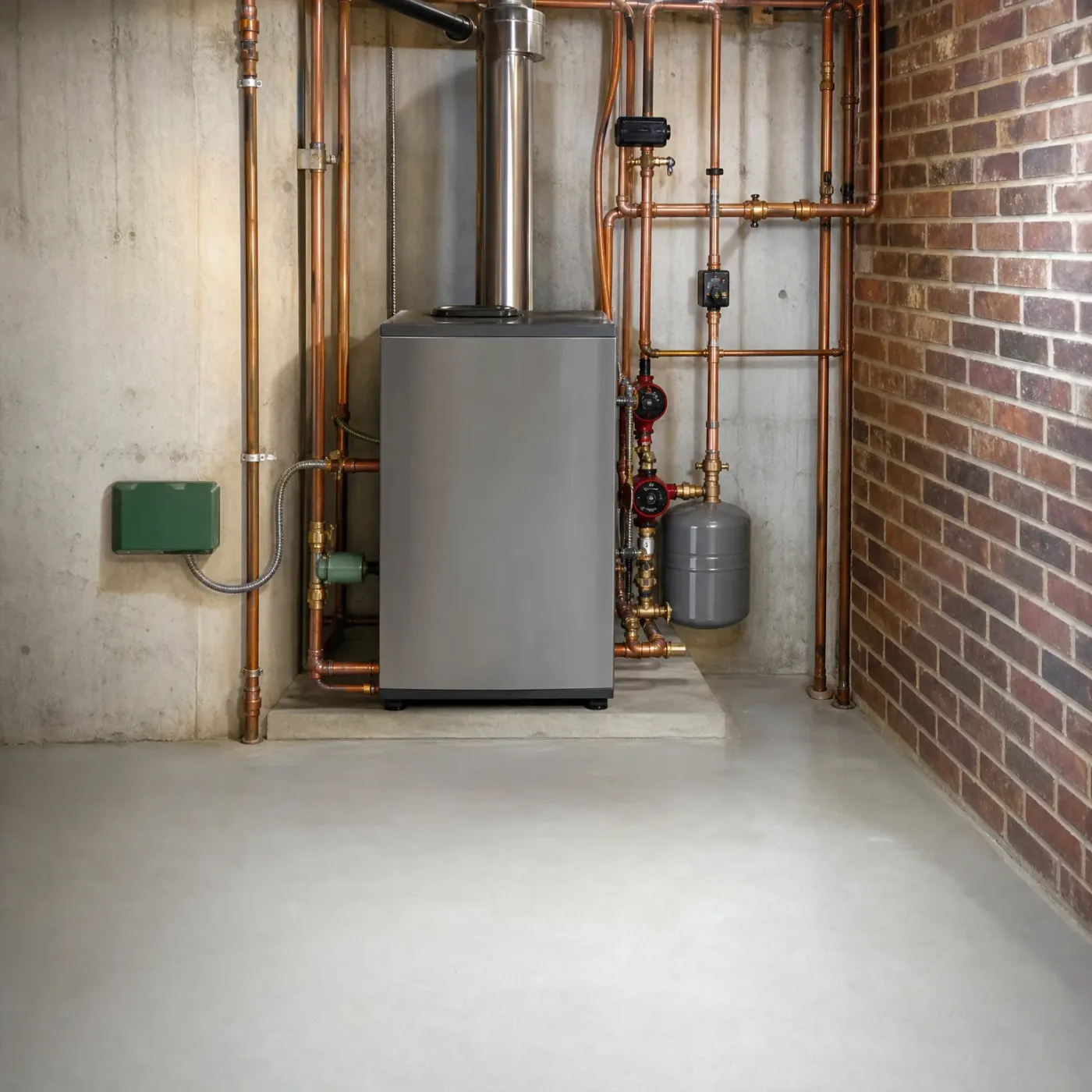
A gray boiler on a concrete pad in a basement, connected to copper piping, valves, pumps and a gray expansion tank, with a concrete wall on the left and a brick wall on the right.
After you get your boiler repair
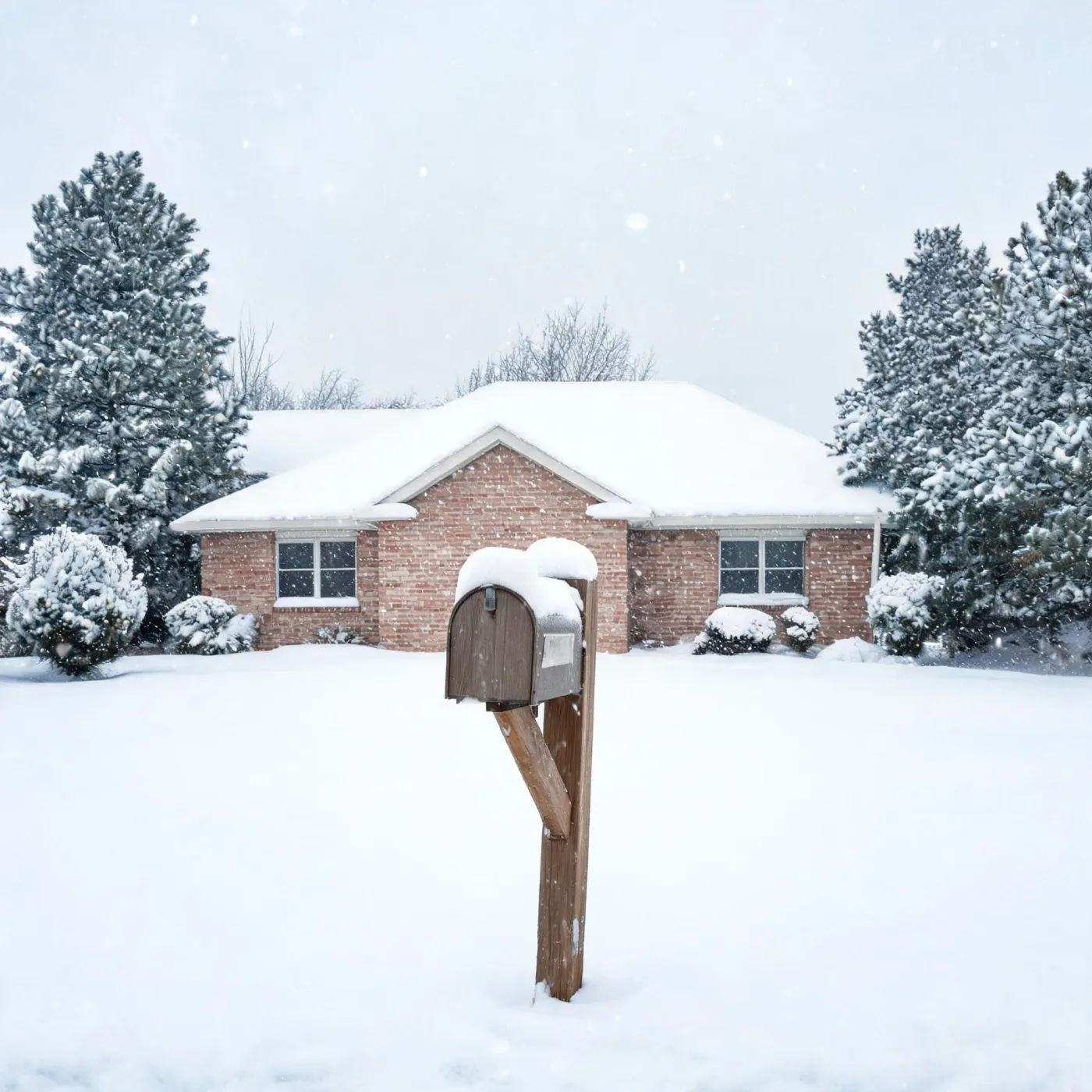
A snow-covered wooden mailbox post stands in a deep snowy front yard before a single-story brick house with a snow-laden roof, flanked by snow-covered evergreen trees during falling snow.

Statewide, winter nights average 25°F, according to NOAA climate data. That kind of cold means your boiler is running long stretches overnight to keep every radiator supplied, and a system already working hard has less room to cover for a valve that's stuck or a loop that's short on water somewhere. If one radiator has been borderline warm for a while, a night like that is when it stops putting out heat at all, and you'll feel it most in the room with that radiator right around sunrise, before the house has had any daytime help warming back up.

NOAA nClimDiv 1991-2020 county normals weighted by homes

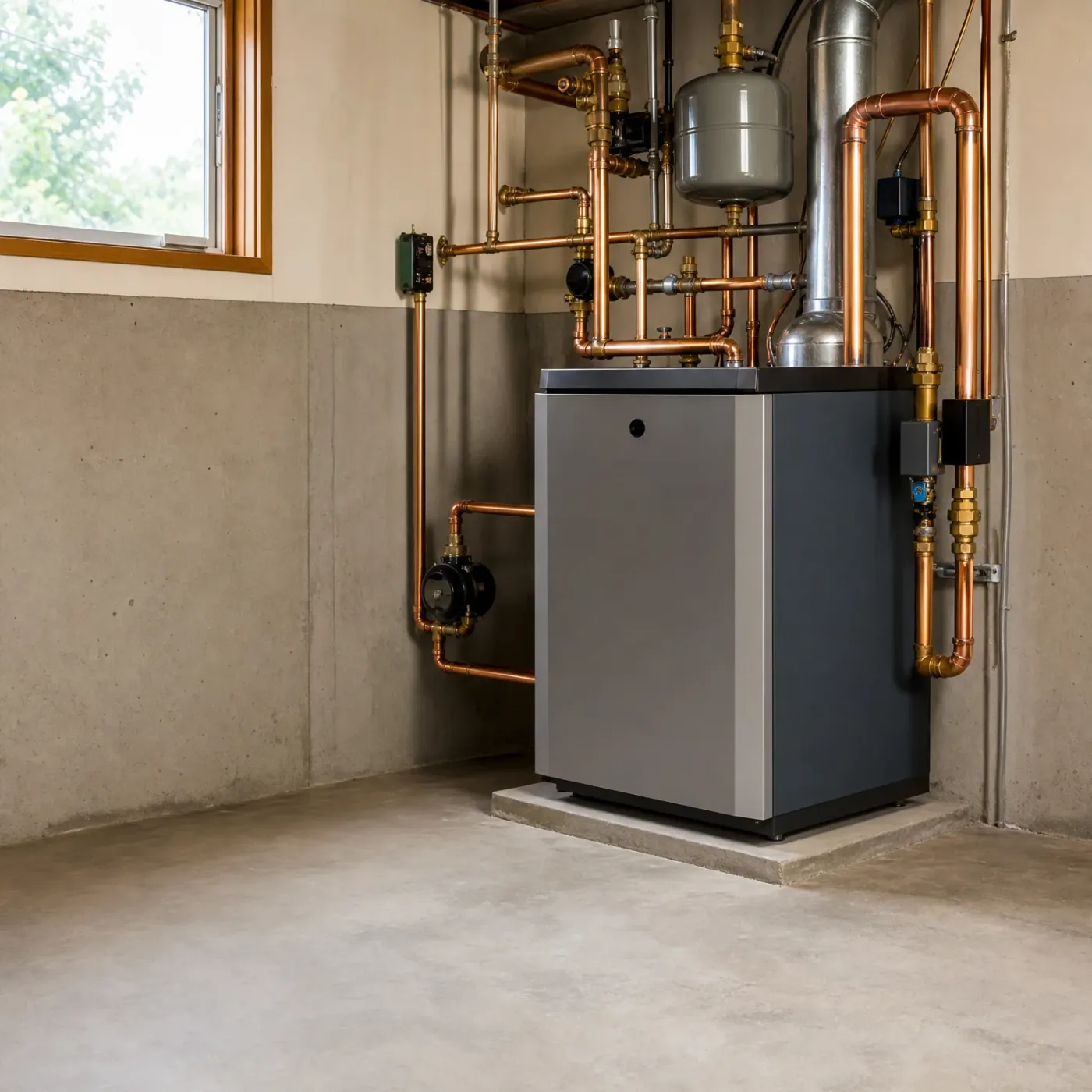
A gray floor-standing boiler on a concrete pad in a basement corner, connected to copper piping, brass valves, a circulator pump, an expansion tank, and a metal flue, with a window at upper left.
Every radiator fed from the same loop, water reaching every room without one left cold.
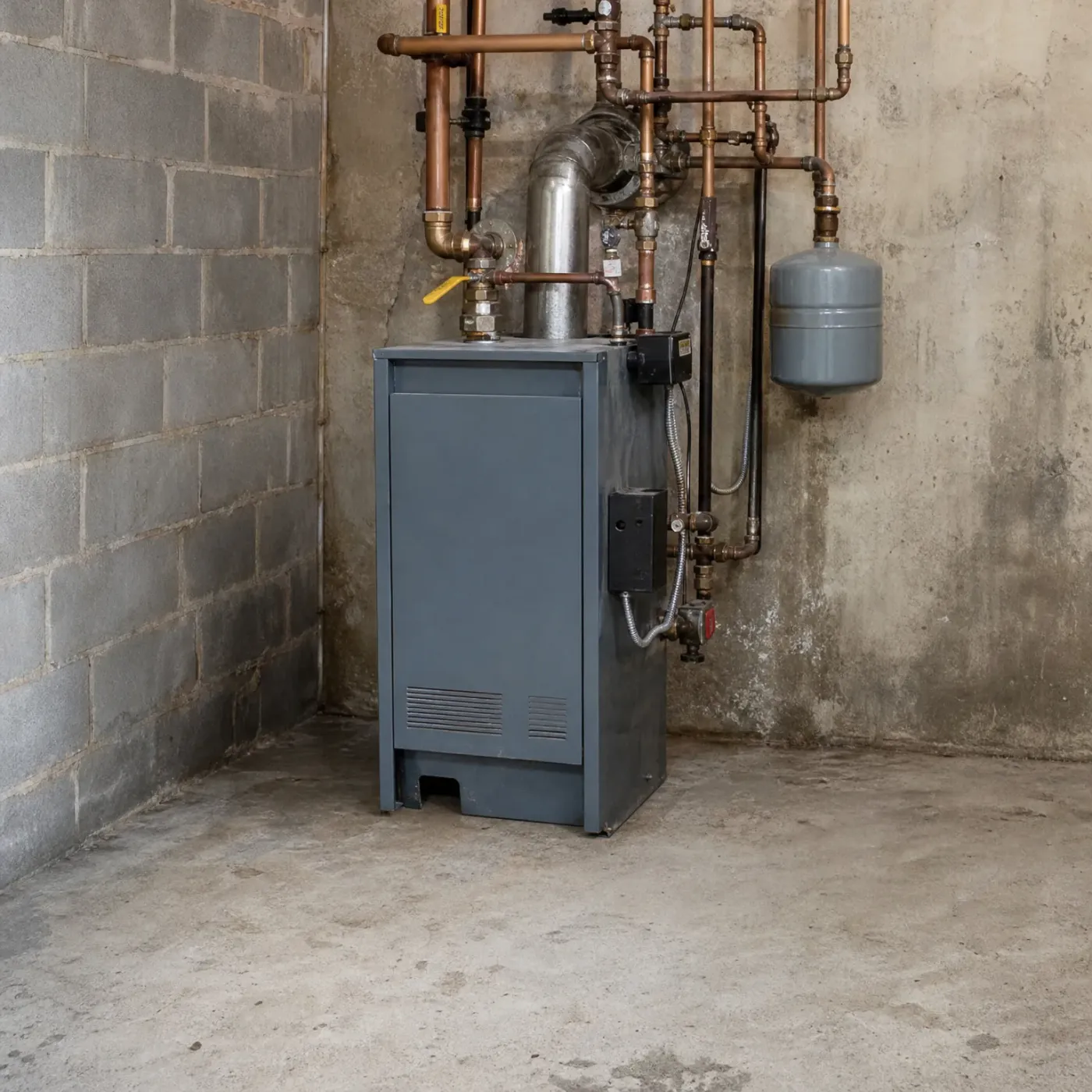
A gray floor-standing boiler in a basement corner with copper and black piping above it, a flue vent, and a gray expansion tank mounted on the concrete wall beside a concrete block wall.
A stuck valve or failed circulator in the same kind of system, and one radiator stops getting its share.

Winter nights average 25°F statewide

Nights in the mid-20s mean your boiler is running long stretches to keep every radiator going, not just the one that's giving you trouble. That leaves less margin for a stuck valve or weak circulator to hide behind, which is usually when a cold radiator gets noticed.

NOAA nClimDiv 1991-2020 county normals weighted by homes

One Cold Radiator, Three Causes

  • A cold radiator next to working ones points to trapped air, a stuck valve, or a circulator not pushing water where it needs to go.
  • Bleeding the radiator fixes it when air is the only problem, but a stuck valve or weak circulator needs a tech to find.
  • A local boiler tech who works on these systems all winter knows which of the three it usually is before taking the cover off.
  • Calling one licensed contractor who already knows Missouri boiler systems beats explaining the same cold radiator to company after company.
  • With nights averaging 25°F statewide, the boiler has little room to cover for a part that isn't doing its share.
  • The fix depends on which of the three problems it is, but you don't have to be the one who figures out which.

One radiator staying cold while the rest of the house heats fine comes down to three things: trapped air, a stuck valve, or a circulator not pushing water where it needs to go. Bleeding the radiator settles it fast if air was the only problem. If it stays cold after that, something mechanical is holding water back, and that's not something to keep testing room by room on your own.

A boiler tech who works these systems every winter in Missouri has usually seen your exact radiator before, in someone else's house. They know a lockshield valve that's seized shut looks different from a circulator that's lost its push, and they know which one to check first based on where the cold radiator sits in the loop. That's what years on the same equipment gets you: less guessing, fewer parts pulled apart for no reason.

You get matched with one licensed contractor, not a handful of companies competing for the job. No repeating the same description of your cold radiator to three different people, no sorting through quotes that don't line up. Just someone local who already knows what a Missouri boiler system looks like when it's working and when it isn't.

Nights here average 25°F, and your boiler is already working long stretches to keep every other radiator supplied. Whatever is keeping that one room cold, it's not going to fix itself once the temperature drops further. It's a mechanical problem with a mechanical cause, and someone who knows the system can find it.

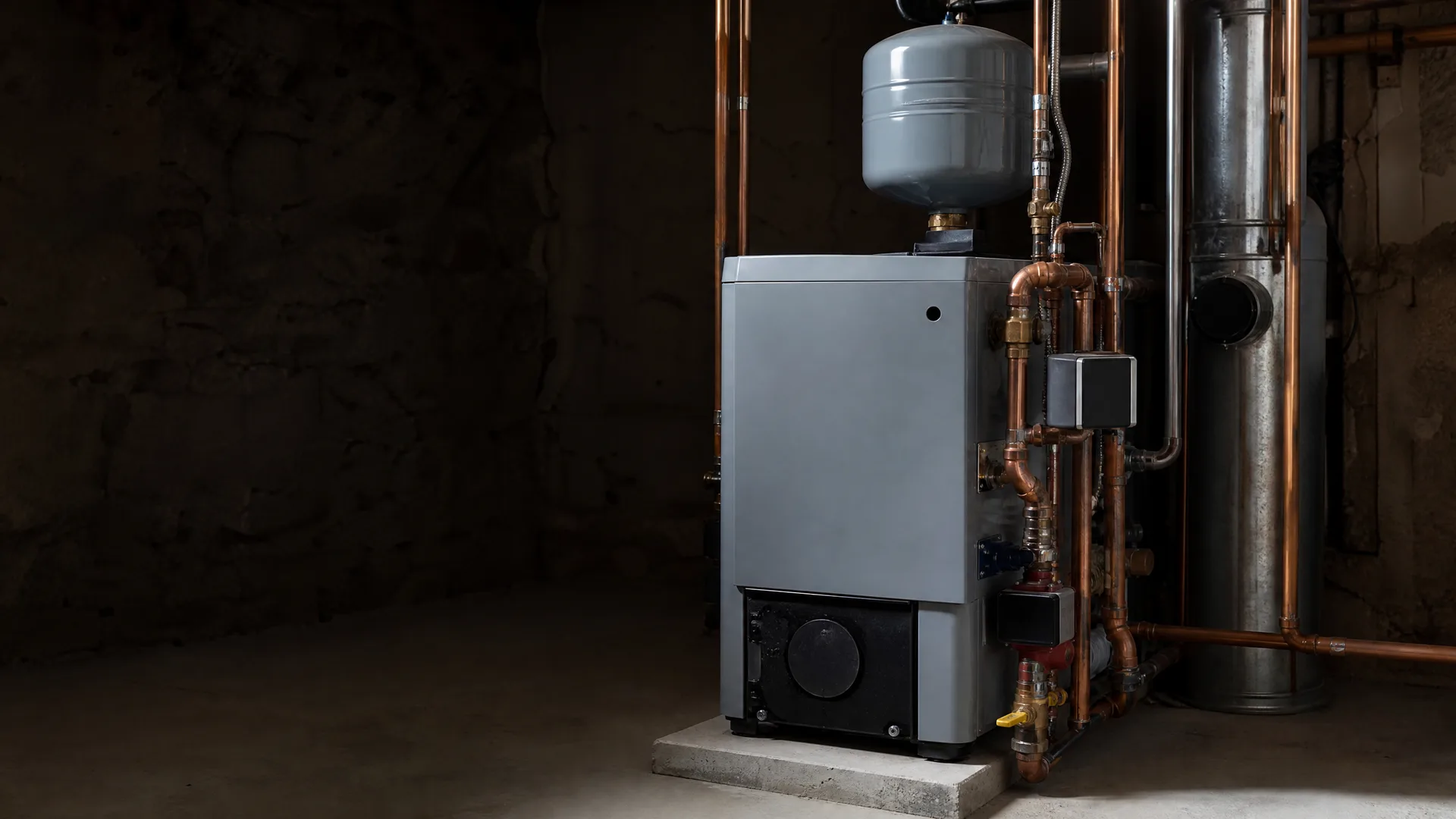
A gray residential boiler on a concrete pad in a dim basement, connected to copper piping, a gray expansion tank overhead, and a metal flue pipe along the wall.

Skip calling around

Step 1 of 3: Equipment