Holding steady
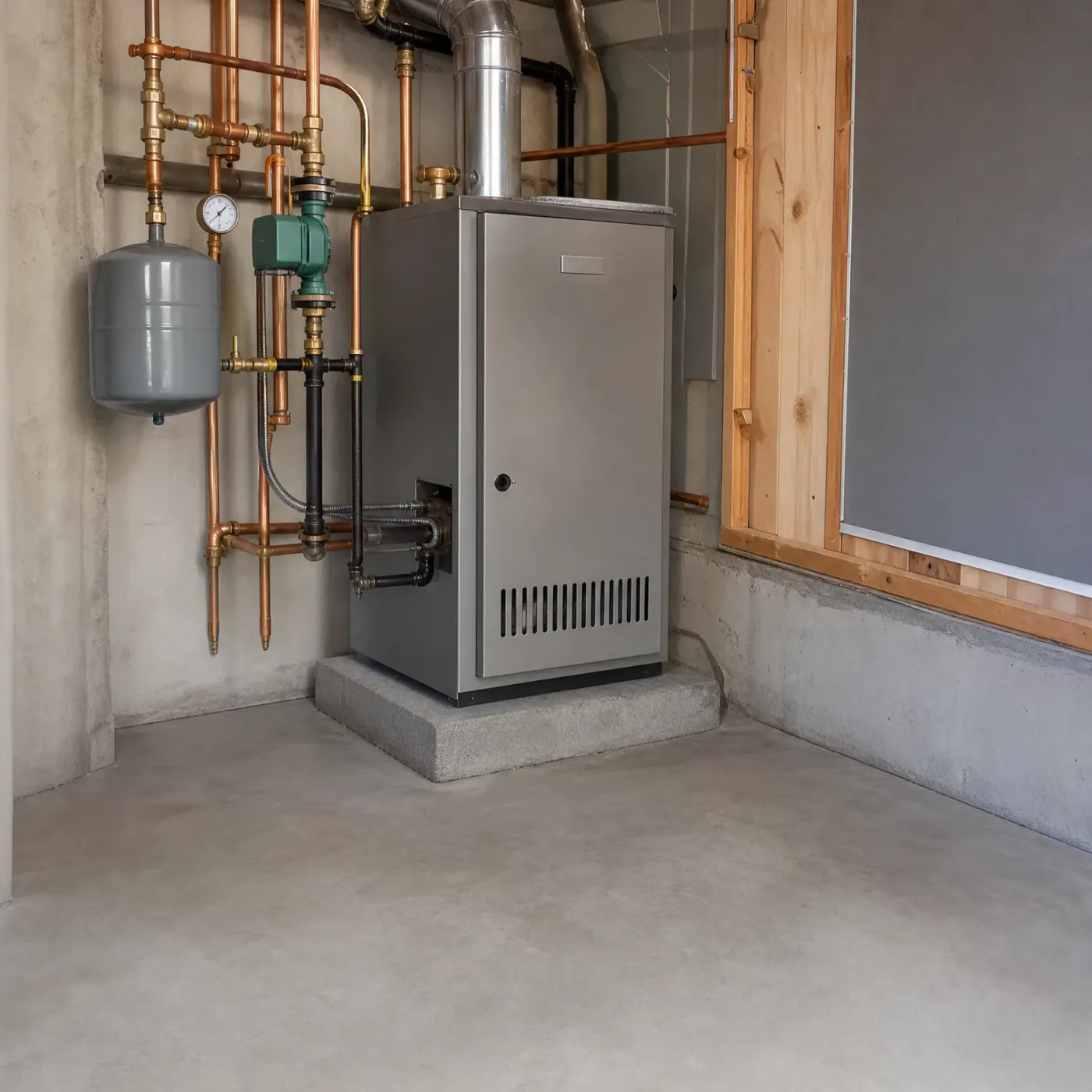
The gauge sits where it should and the pump seal, valves, and fittings stay dry. Copper lines run clean to the expansion tank, no crust at the joints, no drip at the base of the unit.
 Hand it off
Once you send the form, finding a pro is off your list.
A boiler that keeps losing pressure is telling you something is letting water out or letting air in. Neither one fixes itself. You can bleed a radiator or top off the loop through the filling valve, and the gauge climbs back to where it should be, and a week later you're doing it again. That cycle wears on a system that's supposed to run quiet through a Missouri winter.
Most of the time it's a small thing with a clear cause: a pressure relief valve that's weeping, a pinhole in a pipe you can't see, a failing expansion vessel that can't hold its charge anymore. Sometimes it's the boiler itself, a seal or a joint inside giving out under heat. None of these get better with time, and running a boiler low on pressure strains the pump and can trip the system out right when you need the heat most.
Finding out which one it is means someone has to look at the actual system, the pipework, the valve, the vessel, not guess from a description over the phone. A boiler technician who works on these systems all winter in Missouri has seen most of what causes this, and knows where to check first and what's worth ruling out before touching anything else.
Send the request and that search becomes someone else's job instead of yours. You're not handed a list of companies to sort through and call one by one. A single local contractor, licensed to do this work, gets matched to your situation, and from there it's on them to follow up. No second call to make if the first one doesn't pick up, no explaining the problem over again to someone new. Just the one connection, built around a boiler losing pressure in a Missouri home, moving toward getting it looked at.
A boiler losing pressure usually means water is escaping somewhere in the system, or air is getting into a loop that should stay sealed. The most common cause is a small leak, often at a pump seal, a valve joint, or a fitting that has started to weep. It can also mean the expansion tank has lost its air charge, so the system can't absorb normal pressure changes as water heats and cools. A pinhole leak in a radiator or a line hidden behind a wall won't always show as a puddle. You might only see the gauge drop a little each week. Left alone, low pressure can shut the boiler down entirely, since most units are built to stop firing below a minimum reading rather than run dry. If you're refilling the loop more than once every few weeks, something is letting water out faster than it should, and that part needs to be found, not just topped off.
At 25°F overnight, your boiler is cycling on and holding higher pressure for hours at a stretch through December, January and February. A seal or joint that barely weeps in October will show it on the gauge once nights stay this cold.
NOAA nClimDiv 1991-2020 county normals weighted by homes
On a night at 25°F, the water in your boiler's loop sits hotter and under more pressure for longer, and a joint that only seeps during a mild spell will drip steadily once the cold settles in for the night. That's when you'll see the gauge drift down by morning, or hear the pump cycling more than it used to. Cast iron and steel both contract as they cool, and a fitting that was snug in September can open a hairline gap by January. Once you send the form, you're not the one calling around to find someone who still has time this week. That part is off your plate, and someone local who works on these boilers all winter takes it from there.
NOAA nClimDiv 1991-2020 county normals weighted by homes
A boiler that keeps dropping pressure through a Missouri winter is wearing down a seal or joint a little more every cold night, and by January that slow weep can turn into a repair call anyway, just a harder one. Missouri runs mostly gas heat, so a tech who works this equipment all season has seen the same pump seals and filling valves give out in the same way, year after year, in homes just like yours. The request goes to one licensed contractor local to you, not a handful competing for the job, so you're not stuck sorting through calls while your gauge keeps sliding. You still have to bleed a radiator or top off the loop tonight to get through until someone looks at it. But once you send the request, finding the right person for that stops being something you have to manage. That's worth doing before the next hard freeze asks more of a seal that's already letting go.
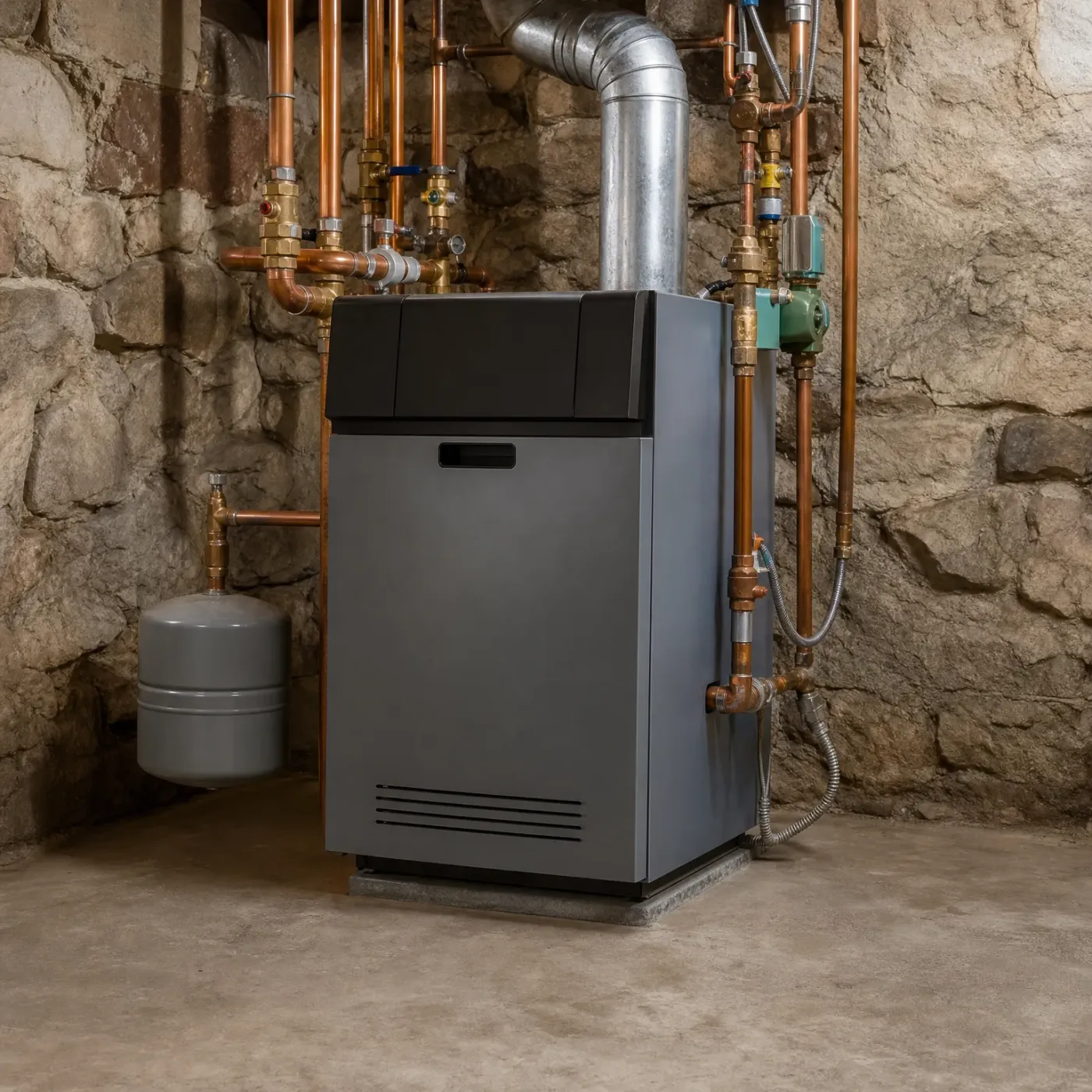
The gauge sits where it should and the pump seal, valves, and fittings stay dry. Copper lines run clean to the expansion tank, no crust at the joints, no drip at the base of the unit.
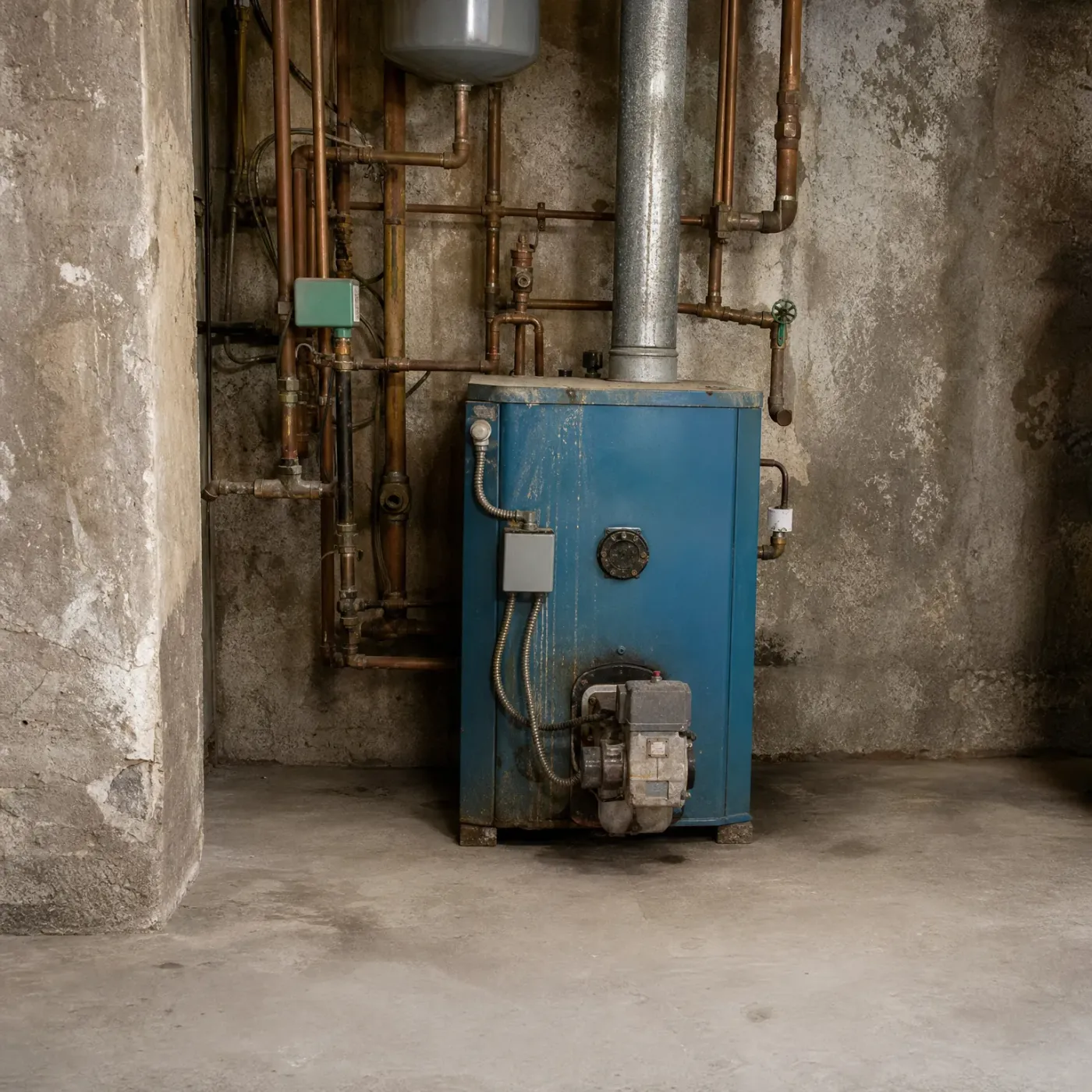
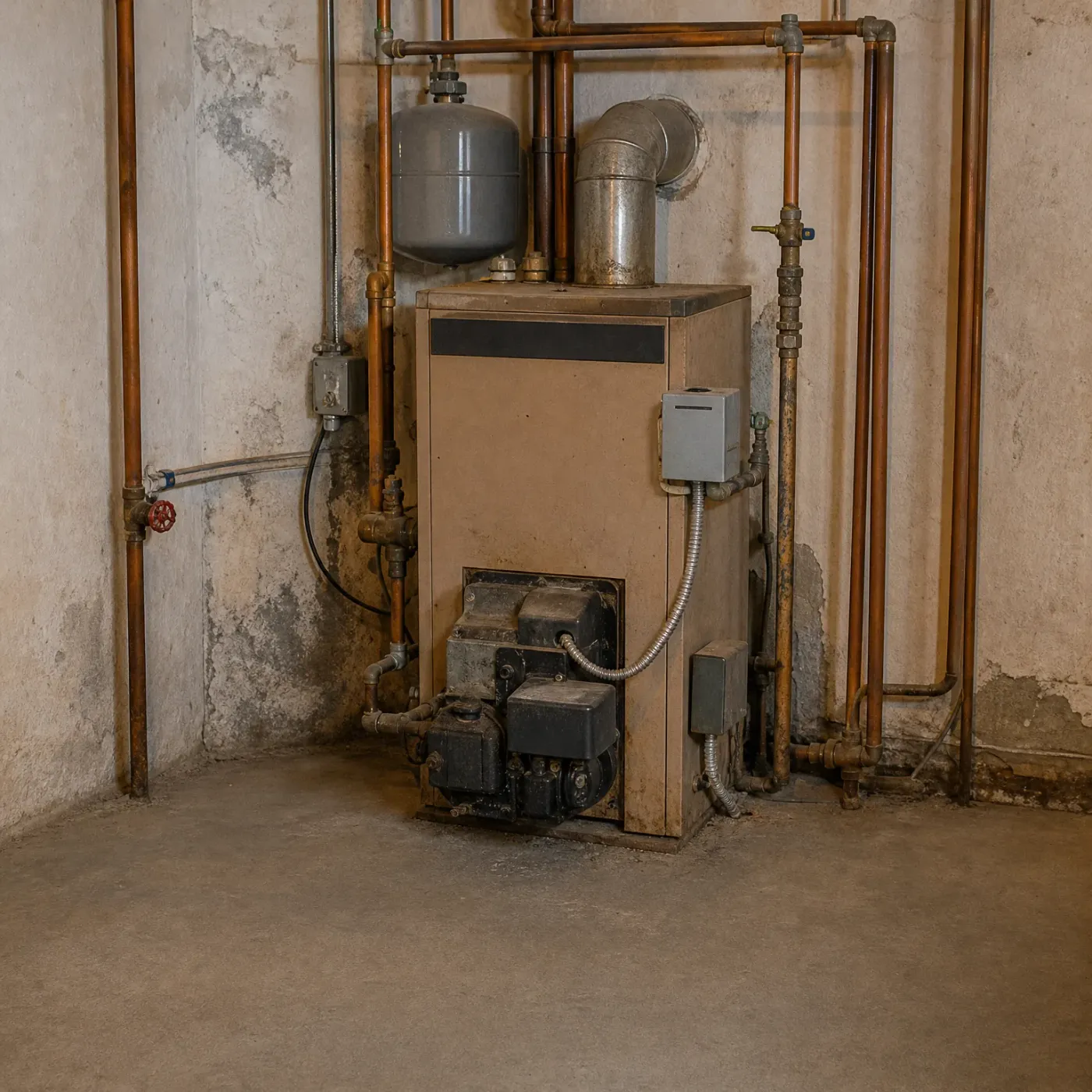
This old boiler is weeping somewhere along the wall of pipe behind it. The flue pipe and burner still look sound, but a joint or seal is letting water or air slip past, and the gauge keeps drifting down.
Where does the water actually go when my boiler loses pressure?
A sealed heating loop does not use up water the way a kettle does. If the gauge keeps dropping, that water went somewhere. Most of the time it is coming out slowly enough to evaporate before it pools, at a pump seal, a valve joint, or a fitting that has started to weep. Some of it can also leave as air, through an automatic air vent that is venting off tiny amounts of water vapor along with it. A pinhole in a pipe or a cracked expansion tank will do the same thing, just lower down in the system. The loop does not lose pressure on its own. Something is letting water past a seal that used to hold.




Maybe you've caught yourself topping off the loop every week or two, turning that filling valve more often than you used to. Maybe there's a damp patch on the floor near the base of the unit, or a faint metallic smell when you walk past it. Radiators that used to heat evenly might have a cool spot at the top now, or take longer to warm up on a cold morning. None of that fixes itself, and a boiler running low on pressure for weeks at a time puts more strain on the pump and the heat exchanger than it was built for. Left alone through a Missouri winter, a small weep can turn into a bigger repair, and a cold snap is a bad time to find that out.


A boiler holds a sealed amount of water, and that number on the gauge only falls for one of two reasons. Water is getting out somewhere along the loop, at a pump seal, a valve, a fitting gone soft with age, or air is getting in where it shouldn't. Cold nights don't cause either one, but they make a small problem easy to see, because a joint under more pressure for longer hours will show what it's doing. Topping off the filling valve or bleeding a radiator brings the number back up for a while. It doesn't change what's letting water or air through, so the gauge will start sliding again, maybe in a day, maybe in a couple of weeks.
Missouri winters run cold enough, and long enough, that a weep left alone usually gets worse before it gets better. A gas boiler that's fine in October can be dropping pressure every few days by January, and the part that's failing doesn't heal itself in the meantime.
Finding the actual leak or the air source is a job for someone who opens up systems like yours regularly, not a guess made from the gauge alone. A contractor who works gas boilers all winter in this area has already traced this exact pattern more than once and knows where to look first. Send one request and one licensed, local contractor calls, no pile of competing bids to sort through, just someone who can look at the loop and tell you what's actually letting go.

Send one request and you're done looking