
Why your boiler keeps turning off in Missouri

Answer a few questions instead of calling shop after shop.

Skip the calls

Why does my boiler keep shutting off?

A boiler that shuts off on its own, sometimes a few minutes after it starts, sometimes a few times a day, usually means it's protecting itself from something. It's frustrating when the house is cold and the thing won't stay running long enough to help. Before you call anyone, it helps to know what's actually making it cut out, because the cause changes what kind of repair it needs.

A safety switch is cutting power before the boiler can finish its cycle

Boilers shut themselves off when a sensor tells them something downstream isn't right. Low water pressure is the most common reason, and it's easy to check on the gauge yourself. A failing flame sensor, a blocked vent, or air trapped in the lines will do the same thing, each one making the boiler trip its own safety switch rather than risk running unsafely. With Missouri winters putting a boiler through months of steady use, pressure drops and worn parts tend to show up as exactly this kind of short-cycling. None of these are safe to force past. A repair tech can pressure test the system, check the sensor, and find which one of these is actually happening in your boiler before anything gets replaced that doesn't need to be.

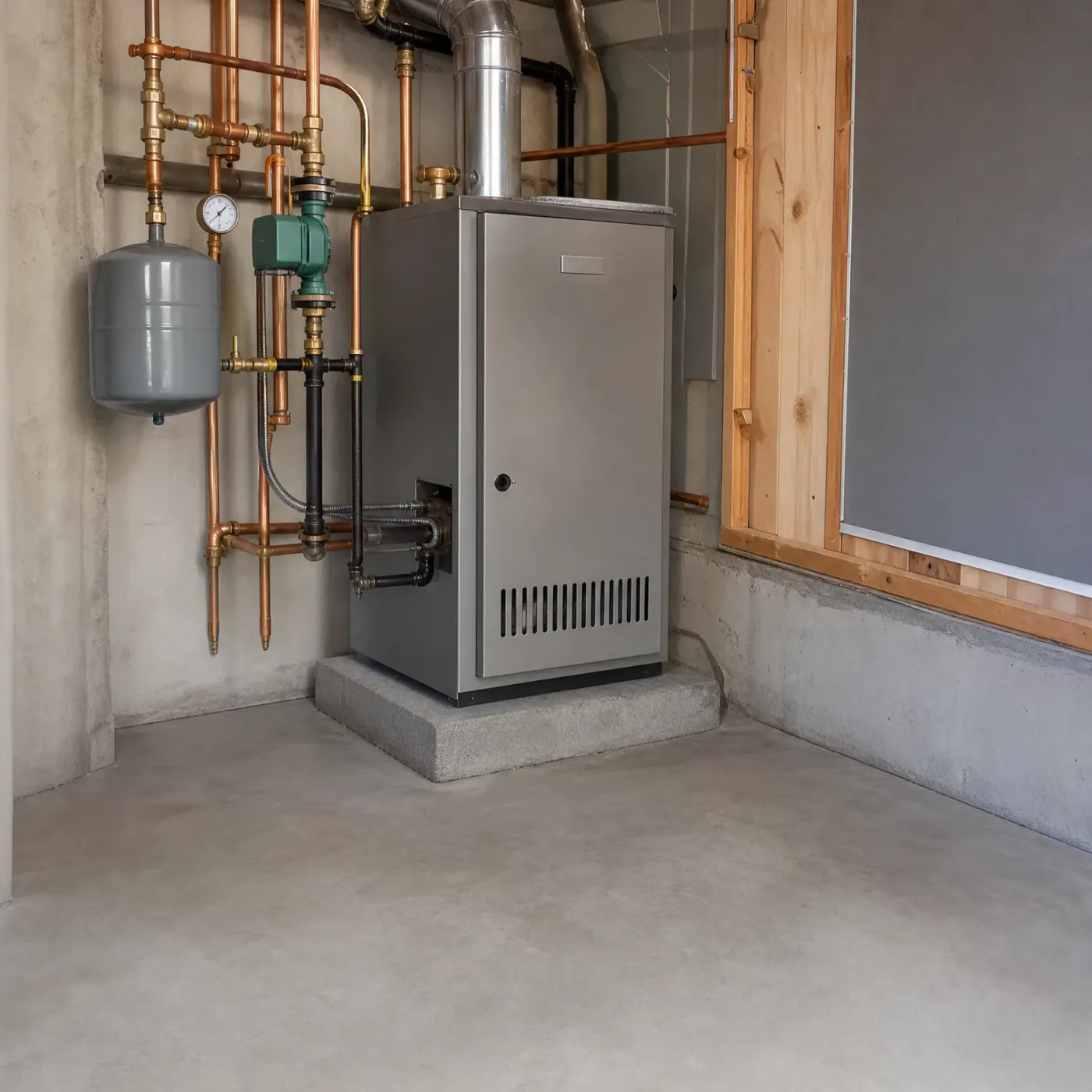
A gray boiler on a concrete pad in a basement corner, connected to copper and black pipes with a gauge, circulator pump, and gray expansion tank, beside a wood-framed wall.

Running the way it should

Water moves through the pump, pressure holds steady on the gauge, and the burner stays lit until the thermostat is satisfied. Nothing cycles off early. In a Missouri winter that means heat that keeps up overnight without you checking on it.
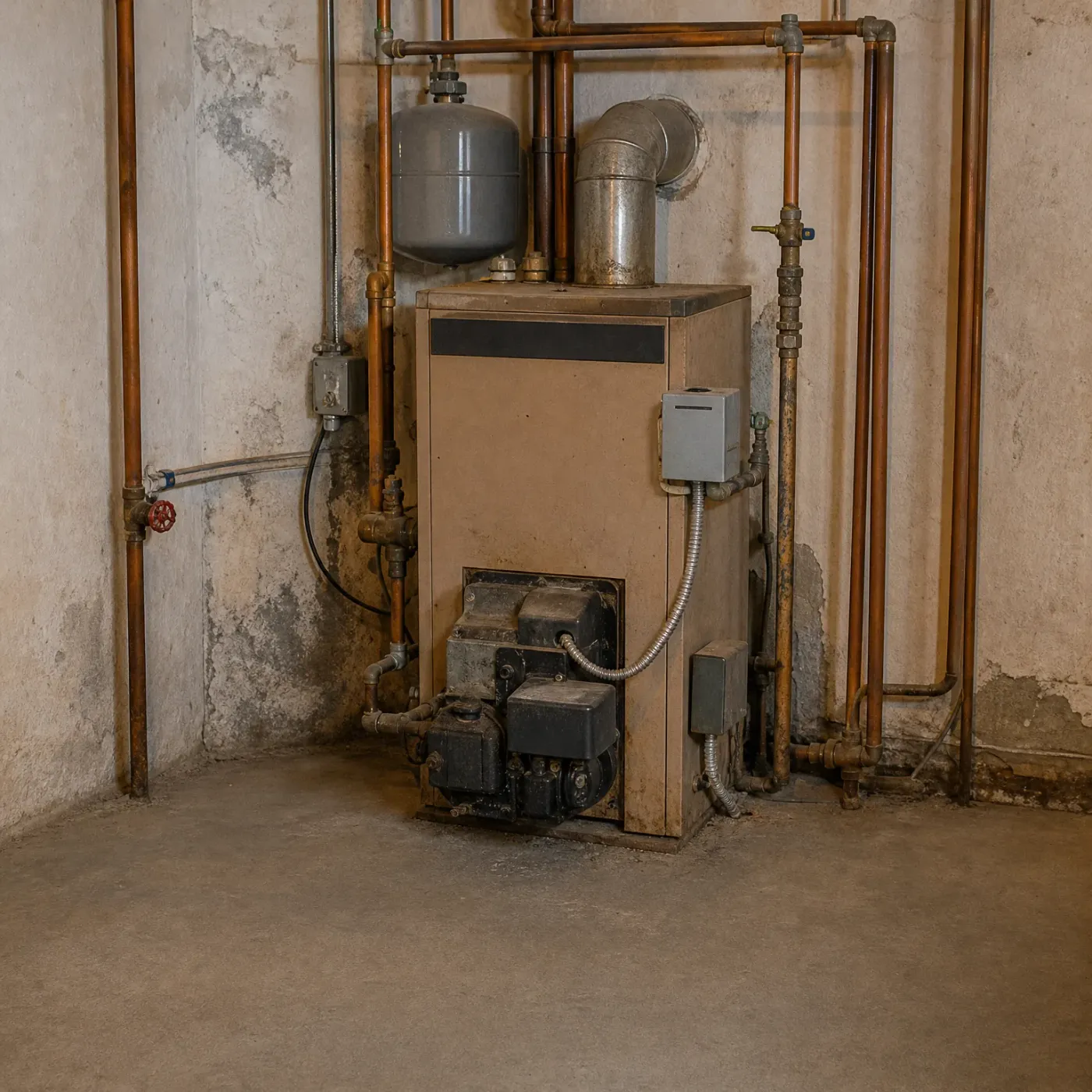

An older oil-fired boiler with a burner unit, flue pipe, expansion tank and copper piping stands in the corner of a concrete-floored basement with weathered plaster walls.

Shutting off on its own

The burner fires, then quits after a few minutes, or won't fire at all. Pressure may be low, a flue connection may be loose, or a safety switch may be tripping for a reason worth finding. A contractor who services boilers all winter in Missouri has likely seen this exact one before.

A gray-haired man in a dark long-sleeve shirt sits on a gray sofa in a living room, looking toward a sunlit window with sheer curtains.
A gray-haired man in a dark green sweatshirt sits on a sofa in a living room, looking toward a bright window, with a houseplant, lamp, fireplace and framed art behind him.
A gray-haired bearded man in a dark green collared sweater sits on a sofa in a living room with a window, houseplant, floor lamp and bookshelves, looking off to the side.
A gray-haired man in a dark green sweater sits on a sofa in a sunlit living room, looking off to the side, with a framed landscape painting, dining table and shelving behind him.

Most lockouts trace back to one of three things: a pressure switch that's lost its reading, an igniter that's worn out, or a flame sensor coated with residue.

None of those fix themselves. A boiler that short cycles once a week now will keep doing it, through the coldest stretch of a Missouri winter, until someone who knows gas boilers opens it up and finds which one it is.

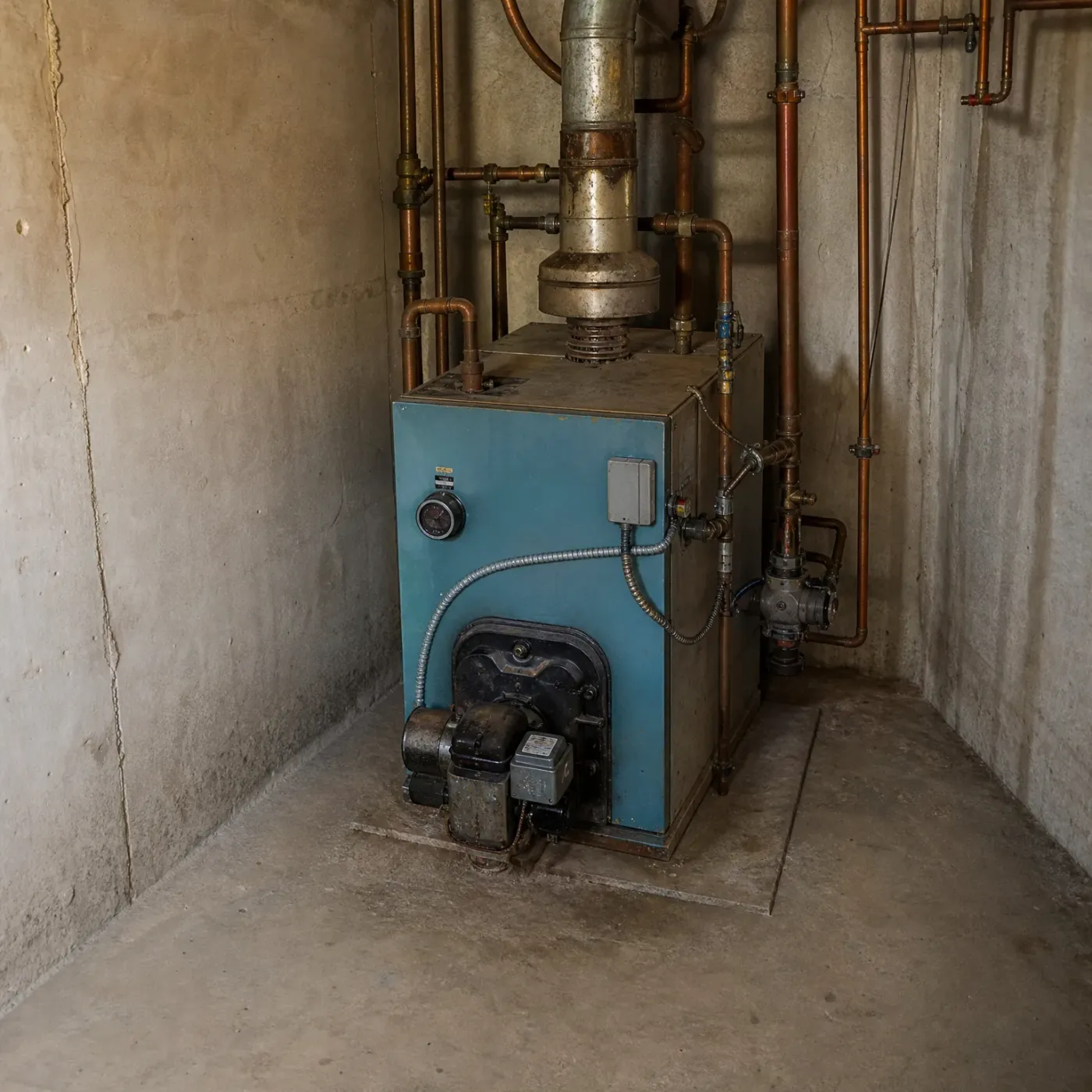
A blue oil-fired boiler with a burner unit and pressure gauge stands in a concrete basement corner, connected to copper pipes and a metal flue.
Before you get your boiler repair
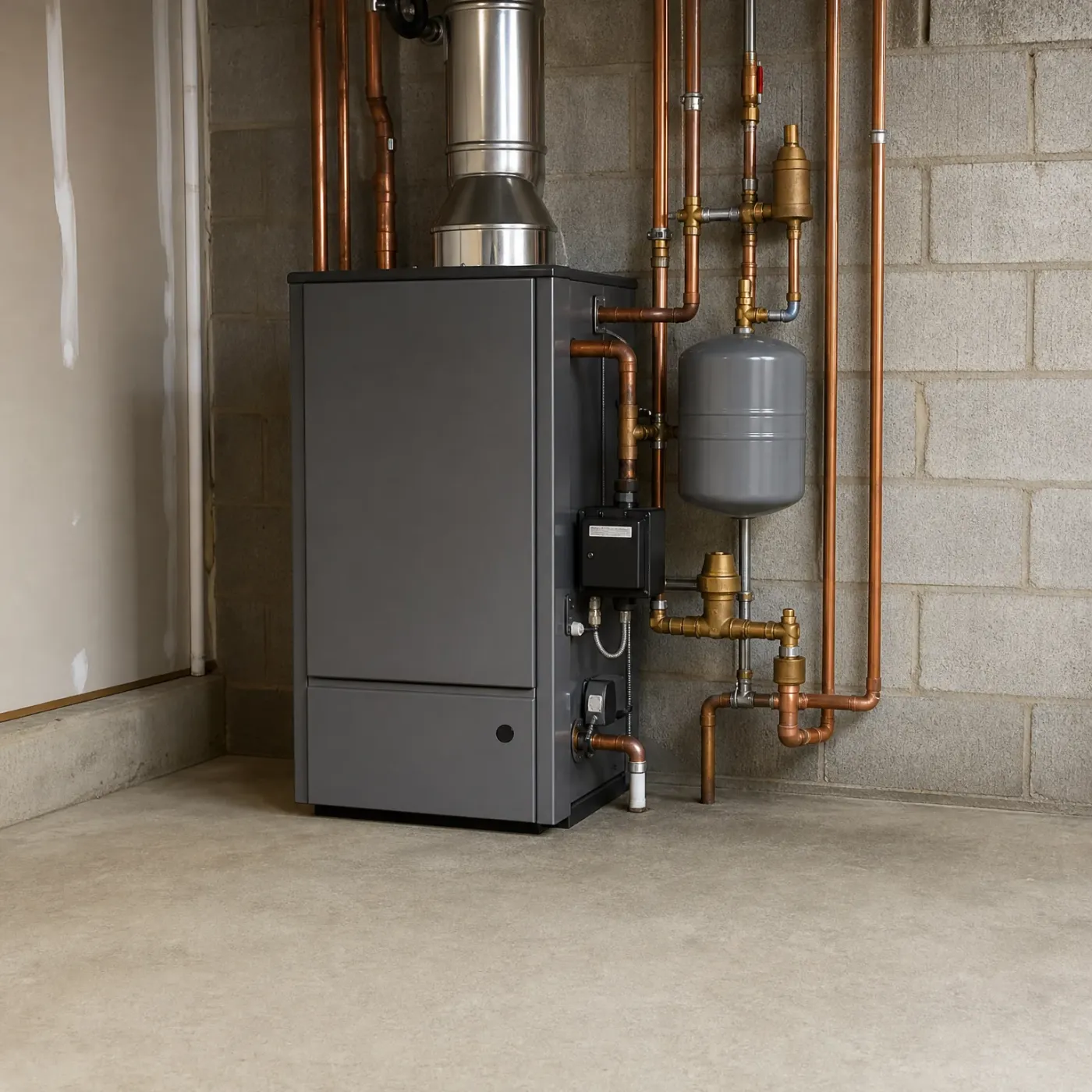
A gray floor-standing boiler with a metal flue stands against a concrete block wall, connected to copper pipes, brass valves and a gray expansion tank, on a bare concrete floor.
After you get your boiler repair

A few minutes of heat, then nothing

Keep ignoring it and the cycles get shorter and more frequent. A Missouri cold snap is the wrong time to find out the burner won't stay lit at all.

Get one local pro

One visit, one diagnosis

A licensed Missouri contractor who works on boilers all winter checks the pressure switch, igniter and flame sensor and tells you which one is behind the shutoffs.

Get one local pro
A woman with shoulder-length dark brown hair in a cream knit cardigan sits in an upholstered armchair beside a window, looking off to the side, with a white bookshelf and potted plant blurred behind her.
A woman with dark hair in a bun sits wrapped in a chunky knit blanket on a couch with a child resting his head on her shoulder, eyes closed, beside a lit lamp and bookshelf indoors.

One form, no calling around

A boiler that keeps shutting off doesn't need a second opinion from three different companies. It needs someone who's already seen a hundred pressure switches drop out and a hundred flame sensors go bad, and who can tell which one is yours. Finding that person yourself means calling around, explaining the short cycling again to each one, waiting on callbacks, then sitting with quotes you can't really compare because you don't know what any of them checked. Send the request through here instead and it goes to one licensed Missouri contractor, not five, so your phone isn't the one ringing all afternoon. Whoever gets it works on boilers all winter in this state and has a good idea what's behind a lockout before they even open the panel. With a cold snap coming, that's the difference between a house that's cold for an afternoon and one that's cold for a week while you're still sorting through options.

Letting it ride through winter

A boiler that shuts off once or twice and relights usually gets ignored, because the house is still warm enough and the gauge still reads fine. But a pressure switch that drops out once will drop out again, and more often. An igniter that's starting to go doesn't come back. A flame sensor with a little residue on it gets a little worse each week it isn't cleaned. Whatever is causing the shutdowns now is still there after the boiler relights itself, and Missouri winters don't stop asking the system to run. By January the same part that caused a short cycle in October can cause a full lockout, and you're left with no heat on the night you need it most, instead of a problem you could have had looked at in the fall.

Getting it looked at now

A licensed Missouri contractor who works on boilers through the winter can usually tell from the pattern, how often it shuts off, how long it runs first, whether it relights on its own, which of the common causes it is before taking the panel off. That means one visit instead of a guessing game, and one contractor who already knows pressure switches and flame sensors in this climate rather than three companies each starting from scratch. You skip the part where you call around, explain the same symptoms twice, and wait to see who calls back. What you get instead is someone who saw this same shutdown pattern last winter, in another house not far from yours, and knew which part it was.

Winter nights average 25°F statewide

Nights in the mid 20s are normal here all winter, and your boiler has to hold a steady burn for hours at a stretch to keep up. That's exactly when a worn igniter or a dropped pressure reading shows up as a lockout instead of just heat.

NOAA nClimDiv 1991-2020 county normals weighted by homes

A gray floor-standing boiler with a black flue pipe stands on concrete blocks in a corner, connected to copper pipes, a green circulation pump, and a gray expansion tank on the wall.

Ignoring the short cycling

Some homeowners wait because the boiler still relights and the house still gets warm eventually. But each lockout puts more strain on the same part that's already failing. A pressure switch that drops once will drop again, and the igniter or flame sensor behind a bad cycle doesn't recover on its own. By the time it fails outright, you're troubleshooting a cold house instead of scheduling a fix on your own timeline.

A white and black floor-standing boiler in the corner of a bare plastered room, with copper and metal pipes running up the wall behind it.

Getting the actual cause fixed

A licensed Missouri contractor can test the pressure switch, check the igniter, and clean or replace the flame sensor in one visit, rather than you guessing which part is behind the lockouts. Once the actual cause is found and replaced, the boiler holds its burn the way it's supposed to. No more wondering if tonight's the night it won't relight, no more checking the gauge every few hours to see if it's held steady.

A boiler that keeps shutting off is telling you something specific: a pressure switch, an igniter, or a flame sensor isn't holding up to a long Missouri winter. That's a known fix, not a mystery, once someone who works on these units every season takes a look. A licensed contractor local to you can trace the lockout to its source in one visit, instead of guessing at parts or waiting to see if it happens again. You won't be explaining the problem three times to three different companies trying to get someone out before the next cold snap. One contractor, already familiar with what fails in a boiler running hard through a Missouri winter, takes the call and handles the diagnosis. The short cycling isn't random and it isn't going to work itself out. It's a part that's failed or is failing, and it gets replaced. Once that's done, the boiler holds its burn the way it's supposed to, and you stop checking the thermostat every time the house feels a little cool.

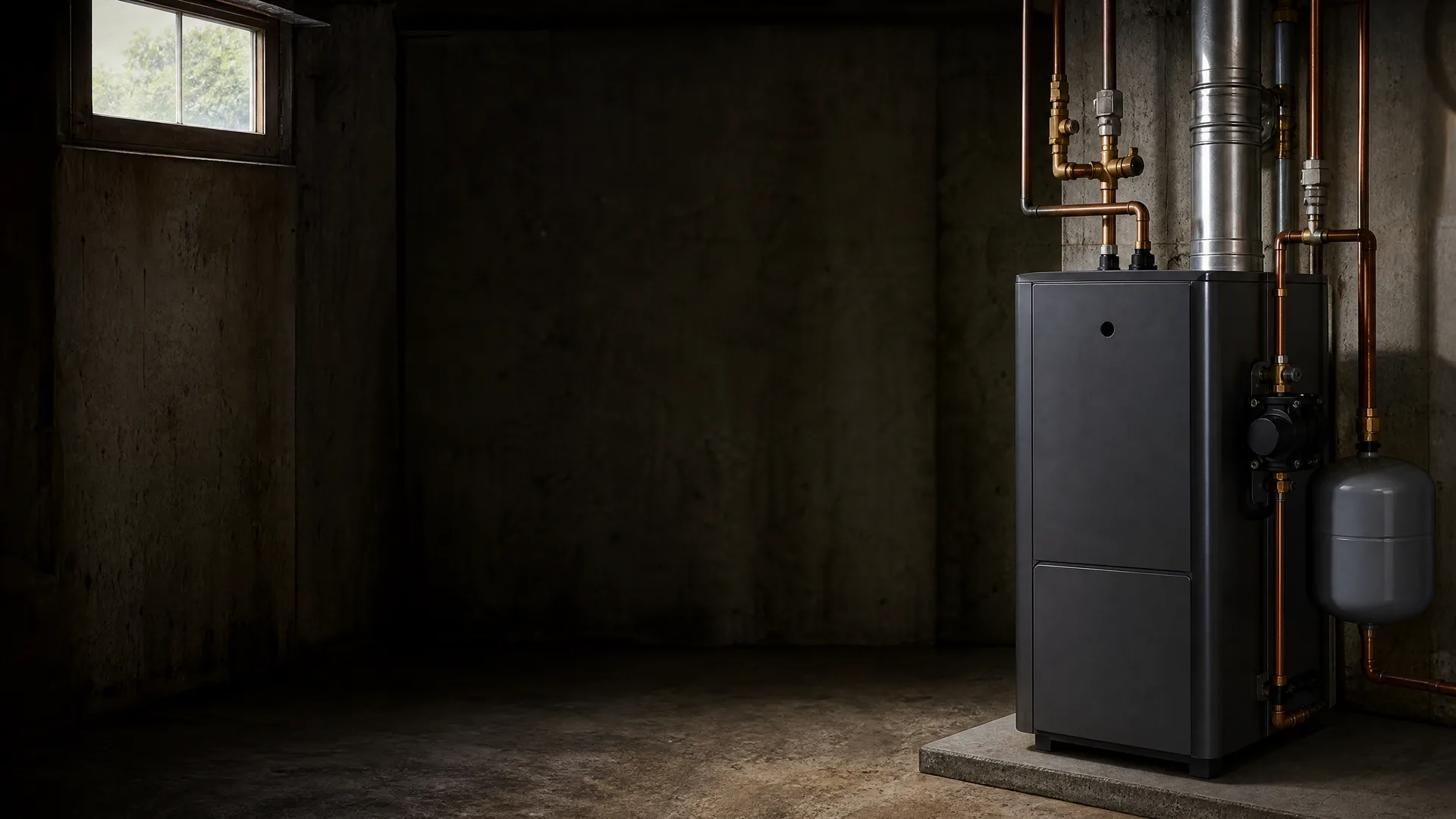
A dark grey boiler unit on a concrete pad in a dim basement, with copper pipes, a metal flue, and a grey expansion tank on the wall, and a small window with daylight on the left.

Skip the search

The pro who reaches out is licensed in Missouri.

Step 1 of 3: Equipment