Why your boiler makes a banging noise in Missouri

Tell a local repair pro what your boiler is doing.

Find my pro

That banging is water hammer, and most of the time it's caused by mineral buildup on the heat exchanger or inside the boiler sections. As scale and sediment collect, water trapped underneath it flashes into steam pockets when the burner fires. Those pockets collapse fast, and the collapse is what you hear as a bang or a series of knocks. It can also come from a buildup of limescale in older cast iron sections, which is common once a boiler's been running a few seasons on gas, the way most systems in Missouri do. The noise itself won't quit on its own, and it tends to get louder over time as more scale builds up. It's not dangerous in the short run, but it means the boiler is working harder than it should to heat the water, and that buildup can eventually stress the heat exchanger. Worth having someone look at it before it turns into a bigger repair.

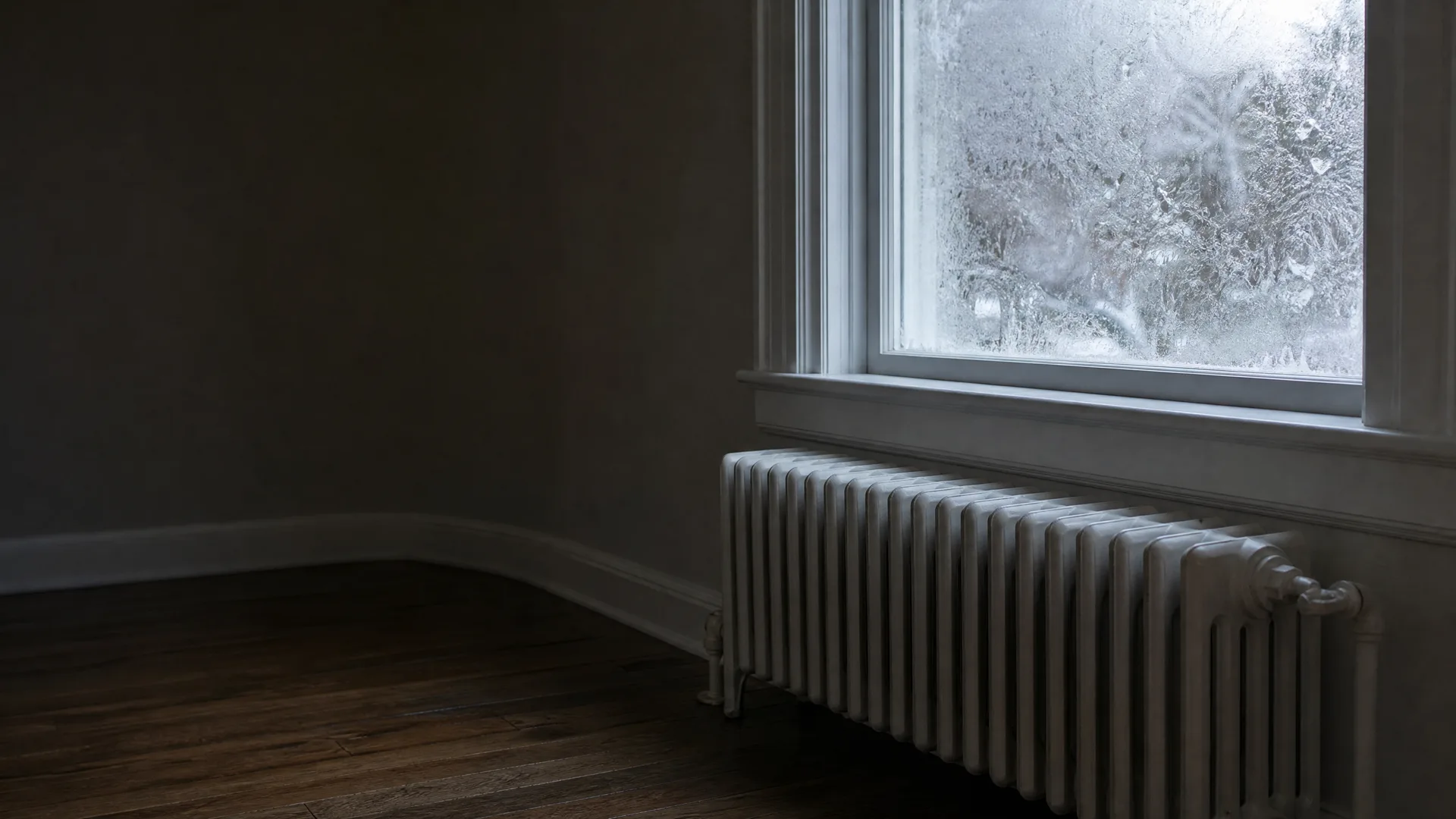
A white cast-iron column radiator under a frosted window in a dim empty room with dark walls and a wood floor, with snowy trees visible outside.

Six in the morning and the house is quiet except for the radiator. You're half awake under the blankets when it starts, a hard knock somewhere down in the pipes, then another, like someone hit the cast iron with a wrench. Outside the window the glass has frost on the inside of it, that thick kind you get on the coldest Missouri mornings, January with the temperature still dropping. You lie there and count the bangs. Three, then a pause, then two more. The radiator under the window ticks as it heats, and the knocking comes again right as the metal starts to warm. You already know the gas bill this month won't be small. You just want it to stop before it wakes the rest of the house.


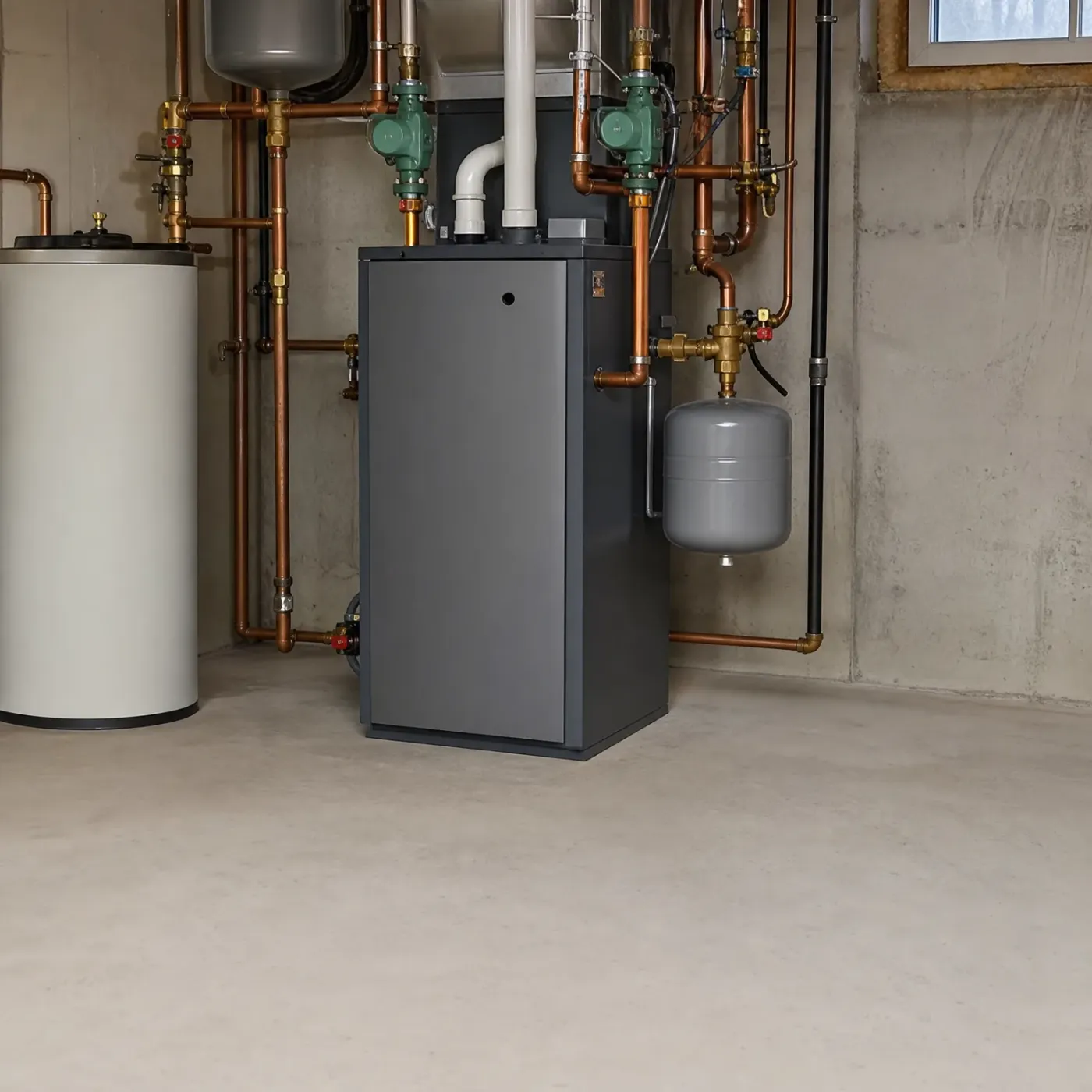
A dark gray floor-standing boiler in a concrete-walled basement, connected to copper piping, circulator pumps, a gray expansion tank, and a cream-colored storage tank to the left.
Pipes click and tick as they heat up and the water moves through without resistance, settling down once the system reaches temperature.
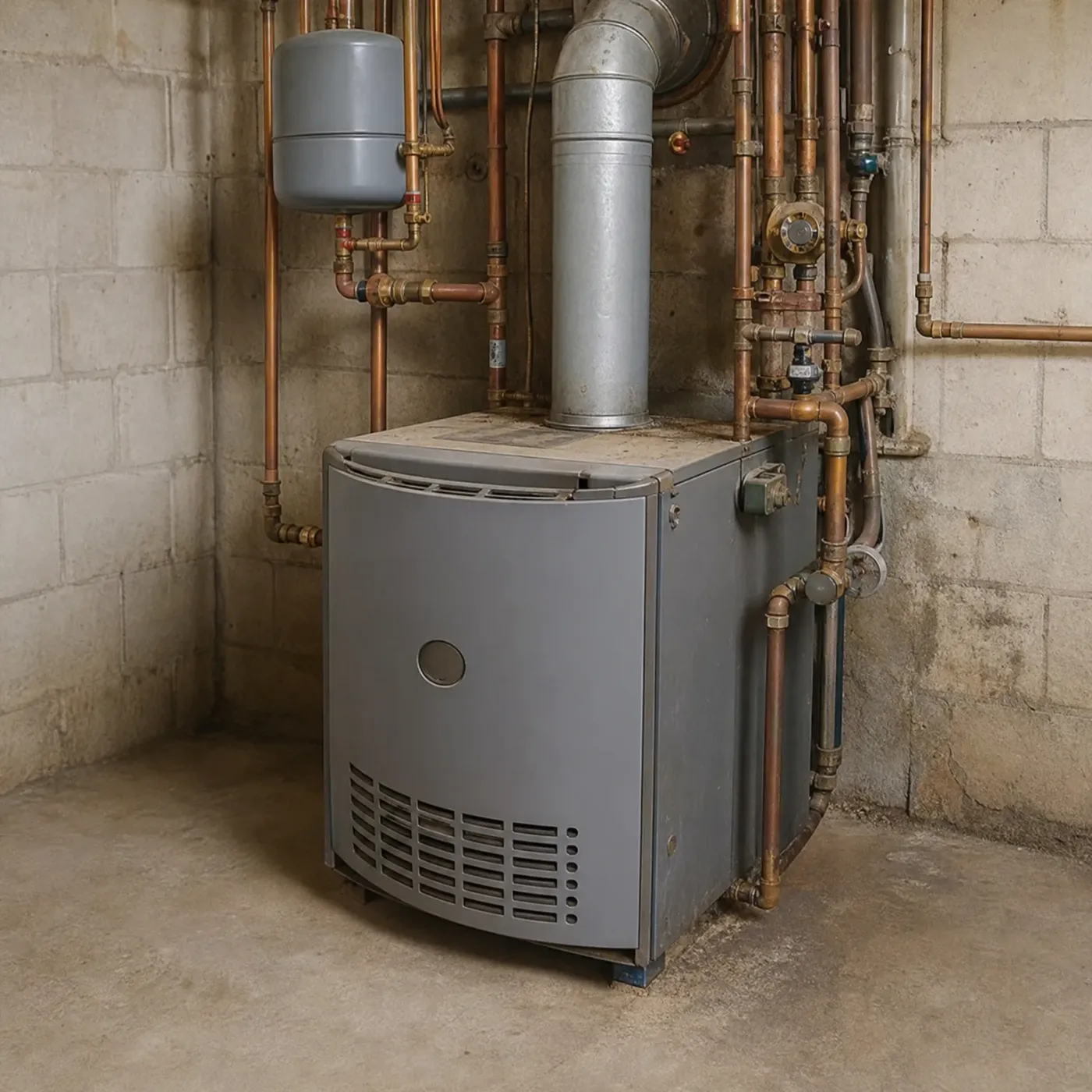
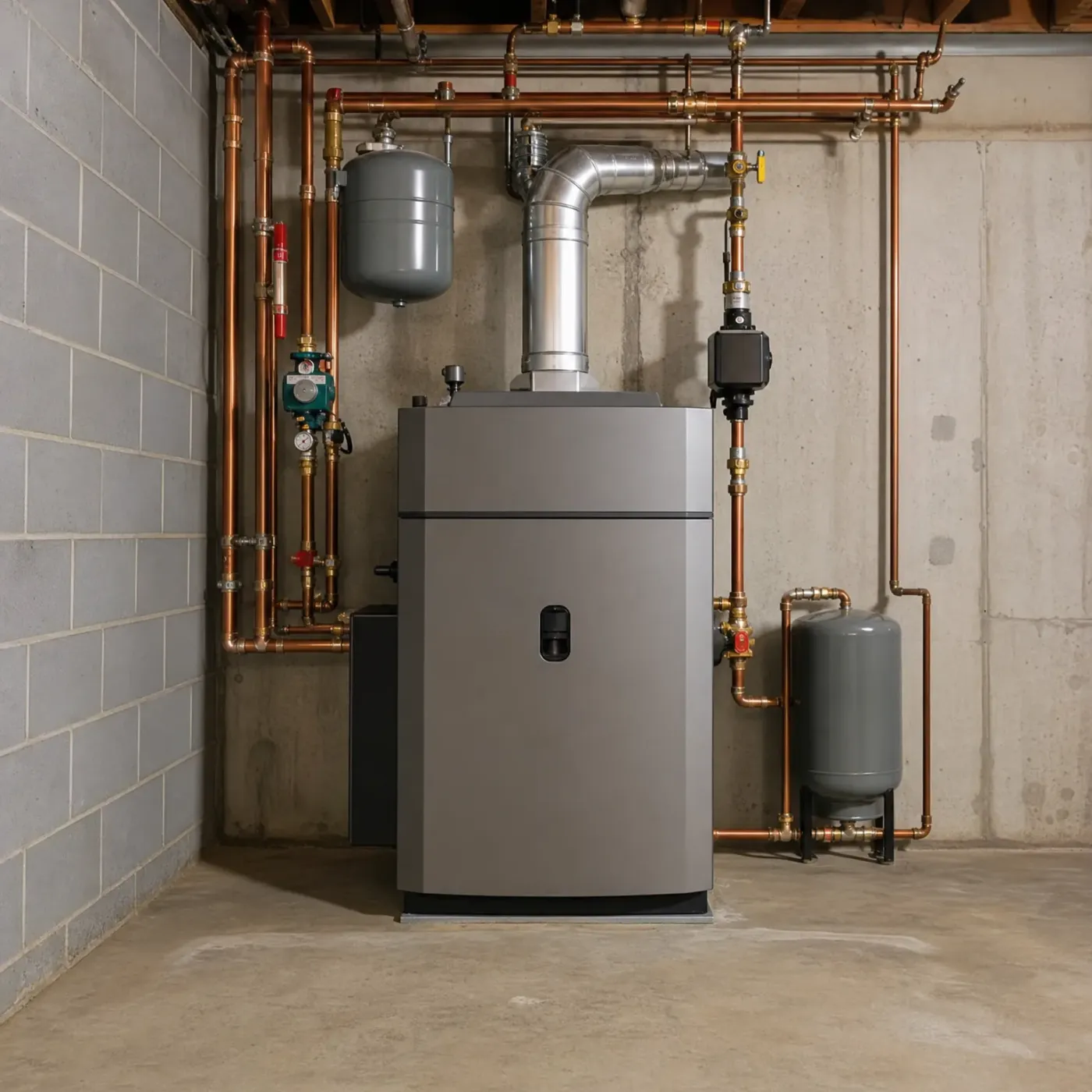
A gray residential boiler with a metal flue pipe stands in a concrete-block basement corner, surrounded by copper piping, valves and a gray expansion tank.
The banging holds steady or gets worse over weeks, a sign that scale is building on the heat exchanger and sections underneath.

Minerals in the fill water don't stay dissolved forever. They settle out and bake onto the hottest metal in the system, which is the heat exchanger and the cast iron sections closest to the burner. Once that scale builds up, it works like a blanket. The iron underneath gets hotter than the water is able to carry away, because the scale is sitting between them. Water that gets trapped under that layer turns to steam the moment it reaches temperature, and the pocket collapses as soon as cooler water reaches it. Cast iron doesn't absorb that kind of shock. It carries it straight through as a bang, sometimes several in a row as different pockets form and collapse. A low water level does the same thing a different way, by leaving part of the heat exchanger exposed to the flame with nothing but air where water should be. Sediment always settles to the bottom of the boiler first, which happens to be where the burner is putting in the most heat.

Where the Banging Comes From

  • Scale forms when minerals in the fill water settle out and bake onto the hottest metal, which is the heat exchanger and the cast iron sections around it.
  • A layer of scale acts like a blanket, so the metal underneath gets hotter than the water meant to carry that heat away.
  • Water trapped between the scale and the iron turns to steam the instant it gets hot enough, and that pocket collapses the moment cooler water touches it.
  • Each collapse sends a shock through the water column, and cast iron carries that shock as a bang instead of absorbing it.
  • The same banging shows up when the water level drops low enough to expose part of the heat exchanger to the flame directly.
  • Sediment settles fastest at the bottom of the boiler, which is exactly where the burner puts the most heat into the iron.
A woman in a gray turtleneck sweater stands by a window looking outside at snowy ground, with a dimly lit living room containing a sofa, shelves, lamp and a lit candle behind her.
A woman in a cream cable-knit turtleneck sweater stands in a warmly lit living room with a fireplace and shelves behind her, looking out a window toward snow-covered trees and a railed deck.
A woman in a cream knit turtleneck sweater stands by a window looking out at snow, with a lit fireplace, sofa and lamp in the room behind her.
A woman in a gray knit sweater sits by a window looking out at falling snow, with a dimly lit living room containing a sectional sofa, pillows, a lamp and houseplants behind her.

What scale does to the water inside

Water sits against the hottest metal in the boiler, right at the heat exchanger and the cast iron sections. When scale coats that metal, the water trapped between the scale and the surface has nowhere to go. The burner keeps firing underneath it, so that trapped layer turns to steam a lot faster than the water around it. A pocket of steam collapses the moment it touches cooler water nearby, and that collapse is what you hear as a knock. It isn't the pipes stretching or the system settling. It's steam forming and collapsing in the same spot, over and over, every time the burner cycles on.

Why it gets louder, not quieter

Scale doesn't wash away on its own. More minerals settle out of the fill water every time the boiler heats a batch, and they bake onto whatever layer is already there. So the blanket of scale gets thicker over weeks and months, not thinner. A thicker layer traps more water underneath it and holds more heat against the metal, which means bigger steam pockets and a harder knock when they collapse. If the noise has gone from an occasional tick to something sharp and steady, that's the scale buildup talking, not a loose pipe or a bracket that needs tightening.

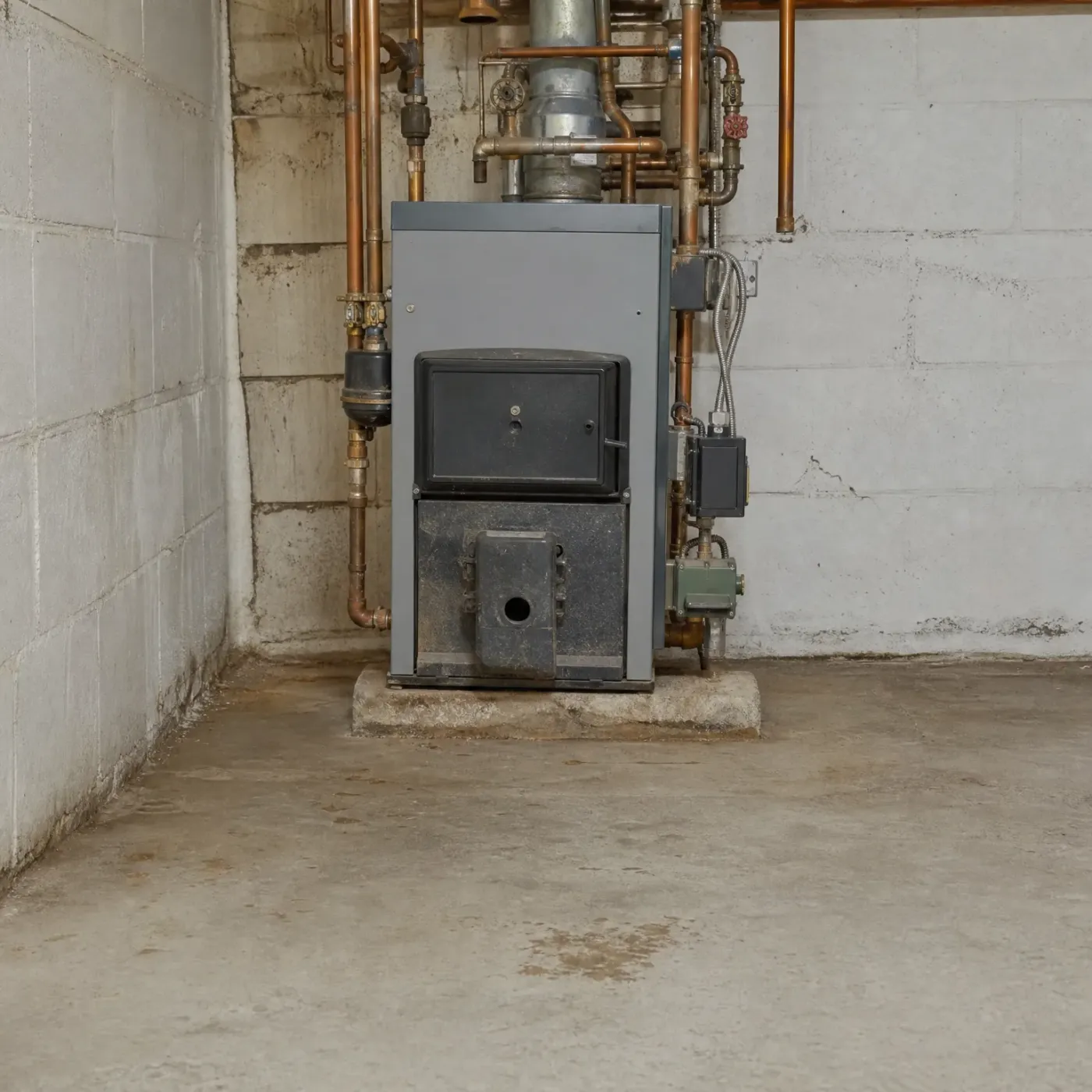
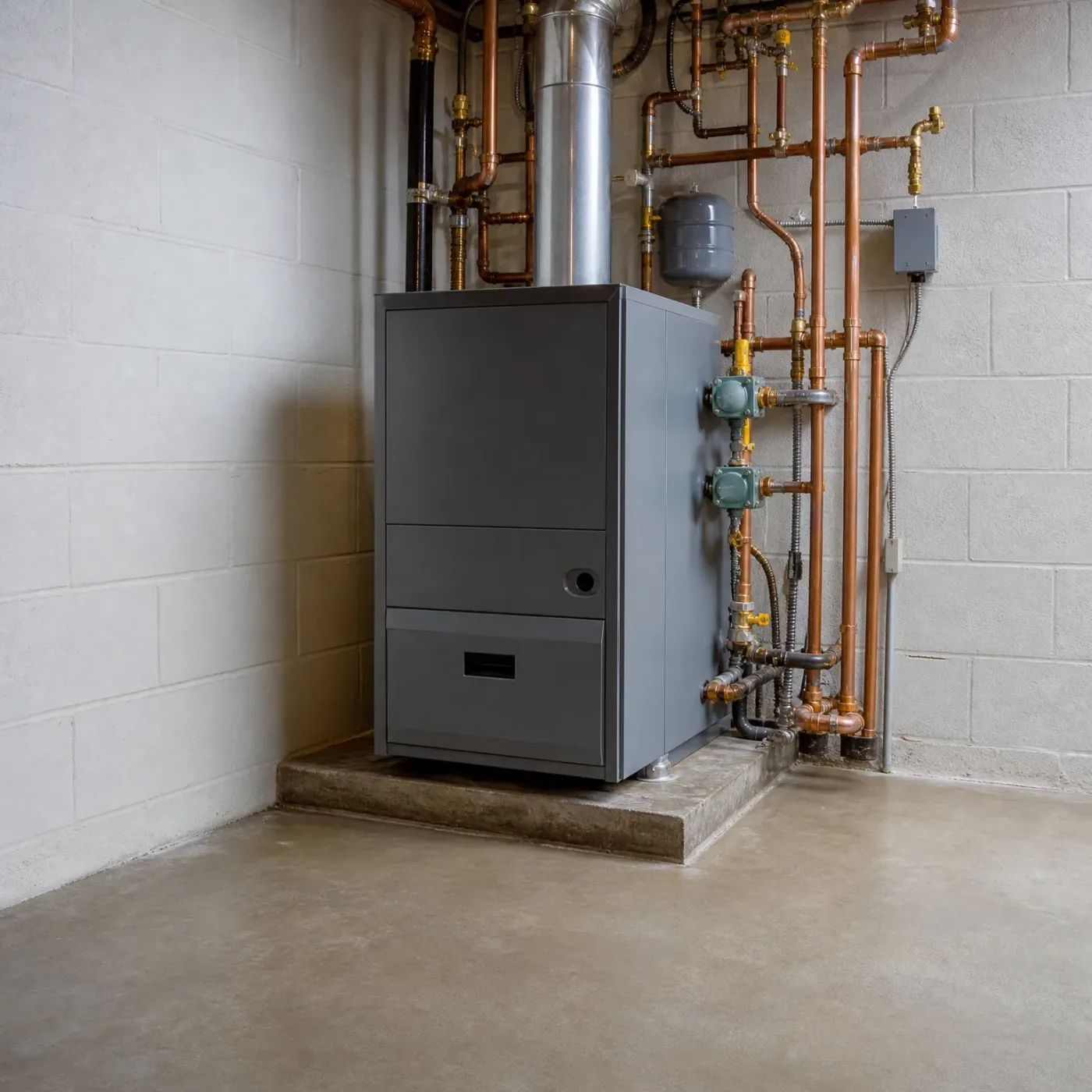
A gray boiler on a concrete pad in a basement with painted concrete block walls, copper piping, a metal flue, and electrical control boxes.
Before you get your boiler repair
A gray boiler with a metal flue pipe stands in a basement against concrete and concrete-block walls, connected to copper piping, a circulator pump, and two gray expansion tanks.
After you get your boiler repair

A boiler pro near you

That banging doesn't fix itself, and running the boiler with steam pockets forming under scale wears on the cast iron sections every time the burner fires. Each cycle knocks a little harder as the scale builds. Left alone through a Missouri winter, that's months of a system working against itself, and a cracked section or a failed heat exchanger costs a lot more to put right than the buildup that caused it. You don't need to figure out how bad it's gotten or whether it's the boiler itself or something in the near pipes. A contractor who works on boilers in Missouri can look at yours, see what the scale has done, and tell you what it actually needs. Send the request and that part of it is off your plate. You'll still have a boiler making noise tonight, but finding someone to deal with it won't be something you're carrying anymore.

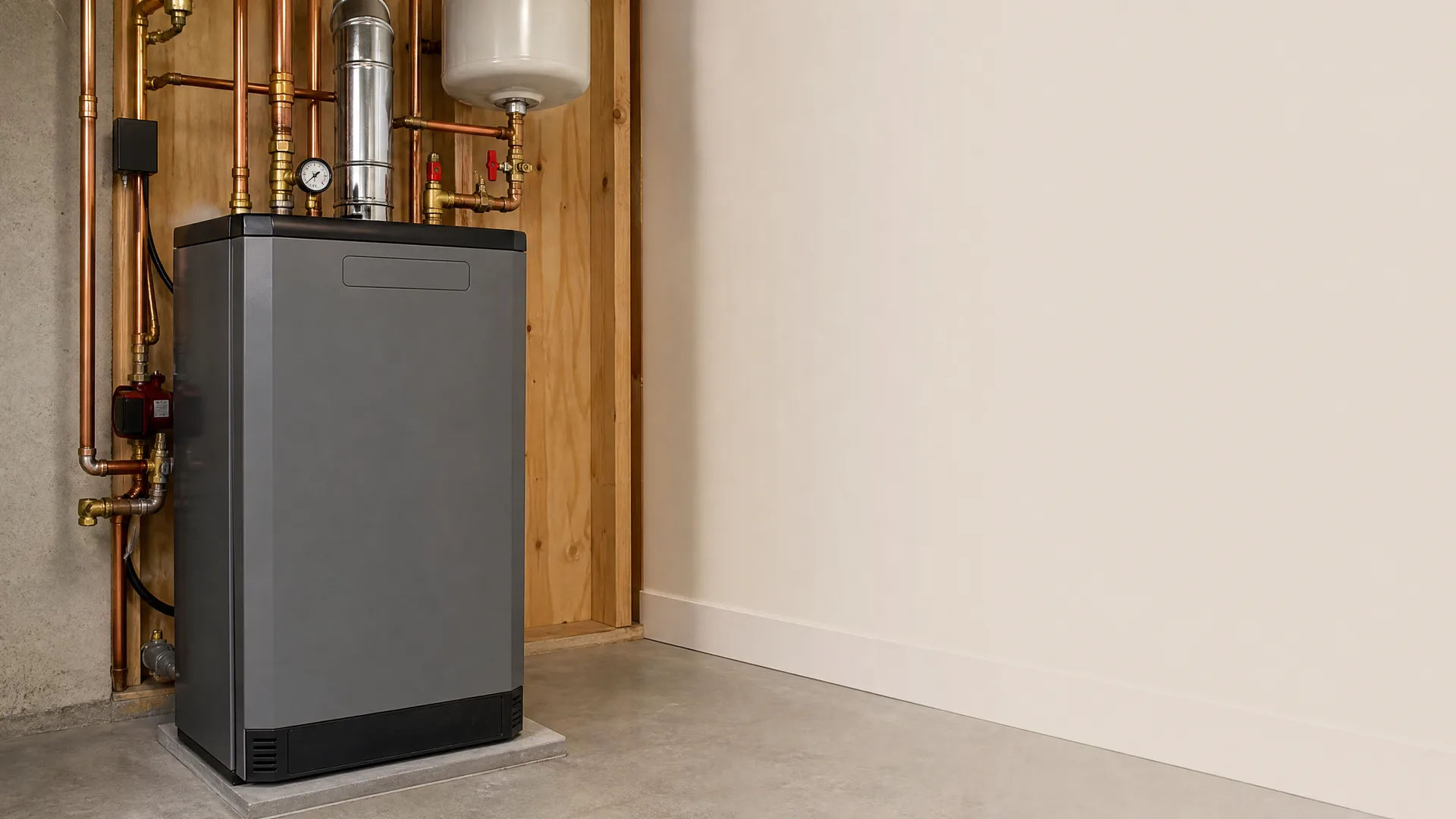
A dark grey floor-standing boiler on a concrete floor in front of a plywood wall, with copper pipes, valves, a pressure gauge, a flue pipe and a white expansion tank above it, beside a plain light-coloured wall.

Soft water versus hard well water

Homes on city water in most Missouri towns get water treated before it reaches the boiler, so fill water carries less mineral load to start. Homes on a private well often pull harder water straight from the ground, with more calcium and iron dissolved in it. That mineral content is what bakes onto the heat exchanger and cast iron sections. The harder the fill water, the faster scale builds, and the sooner the banging starts.

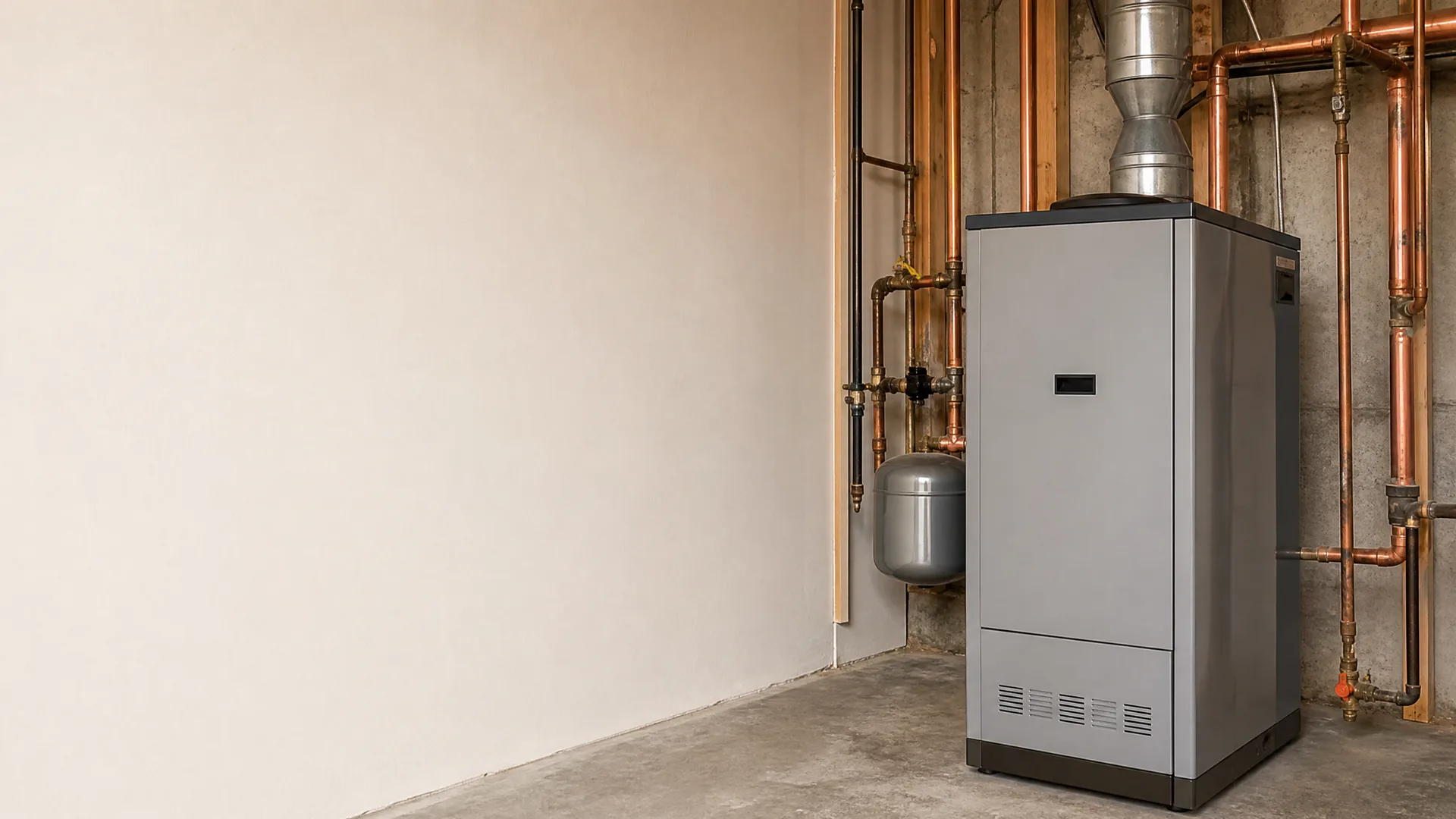
A gray boiler unit with a metal flue pipe stands in a basement corner, surrounded by copper piping and an expansion tank against a plain light wall and concrete floor.

One zone versus a full loop

A boiler feeding a single zone, like one radiator or one baseboard loop, cycles the same water past the same hot surfaces over and over. Scale collects in fewer places but builds there fast. A boiler running several zones spreads the heat across more pipe and more sections, so buildup shows up more slowly and in more spots. Either way, once scale forms under the burner, the knocking follows the same pattern.

Flush the Scale or Treat the Water

Flush the system

  • A contractor can drain the boiler and run a cleaning solution through the sections to break loose scale that's already formed.
  • This clears what's built up but doesn't change the mineral content of the water going back in, so scale starts forming again once the system refills.
  • Cast iron sections with heavy buildup may not come fully clean, especially where scale has baked on over several winters.
  • A flush addresses the noise without touching whatever is adding minerals to the fill water in the first place.
  • Homes on a well with hard water often see the banging return sooner than homes on treated city water.

Treat the fill water

  • A scale inhibitor or softener added to the fill water keeps minerals from settling out onto the heat exchanger and cast iron sections.
  • This works alongside a flush rather than instead of it, since existing scale doesn't dissolve on its own.
  • Homes on a private well tend to need this more than homes on city water, since well water usually carries more mineral load.
  • Treating the water is a longer-term step, not something that quiets a banging boiler the same week.
  • Missouri's cheap power doesn't offset what a boiler running under scale costs in wear on the cast iron over a winter.
A gray boiler unit on a concrete pad in a basement corner, connected to copper piping, valves and a metal flue against painted concrete block walls.

Running quiet

A boiler like this heats up without a sound beyond the burner catching and the pipes ticking once as the metal warms. The sections are clean, so water moves across the heat exchanger and off through the copper lines without anything trapped underneath it.

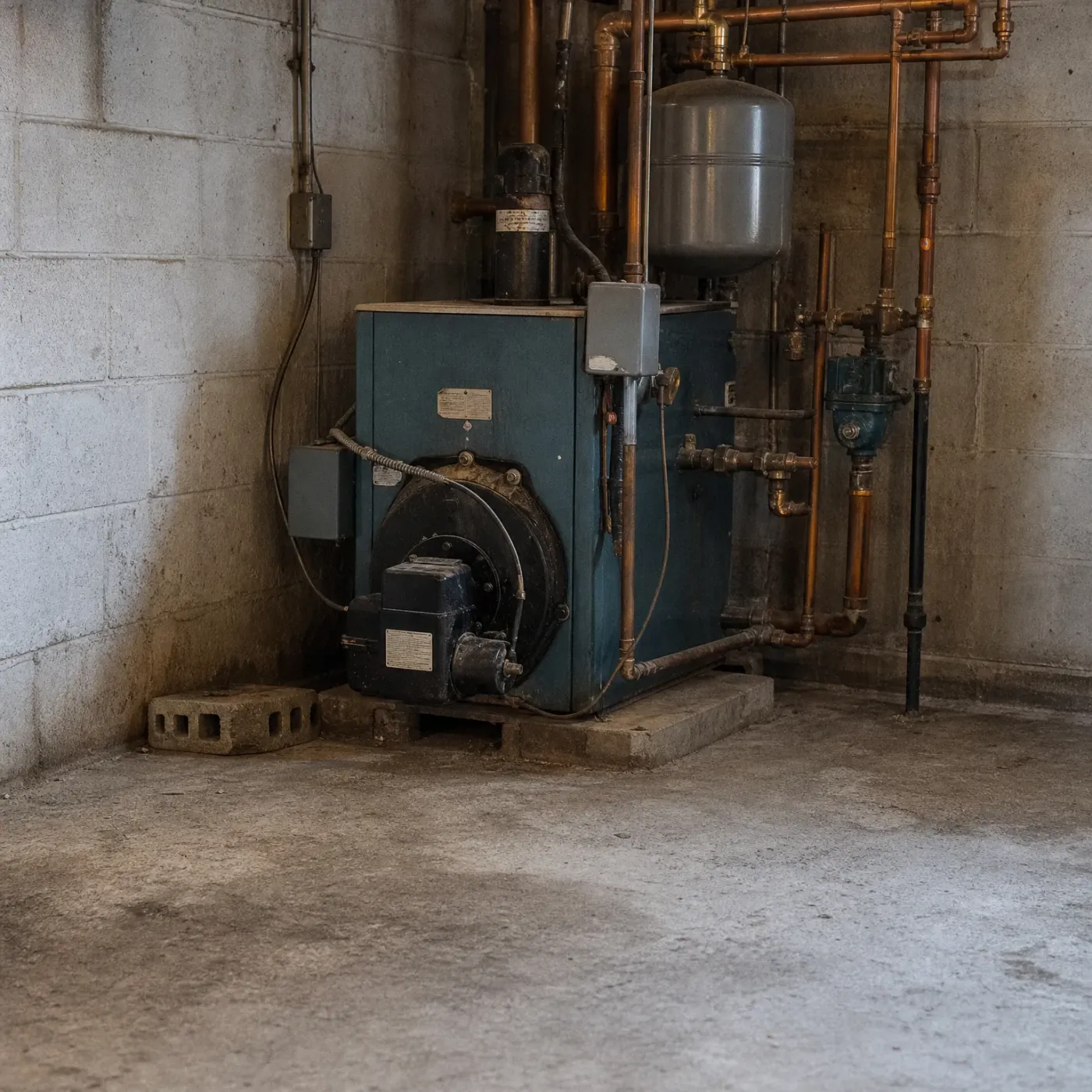
A blue oil-fired boiler with a burner unit sits on a concrete pad in a basement corner, with copper piping, valves and a gray expansion tank overhead against concrete block walls.

Scale underneath

This one's old enough that scale has had years to build on the cast iron sections. Water gets stuck between the scale and the hot metal, turns to steam, and the pockets collapse with a knock you can hear from the basement stairs.

Winter nights average 25°F statewide

Winter nights in Missouri average 25°F, cold enough that your boiler is firing on and off most of the night to keep the house even. That's a lot of burner cycles for scale and sediment to trap steam pockets under, which is when you hear the banging.

NOAA nClimDiv 1991-2020 county normals weighted by homes

A boiler that sits unused in a warm house through a Missouri spring doesn't fix itself, and scale doesn't dissolve on its own between one heating season and the next.

The banging comes back as soon as the burner starts firing hard again in the fall, usually louder than you remember it, because the scale had all summer to keep building.

A bearded man in a plaid flannel shirt stands in a kitchen looking out a window toward snow-covered shrubs, with a steaming mug on the windowsill and potted plants on a shelf behind him.
A smiling man with dark curly hair in a navy t-shirt sits on a gray couch indoors, with a large-leafed plant and a window in the background.
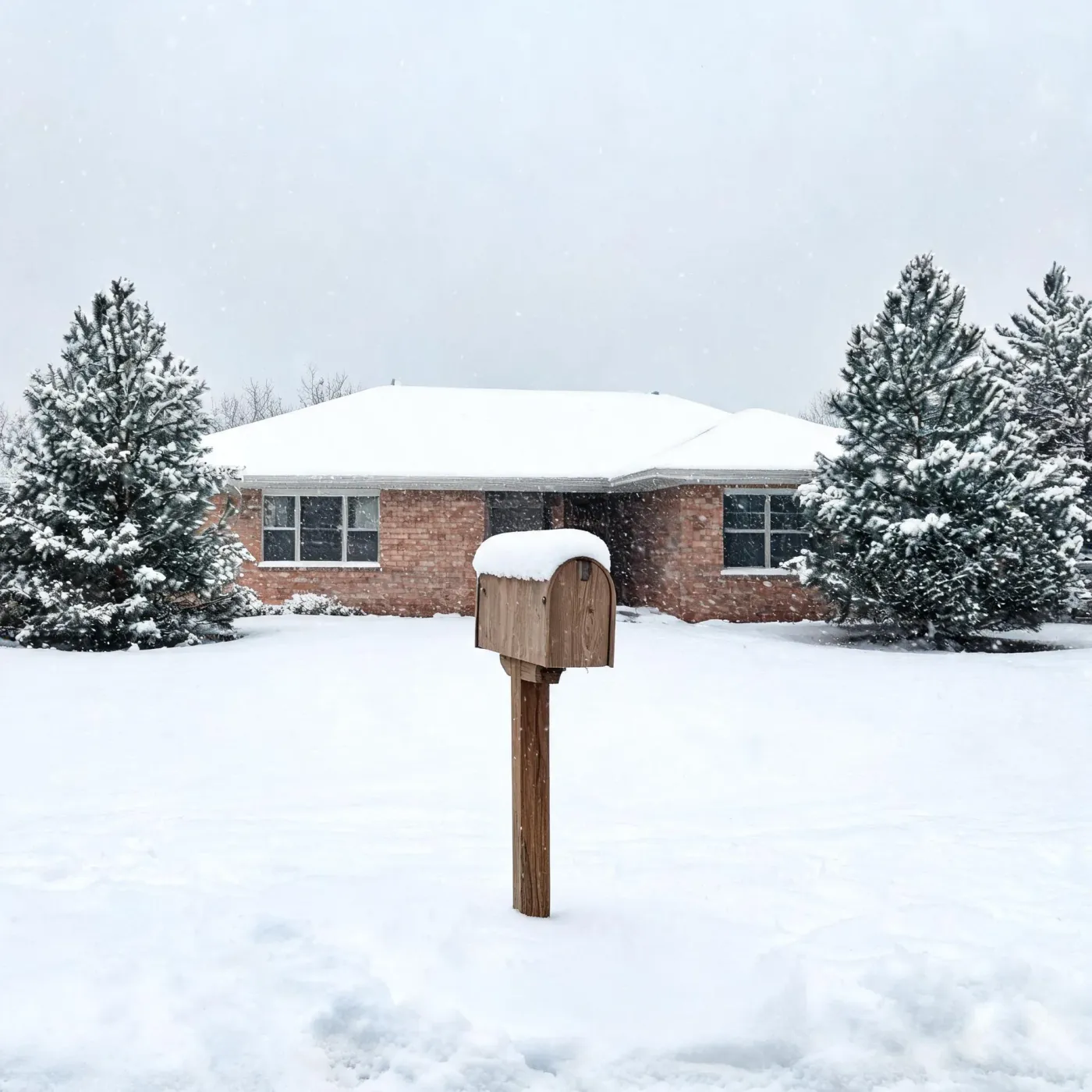
A snow-covered wooden mailbox on a post stands in a snowy yard in front of a single-story brick house flanked by snow-laden evergreen trees during falling snow.

Statewide, winter nights average 25°F, a figure from NOAA climate data. That kind of cold keeps your burner cycling on and off for hours at a stretch to hold the house at temperature, and every one of those cycles is a chance for a steam pocket to form under whatever scale has built up inside the sections. A boiler in a mild climate might only fire a few times an hour overnight. Yours is working harder than that most nights from December through February, so the banging you hear isn't random. It tracks with how often the burner is lighting, and on the coldest nights you'll likely notice it more, not less.

NOAA nClimDiv 1991-2020 county normals weighted by homes

A smiling man in a denim shirt and white t-shirt stands in an open dark doorway of a stucco house, facing a woman with long brown hair and a green jacket seen from behind in the foreground.

The banging is scale, and it won't quiet down on its own

The knock you hear is steam trapped under scale on the heat exchanger and the cast iron sections, and it gets louder as the deposit thickens. Every night the burner fires through a Missouri winter is another chance for it to build. A flush clears what's there. Treating the fill water keeps it from coming back, especially if your house is on a well.

You already know how to handle a small problem before it turns into a bigger one, which is most of why you read this far instead of waiting it out. The next step is getting a contractor who works on boilers in your area to look at yours directly, since what's scaled up in your sections and what your fill water is doing are things only someone standing in front of the unit can tell you. Send the form and that part of it is off your plate.

Interior corner of a room with a window and sheer curtain at left, a gray upholstered sofa with a cushion at right, and a round wooden table holding stacked books and a round vase with an olive branch.
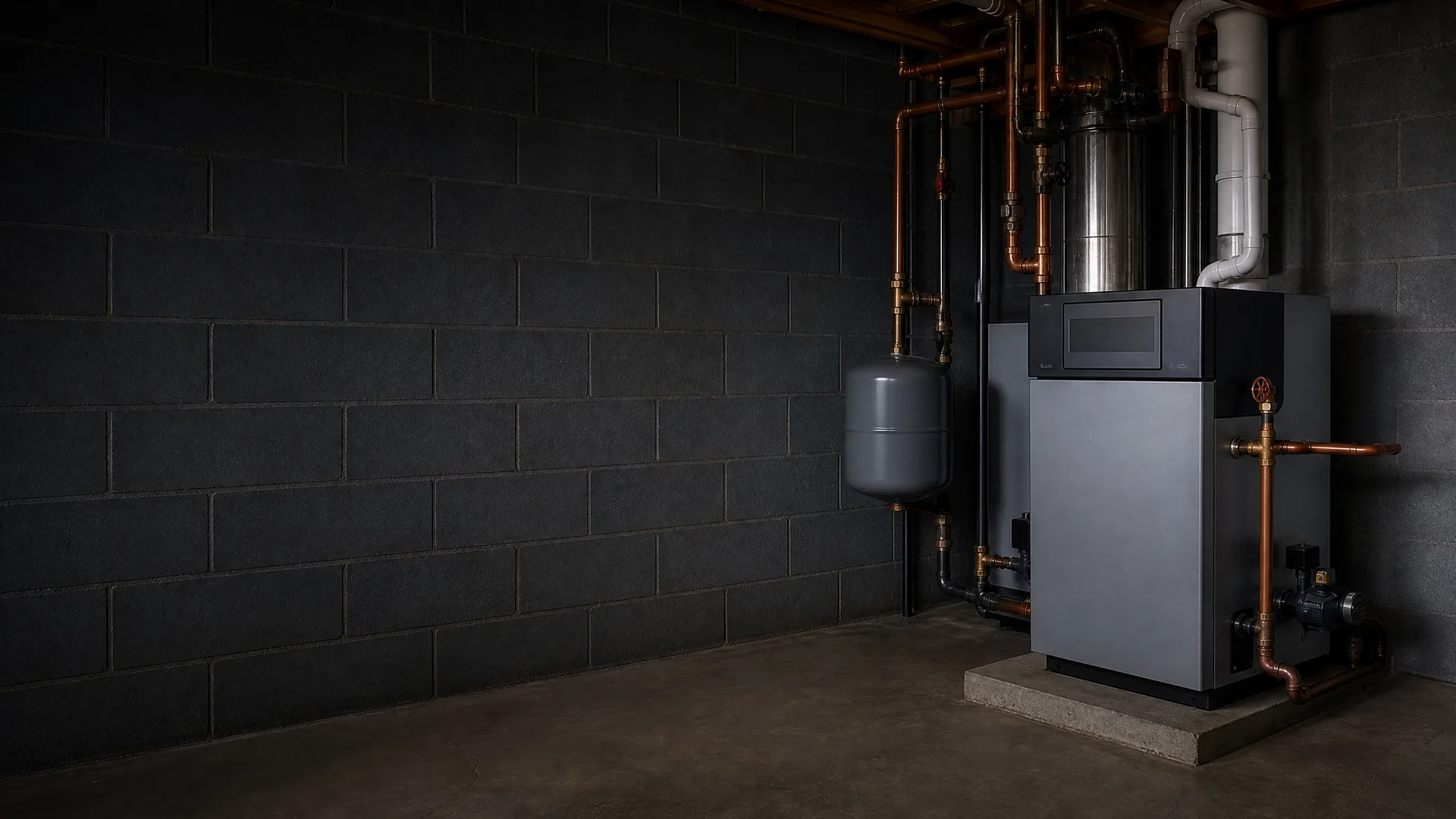
A gray boiler unit with a control panel sits on a concrete pad in a basement room with dark concrete block walls, connected to copper and metal piping, a gray expansion tank, and an insulated flue.

A local pro for your boiler repair

Get the boiler repair search off your mind today.

Step 1 of 3: Equipment