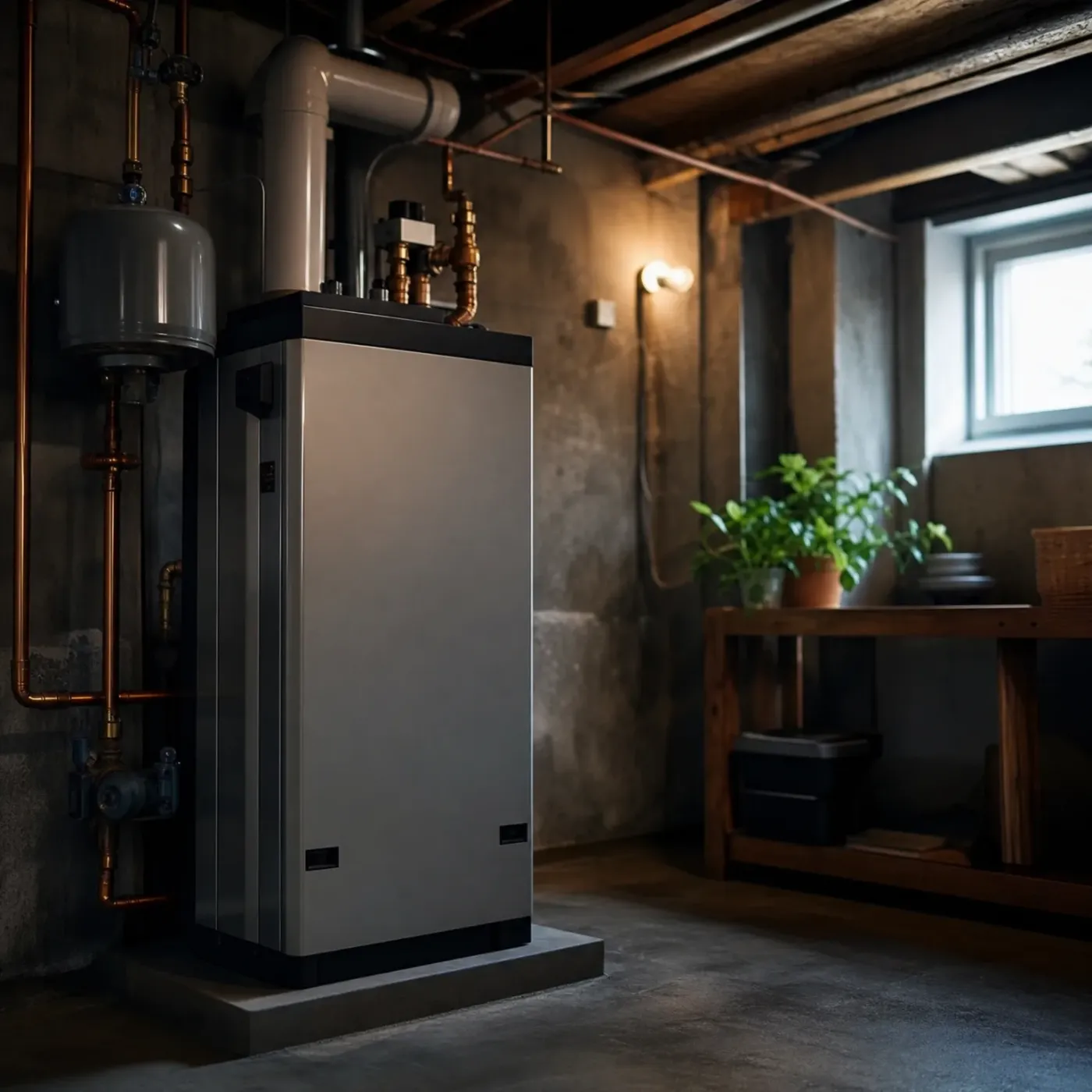
A floor-standing gray boiler unit on a concrete plinth in a basement, with copper pipes, an expansion tank, and a flue pipe above, a wall light, a small potted plant on a wooden shelf, and a window in the background.

The right pro for this job

Why your boiler relief valve is leaking in Missouri

A relief valve lets go when pressure or temperature inside your boiler climbs too high, and a steady drip from it usually means something upstream isn't right, not a bad valve. This page gets into what causes that in a gas-heated Missouri home and what a contractor checks first. Skip the search-and-compare and get matched with someone who can look at your system.

Get matched

A leaking relief valve usually means pressure inside your boiler is building past the point it's built to hold, and the valve is doing its job by letting that pressure out. The most common cause is waterlogged expansion tank, one that's lost its air charge and filled with water, so it can't absorb the system's pressure swings as the water heats up. Another cause is a faulty pressure or temperature gauge feeding the system bad readings, or a boiler that's firing too hot because of a control problem. Sediment buildup inside the valve seat can also keep it from sealing back shut once it opens, so what started as a brief release turns into a steady drip. In a gas-fired system like most Missouri homes run, the boiler cycles often through the winter, and each cycle stresses a weak tank or valve a little more. The drip is a symptom. Left alone, the real problem behind it tends to get worse, not better.

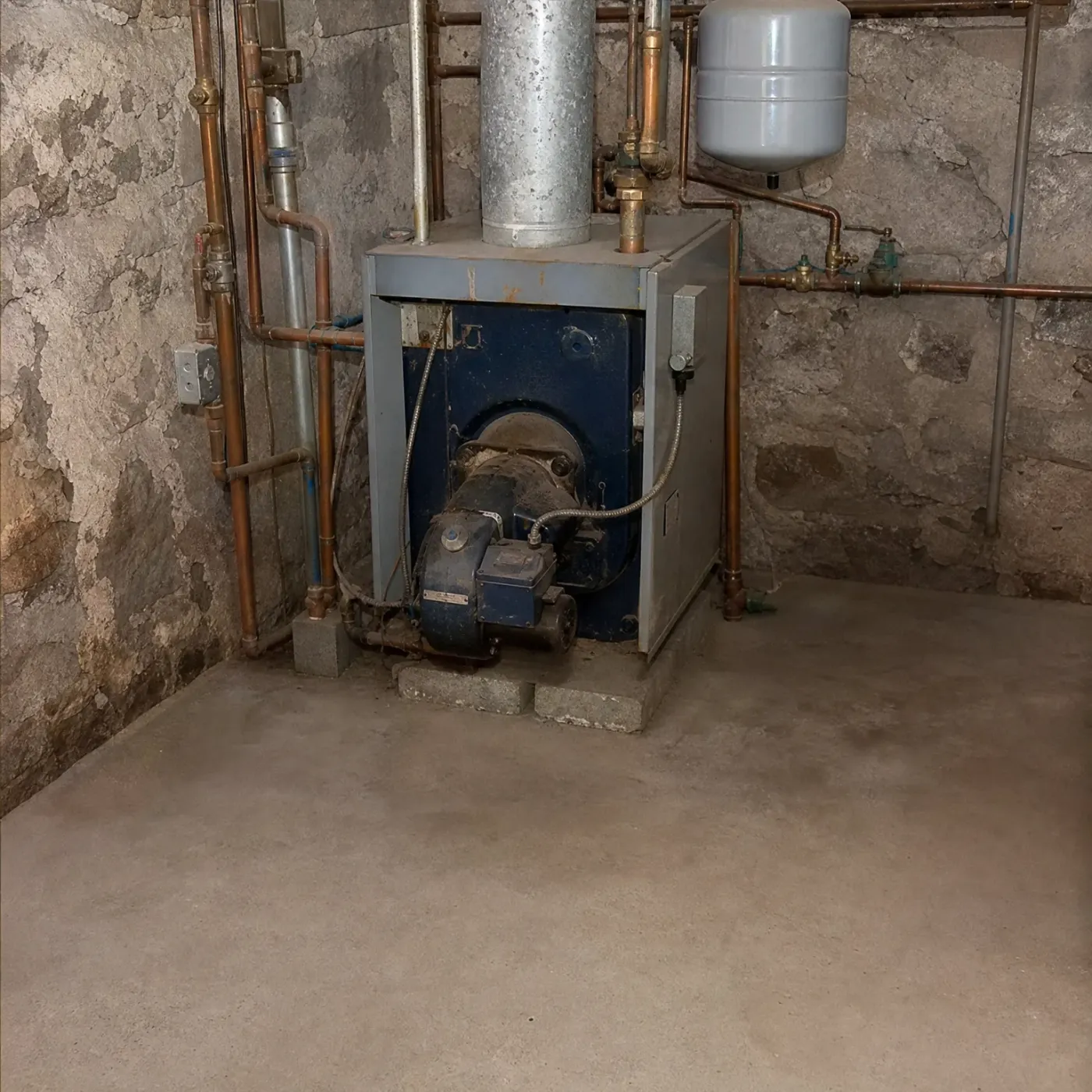
An oil-fired boiler with a blue and gray cabinet and burner sits on concrete blocks in a basement corner with stone walls, connected to copper pipes, a metal flue, and a wall-mounted expansion tank.
Before you get your boiler repair
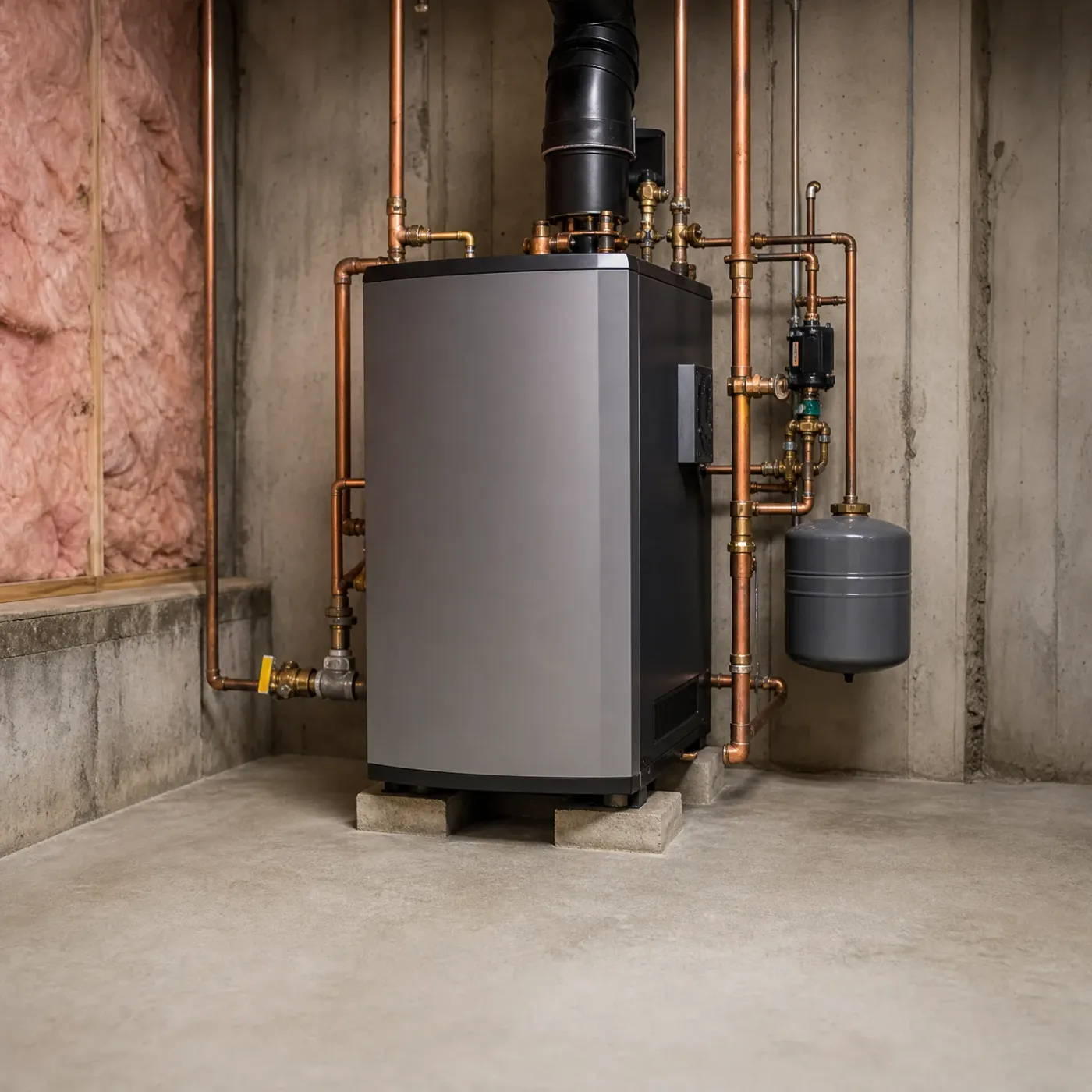
A gray and black boiler unit sits on concrete blocks in a basement corner, connected to copper piping, valves, a black flue duct, and a gray expansion tank, with bare concrete walls and exposed pink insulation at left.
After you get your boiler repair

What's actually pushing the pressure up

Most gas boilers run around 12 to 15 psi cold, and the relief valve is set to open at 30 psi. That gap matters. When the expansion tank behind the boiler loses its air charge, water has nowhere to go as it heats, so pressure climbs straight toward that 30 psi line instead of staying put. A failed fill valve can do the same thing by letting in more water than the system needs. Either way, the valve isn't malfunctioning. It's opening because the number it's watching crossed the line it's built to respond to. That's why tightening or replacing the valve by itself usually doesn't stop the drip for long.

Why a dripping valve won't fix itself

A relief valve that's opened once often keeps weeping afterward, even if pressure drops back down, because the seat inside it can pick up a scratch of mineral grit the moment it lifts. Missouri water running through a boiler loop carries enough dissolved mineral to do that over years. Once the seat is marked, it seals worse each time it closes, and the drip can start showing up at lower and lower pressures. Left alone, that slow loss of water is also what lets air into the system, which is a separate problem from the one that started it.

A woman with dark hair in a bun wearing a cream knit sweater sits on a gray sofa in a bright living room, looking off to the side.
A woman wrapped in a knit blanket sits on a gray sofa in a living room, looking toward a bright window with houseplants and an armchair in the background.
A woman in a gray cowl-neck sweater sits on a light sofa with cushions, smiling and looking to the side, with a kitchen and window visible behind her.
A woman with dark hair in a bun, wearing a light linen shirt, sits on a sofa and looks to the side, with a window, houseplants and a kitchen with pendant lights blurred behind her.

The relief valve is threaded into the top of the boiler or into the supply piping, with a discharge tube pointed down toward the floor. Inside it, a spring holds a disc against a seat, set to let go right around 30 psi. That's by design. It's a safety valve, not a faulty part, and it's meant to open before the tank itself takes the damage. Once pressure falls back below that point, the disc is supposed to reseat and the drip stops within a few minutes on its own. If it keeps weeping after that, something is usually caught on the seat, grit or mineral scale that won't let the disc close all the way. Missouri's municipal water carries enough dissolved minerals that this buildup is common after a few winters of the valve cracking open and reseating. Worth checking where the discharge tube runs, too. Some installers route it into a condensate line or a floor drain, which means a slow leak can go on for a while before you ever see a stain or a puddle to tell you something's wrong.

How the relief valve actually works

  • The relief valve sits near the top of the boiler and is threaded into a tapping on the tank or the supply piping, with a discharge tube running down toward the floor.
  • Inside the valve, a spring holds a disc against a seat, and that spring is calibrated to let go at 30 psi so the tank itself doesn't split.
  • Once pressure drops back below the set point, the disc should reseat and the dripping should stop on its own within a few minutes.
  • A valve that keeps weeping after pressure has fallen usually has mineral grit or scale caught on the seat, which keeps the disc from seating fully.
  • Missouri's municipal water carries enough dissolved minerals that over a few heating seasons, that grit builds up on the seat every time the valve cracks open.
  • Some installers tie the discharge tube into a condensate line or a floor drain, so a leak can go unnoticed for a while before it shows as a stain or a puddle.
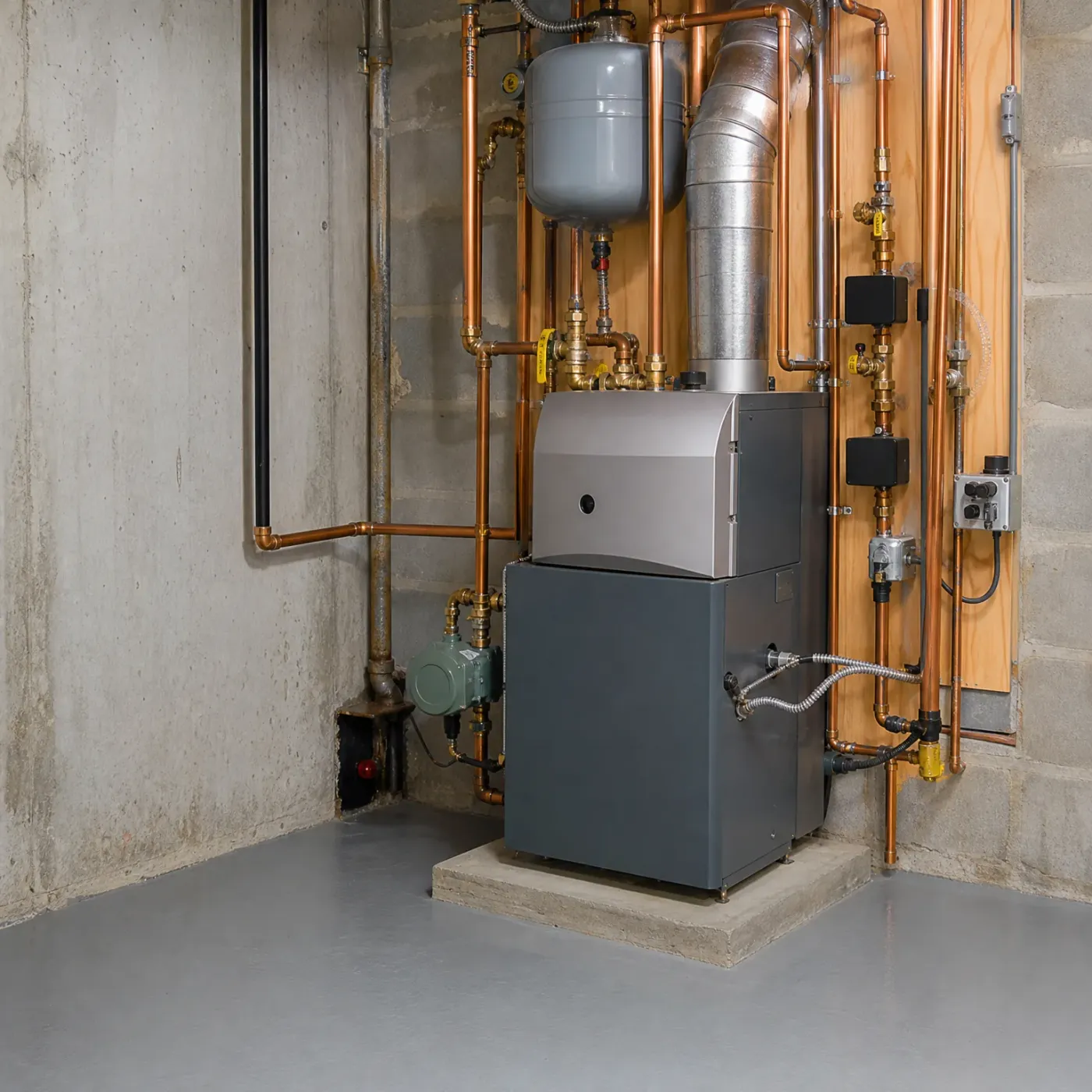
A gray residential boiler on a concrete pad in a basement corner, connected to copper piping, an expansion tank, circulator pumps and insulated flue ducting against concrete and plywood walls.
A boiler running right holds steady pressure, and the gauge stays put instead of creeping up toward that 30 psi mark.
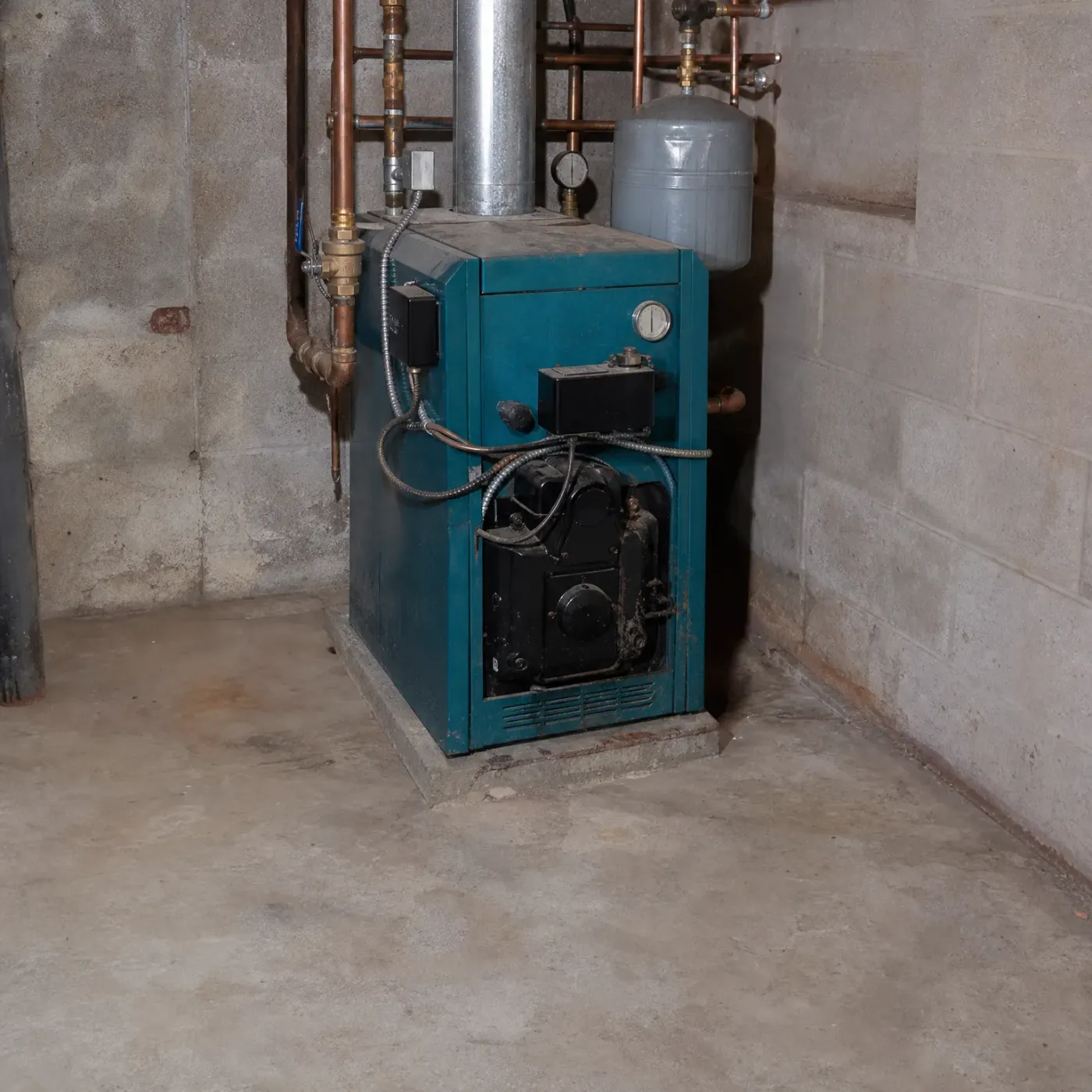
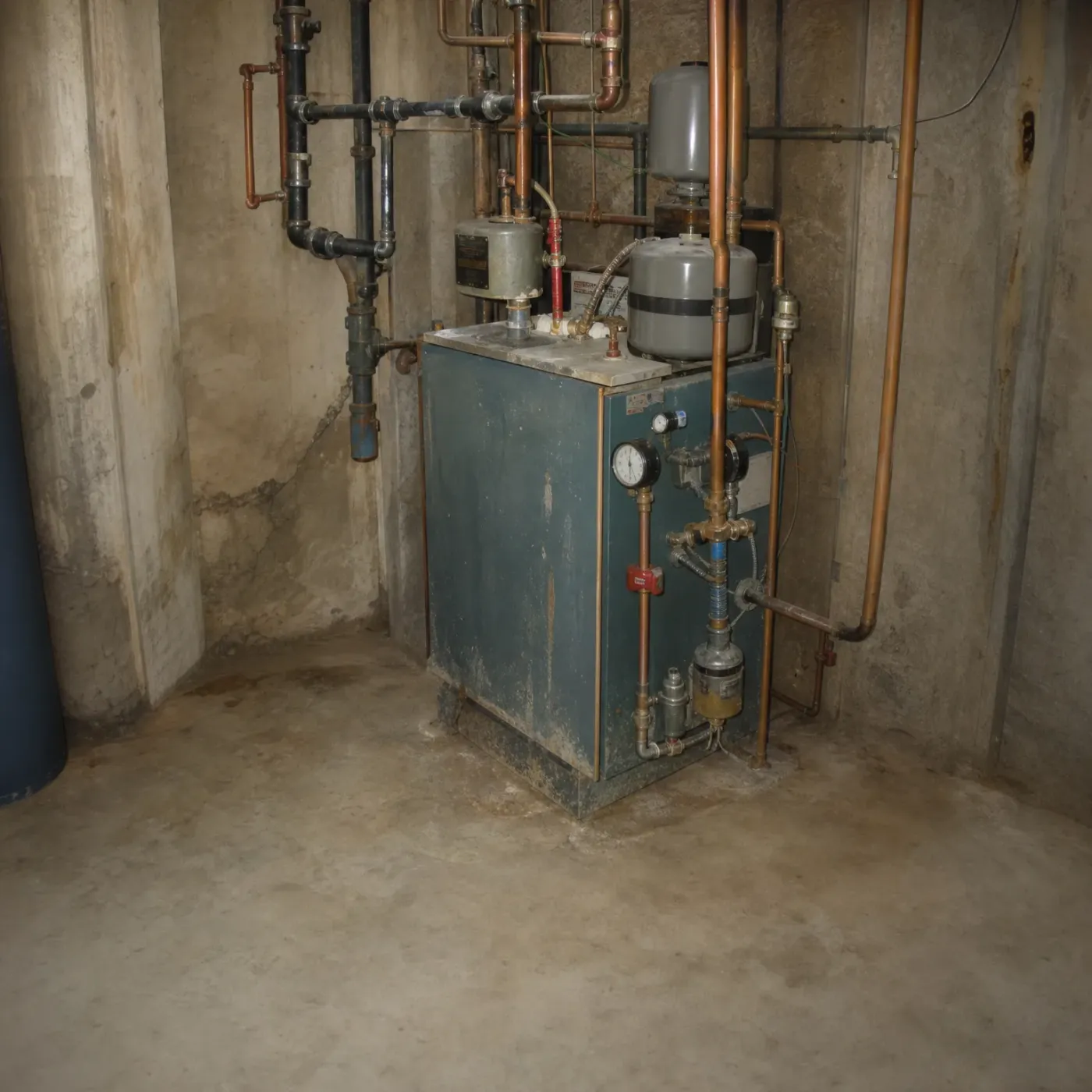
A teal boiler with a pressure gauge and black burner unit sits on a concrete pad in a basement corner, with copper pipes, a flue vent, and a gray expansion tank above against concrete block walls.
Once the casing shows age like this and the gauge keeps climbing, a dripping relief valve usually isn't far behind.
A cast iron column radiator with a valve stands beneath a window with a frosted pane showing snowy trees outside, in a dim room with dark walls and wood flooring.

You're up before the rest of the house, and the radiator under the window has ice feathered across the inside of the glass above it. The cast iron ticks as it heats, but the room stays cold at the edges. Down in the basement, you find out why: a thin trail of water has dried white down the side of the boiler, right where the relief valve sits, and the gauge reads higher than you remember it sitting last January. You wipe it down and go back upstairs, but you keep thinking about that gauge. Missouri mornings like this one are why the furnace runs most of the year, and a boiler that's working this hard to keep up is one you don't want guessing about alone.
Matched to your boiler job

A dripping relief valve won't wait for a convenient week, and most of the year that's a Missouri winter with the heat running hard. Once that valve is wet underneath and the discharge tube shows mineral trails, the pressure problem behind it isn't going to fix itself. Figuring out whether it's a waterlogged expansion tank, a bad fill valve, or the relief valve itself failing takes someone who can read that gauge and pull the tank's air charge, not a guess from searching around online. You could spend an evening calling boiler repair companies around Missouri, explaining the drip and the ice on the radiator glass and the ticking cast iron, then doing it again for the next one, and the one after that, just to find someone who answers and works on boilers like yours. That's the part worth handing off. Get matched with a contractor who knows gas boilers and let them take it from here, so you can stop chasing calls and get back to a basement that isn't dripping.

What People Get Wrong About This

  • The valve itself is almost never the problem; it's a brass fitting with a spring, and springs don't wear out from normal cycling.
  • A relief valve that opens once and reseats cleanly is doing exactly what it's built to do, not failing.
  • Mineral deposits from hard water can keep the disc from seating fully after it opens, turning a one-time release into a steady drip.
  • A thermal expansion issue, not a pressure issue, shows up differently: the valve weeps during or right after a hot water draw, not at random.
  • Replacing the valve without checking the expansion tank's air charge usually means the new valve starts dripping within months.
  • The discharge tube is supposed to run toward the floor, and if it's capped or plugged, pressure has nowhere to go but out around the valve seat.

Most homeowners assume the valve failed and want it swapped out. That's rarely what's happening. The valve is a simple brass fitting with a spring holding a disc against a seat, and that spring doesn't wear out from opening and closing the way a gas valve or igniter might. If a contractor replaces it without looking upstream, the new one often starts weeping within months because whatever pushed the old valve open is still there.

There's a real difference between a valve doing its job and a valve that's failing. One clean release, where it opens, lets out some water, and reseats dry, means the system worked as designed. A steady drip is different. That usually points to mineral buildup on the disc or seat, common anywhere water leaves hard deposits behind, keeping it from closing fully once it's been forced open.

Timing tells you something too. If the drip shows up during or just after someone runs hot water, that points to thermal expansion rather than a slow pressure climb. And check the discharge tube itself. It's supposed to run down toward the floor so water has somewhere to go. If it's capped, kinked, or plugged, pressure builds with nowhere to release except around the valve seat itself, which looks exactly like a bad valve but isn't one.

Winter nights average 25°F statewide

At 25°F, a typical overnight low here in winter, your boiler is running near its hardest for hours at a stretch. That's long, steady runtime for the expansion tank and the relief valve to hold up under, and it's when a tank that's already waterlogged tends to show itself.

NOAA nClimDiv 1991-2020 county normals weighted by homes

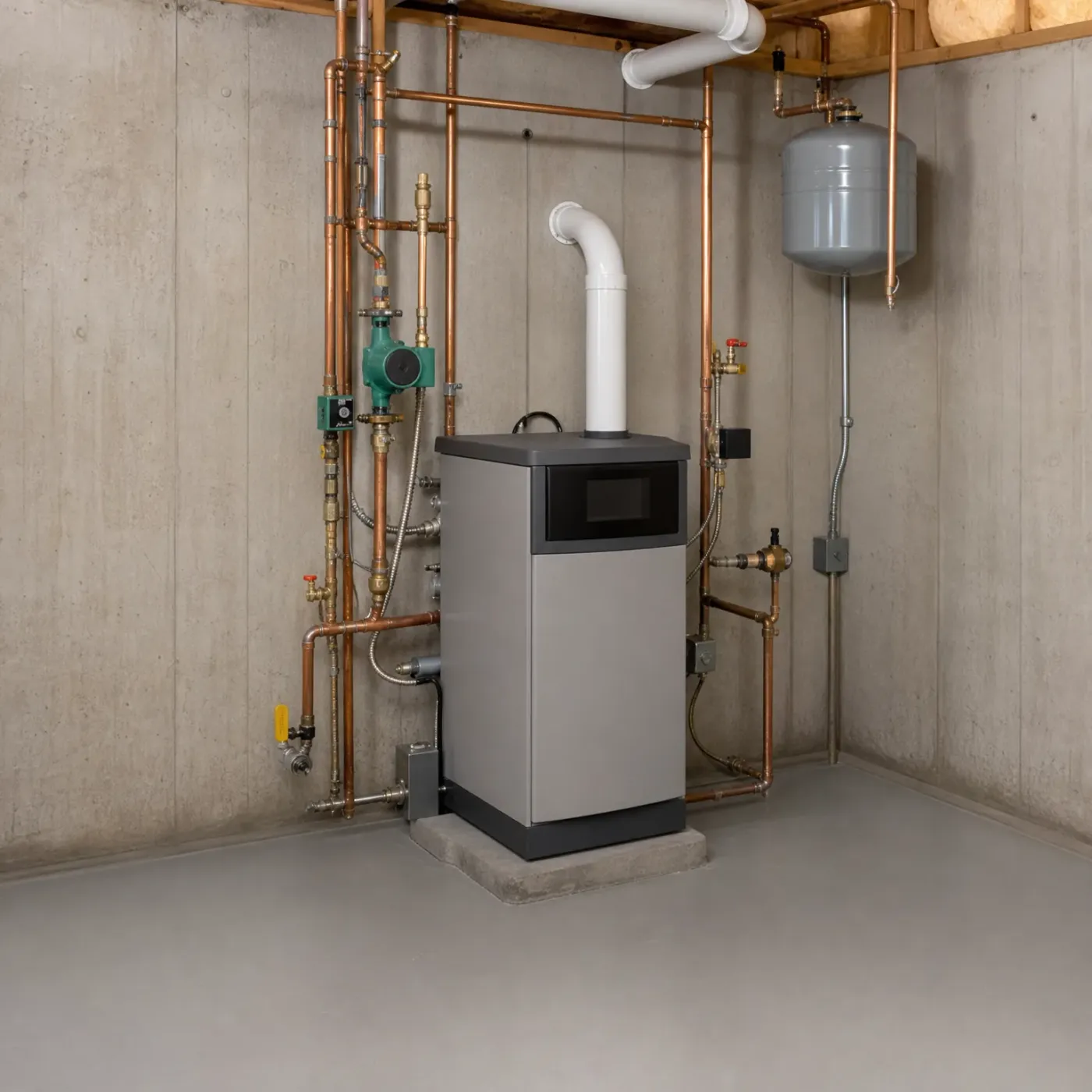
A gray floor-standing boiler on a concrete pad in a basement corner, with copper piping, a circulator pump, a white PVC flue, and a gray expansion tank mounted on the wall.

Holding pressure the way it should

The copper piping is dry, the expansion tank mounted on the wall is doing its job, and the gauge sits where it belongs. A system like this keeps the pump and hoses under steady, even pressure through a long Missouri winter.

A green metal boiler with pressure gauge stands in a concrete basement corner, surrounded by copper and black iron pipes and two tank-shaped vessels.

A sign something upstream is off

Cast iron like this can run for decades, but the gauge and valves nearby tell you what's happening inside. A relief valve that's wet, or a gauge creeping past 30 psi, means the tank behind it isn't holding its charge anymore.

What are you noticing around the boiler right now

Look under the valve and you'll likely find a damp spot on the floor, or a crust of white or rust-colored mineral built up where the discharge tube ends. Sometimes it's a slow weep you only catch if you check twice a week. Sometimes it's enough to pool and leave a stain on the basement floor. You might hear a faint hiss when the boiler is running hard, or notice the pressure gauge sitting higher than it used to. None of this means the boiler is about to fail, but a relief valve that keeps draining water is draining the fix along with it. Left alone through a Missouri winter, that steady loss can leave the system short on water and short on heat when the house needs it most.

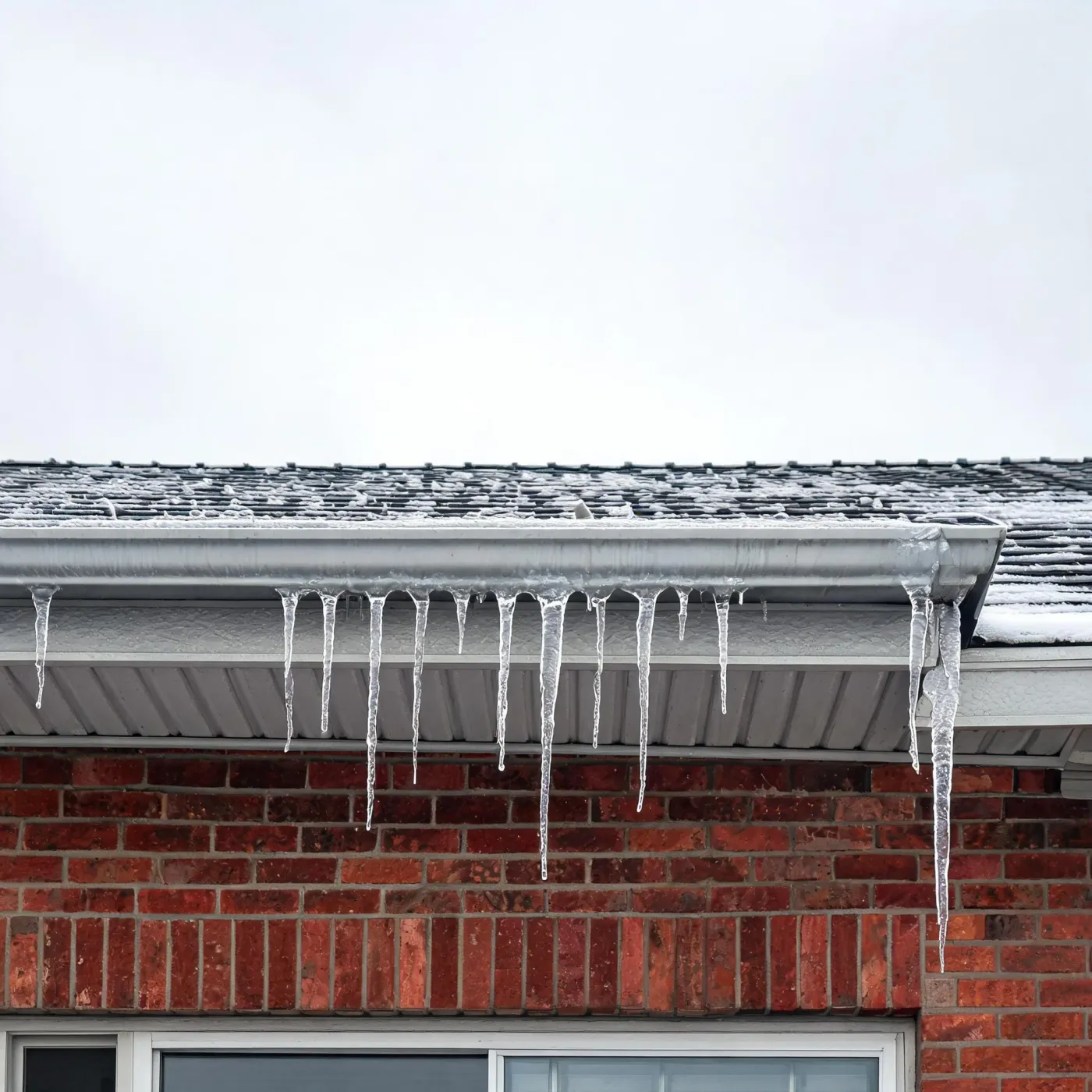
Icicles hang from a metal gutter along the eave of a red brick house with a snow-dusted shingle roof under an overcast white sky.

Statewide, winter nights average 25°F, and your boiler doesn't idle through nights like that. It runs long stretches to keep up, cycling on and off for hours rather than a quick burst here and there. That extended runtime means more heating and cooling cycles for the water inside, and more cycles means more chances for pressure to climb if the expansion tank behind the boiler isn't holding its air charge. A system working fine on a mild afternoon can start weeping at the relief valve once the temperature drops and stays down overnight. If you've noticed the drip mostly shows up after the coldest nights, this is why. Source: NOAA climate normals.

NOAA nClimDiv 1991-2020 county normals weighted by homes

A smiling older woman with gray hair in a cream knit sweater stands in a dimly lit kitchen beside a window showing snow outside, with a round loaf of bread on the counter in the foreground.
A woman and a child wrapped together in a thick knitted blanket on a sofa, both with eyes closed, with a lit table lamp and houseplant in the dim background.
A woman in a cream sweater and jeans stands in the open doorway of a white stucco house, holding the dark door, while a man in a dark quilted jacket seen from behind walks toward the entry past potted plants.

A dripping relief valve is a pressure problem, not a valve problem

A leaking relief valve is telling you something upstream is wrong, most often a waterlogged expansion tank that can't absorb pressure the way it's supposed to. The valve itself is just doing its job. Fixing the drip means fixing what's pushing the pressure up to begin with, and that's not something to guess at while your boiler keeps running through a Missouri winter.

You don't have to track down who handles boiler repair in your area, call around to see who's available, and explain the same drip and the same mineral trail to three different people before you get a straight answer. Answer a few questions about what you're seeing and you'll be matched with a contractor suited to this kind of repair, and they'll reach out to you directly. That's the part that disappears. What they find once they're out to look at your boiler is theirs to tell you.

Interior corner with a beige sofa holding a dark green and a light cushion and a textured throw, a potted small-leaved tree beside a white-framed window, and a dark shallow bowl on a wooden coffee table in the foreground.
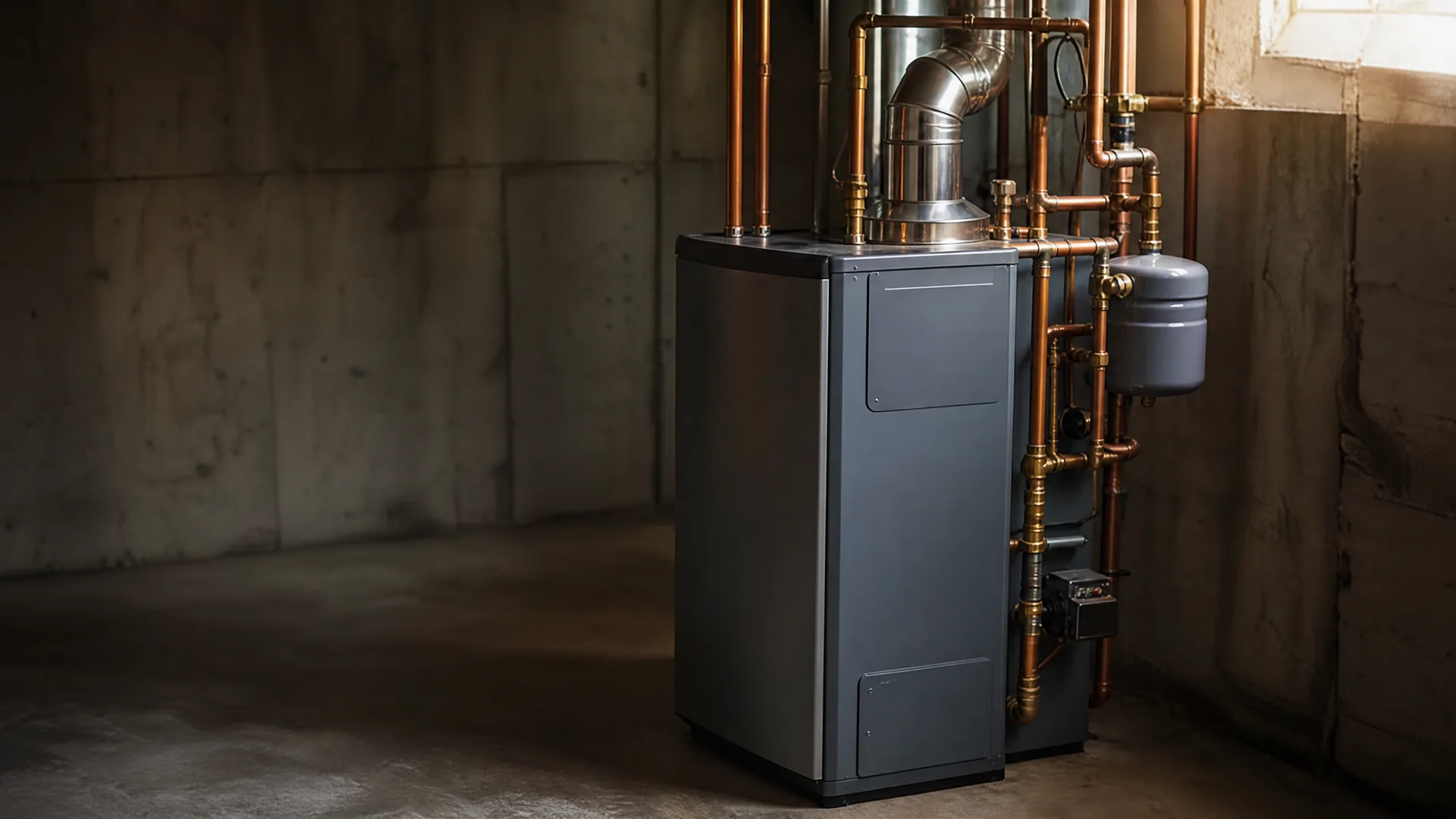
A gray boiler unit in a concrete-walled basement, connected to copper piping, a metal flue duct, and a wall-mounted expansion tank.

A boiler pro near you

Step 1 of 3: Equipment