Why your boiler won't turn on in a Missouri winter
Send the request today and let a boiler pro reach out to you.
A boiler that won't fire on a cold Missouri morning is not a small thing. Most homes here heat with gas, and when that heat doesn't come on, there's no backup plan sitting in the next room.
The reason is usually something specific. A pilot that won't stay lit. An igniter that's failed. A pressure switch, a low water level, a circulator pump that's seized up. Some of these you can check yourself. Most of them need someone who works on boilers all winter, because the fix depends on which one it is, and guessing wrong wastes the one thing you don't have right now, which is time.
That's the part worth knowing before you do anything else. You don't have to figure out which part failed. You don't have to call around and compare who can come out soonest. Send the request once, and that search becomes someone else's job instead of yours.
The contractor who gets it is licensed to work in Missouri and local to where you live. This isn't a dispatch center sorting your request among a pool of strangers. It goes to one contractor who services this kind of equipment through winters like this one, who has seen what usually goes wrong in a boiler when it refuses to start, and who can tell you what's happening once they're looking at it instead of guessing over the phone.
You also won't end up with five companies calling you back within the hour, each one trying to beat the others to your door. One request goes to one contractor. That's the whole process.
The house is cold now, or getting there. That part doesn't wait. Everything after sending the request does the waiting for you.
Why won't my boiler turn on when it's freezing out?
Cold snaps in Missouri put the most strain on a boiler right when you need it least. If it won't fire, you're probably checking the thermostat, listening for a click, maybe staring at the pilot light wondering if it's even worth troubleshooting yourself. The timing feels unfair, but a boiler that quits in single digit weather usually isn't a mystery. Something specific failed, and cold is often what pushed it there.
Cold makes a weak part fail completely
A boiler that was limping along in milder weather often stops outright once temperatures drop hard, because the system has to run longer and more often to keep up. A igniter that was sparking weakly, a pressure switch sitting right at its limit, or a thermocouple already failing can all give out under that extra demand. Low water pressure is another common cause, and cold snaps make it show up fast since the system is calling for heat nonstop. None of this means the boiler is finished. It means something inside it reached a point it couldn't push past, and in most cases that's a single part, not the whole unit.
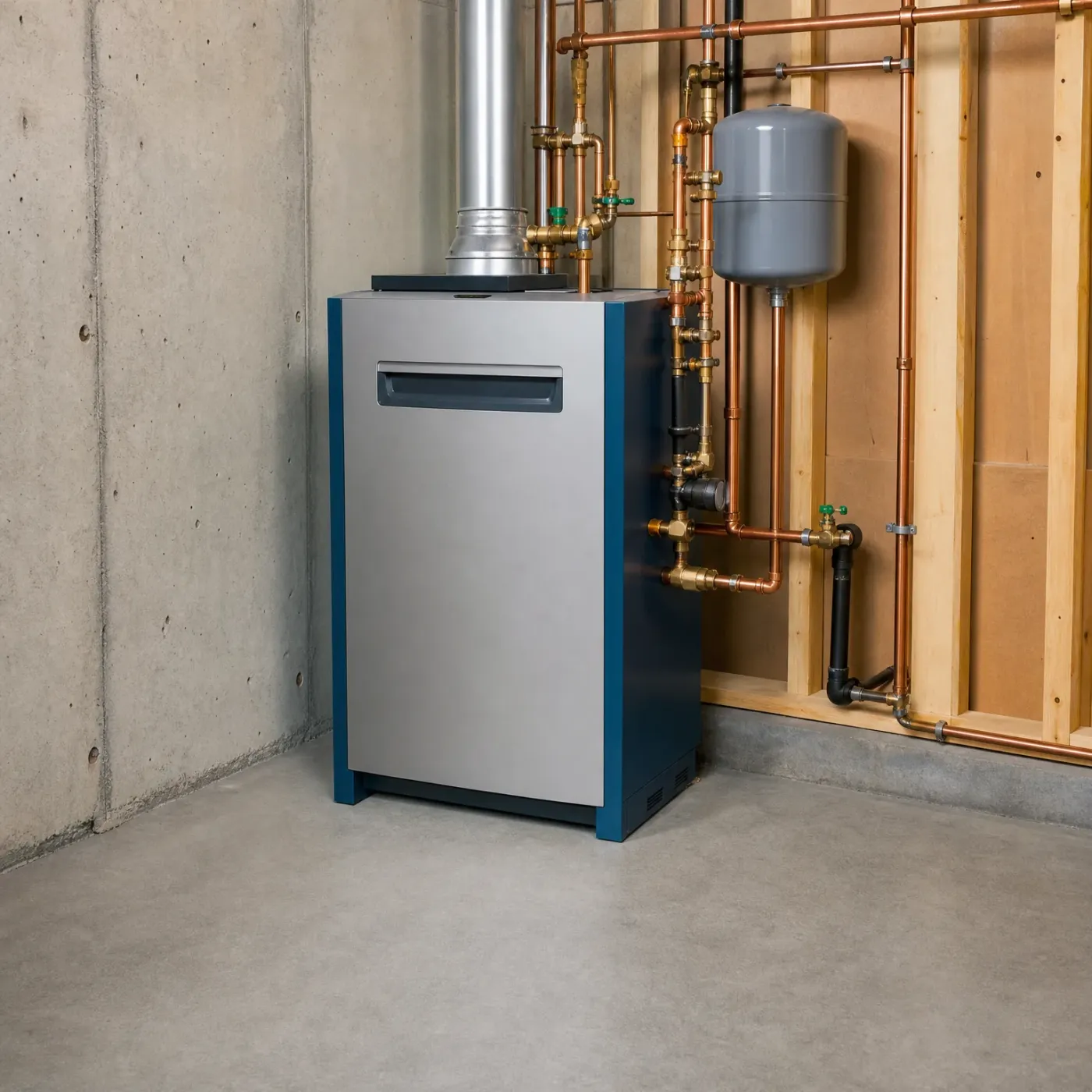
Running the way it should
A boiler that's working right sits quiet most of the time, cycling on and off without you noticing. The pipes carry hot water out to the radiators and back, the pressure holds steady, and the pilot or igniter lights every time it's asked to.
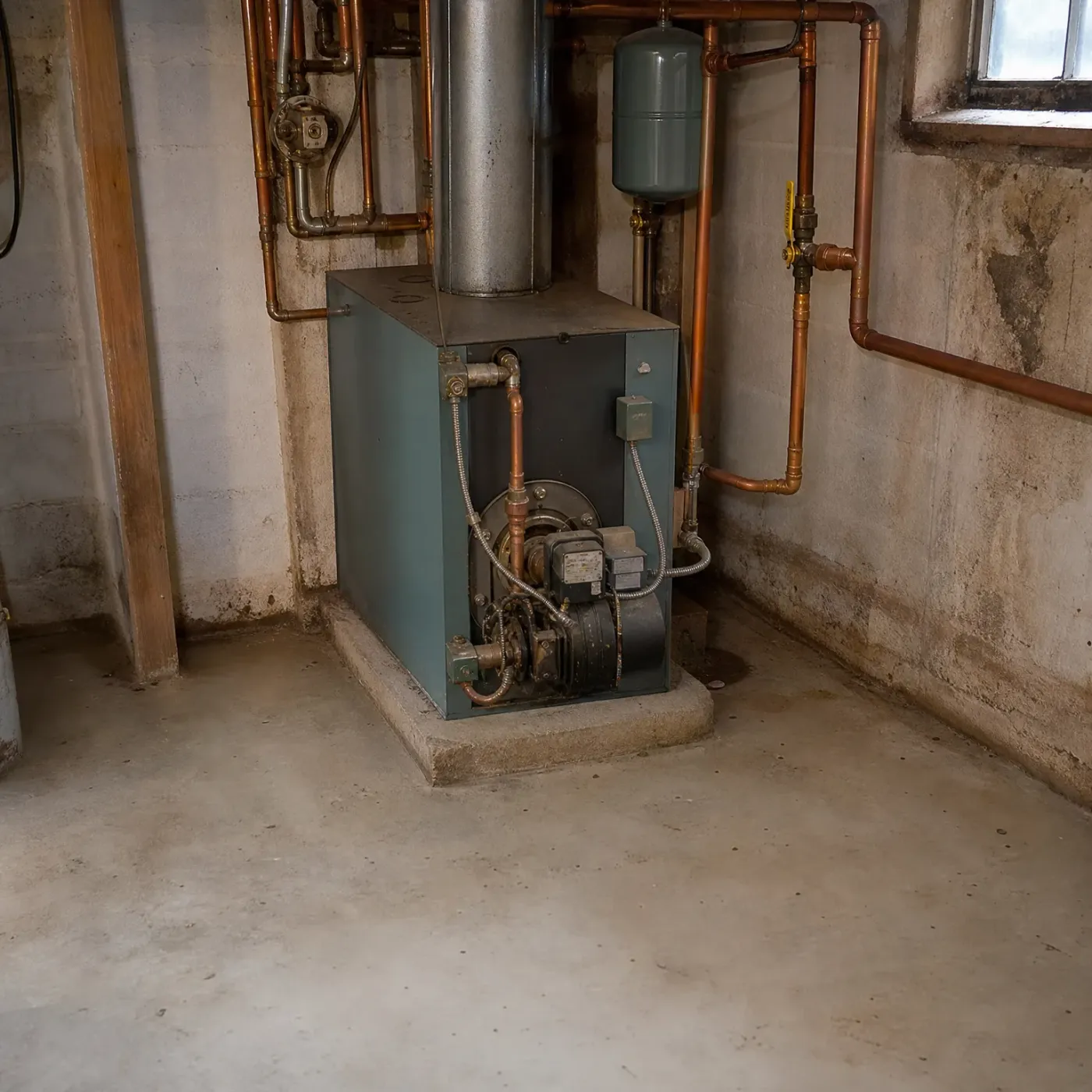
When something's gone wrong
A boiler that won't start might show a flue pipe with soot around the seams, or an expansion tank that's lost its charge. Low pressure, a tripped limit switch, or a pilot that won't hold are common reasons it sits cold instead of firing.
Call Now or Wait It Out
Call for repair now
The boiler won't fire at all, even after you reset the breaker or flip it off and on.
Water is pooling at the base of the unit or dripping from a valve you can see.
You smell gas near the boiler, or the pilot won't stay lit no matter how many times you relight it.
The pressure gauge sits well below 12 psi or keeps dropping after you bleed the radiators.
Rooms are staying cold through the night and the house has no other way to heat itself.
You hear a bang or knock from the pipes right before the burner should kick on.
Safe to wait and watch
The boiler is heating but taking longer than usual to bring rooms up to temperature.
You hear the burner cycle on and off more often than it used to, but it's still keeping up.
One radiator runs cooler than the rest while the others heat normally.
The pressure gauge reads a little low but holds steady once you bleed the system.
You notice a faint mineral smell when the heat first kicks on and it fades within a minute.
The thermostat display is dim or slow to respond but the boiler still answers when called.
A cold boiler in January isn't something to sit with while you keep troubleshooting. Once you've checked the thermostat and the breaker and it still won't fire, the cause is inside the unit, and that's a job for someone who opens these up for a living. Missouri winters bring a run of boiler calls every year, mostly the same handful of failures: a pilot that won't hold, an igniter that's quit, a pressure switch tripping before the burner lights. A contractor who works on these all season knows which of those to check first, and knows it from the kind of boiler sitting in your basement, not a guess. Sending the request means a local, licensed contractor gets your information and starts from what you've already told them, instead of you working the phone yourself in a house that's getting colder by the hour. That part stops being yours to carry once the form is in.
A gas boiler needs three things to fire: power to the control board, a signal from the thermostat, and a flame that proves itself to the sensor within seconds. Miss any one and the burner shuts back down.
That's why a boiler can hum, click, and still not heat. The board is getting power and trying to light, but the flame sensor isn't seeing fire, so it shuts the gas valve for safety and tries again.
No heat overnight
A house with a cold boiler in January loses warmth fast once the sun goes down. Pipes near outside walls are the first to feel it, and the whole house follows by morning.
A local boiler tech who works on these all winter sees the same failures over and over and knows where to look first. You get that one contractor, not a pile of callbacks to sort through.
At 25°F, a boiler isn't just topping off heat, it's the only thing standing between your family and a cold house till morning. When it won't fire on a night like that, you need it fixed before bedtime, not whenever someone gets around to it.
NOAA nClimDiv 1991-2020 county normals weighted by homes
A boiler that won't fire almost always comes down to one of a few things: a pilot or igniter that won't hold, a flame sensor that can't prove itself, a pressure switch tripped low, or a control board that's stopped passing the signal along. None of those are guesswork once someone's hands are on the unit. The contractor who takes this job is local and works on boilers like yours all winter, so the symptoms you've described already point somewhere before he's walked in the door. You'll hear from one contractor, not a handful of companies competing for the job, which means no juggling calls while your house sits cold. From here, the next part isn't yours to carry. Send the request and the work of tracking someone down is off your plate. What's left is simple: heat back on, and the house warm again before the cold has a chance to settle in for good.
Boiler Repair
It's off your list after this
Step 1 of 3: Equipment
Tell a local repair pro what your boiler is doing.
A local pro who knows boilers gets your details and gets in touch.
Send the request today and stop worrying about who to call.
Send the request and finding a pro stops being your problem.
Describe your boiler job once, to one pro.
Fill out one short form instead of calling around.
Your request goes to one pro, not a list of companies.