Tell us about the job
Takes about a minute. No obligation.
Sizing a boiler for a Lawrence County home is not a step a contractor can shortcut and fix later. Homes in Lawrence County, MO run heat about seven months a year, from October through April. The burner, heat exchanger, and ignition system carry that load every year, and a unit that is undersized or poorly commissioned runs harder than it should through the whole stretch. A contractor who skips a proper load calculation leaves a system that cycles too often, wears its components faster, and fails sooner than one that was matched to the house from the start.
Ductwork laid in for one heating system rarely matches what a replacement boiler needs without adjustment, and in Lawrence County that gap between the original installation and current equipment is what a contractor prices first. Half the homes in Lawrence County, Missouri were built in 1979 or earlier (2020-2024 ACS 5-year). Pipes sized for older cast-iron runs, flue arrangements built around different combustion requirements, and electrical service that was not planned around modern controls all sit behind the walls of a typical house here. A contractor quoting a boiler job opens those systems before settling on equipment, because the house decides the scope as much as the unit does.
What a Boiler Installation Puts in Your Home
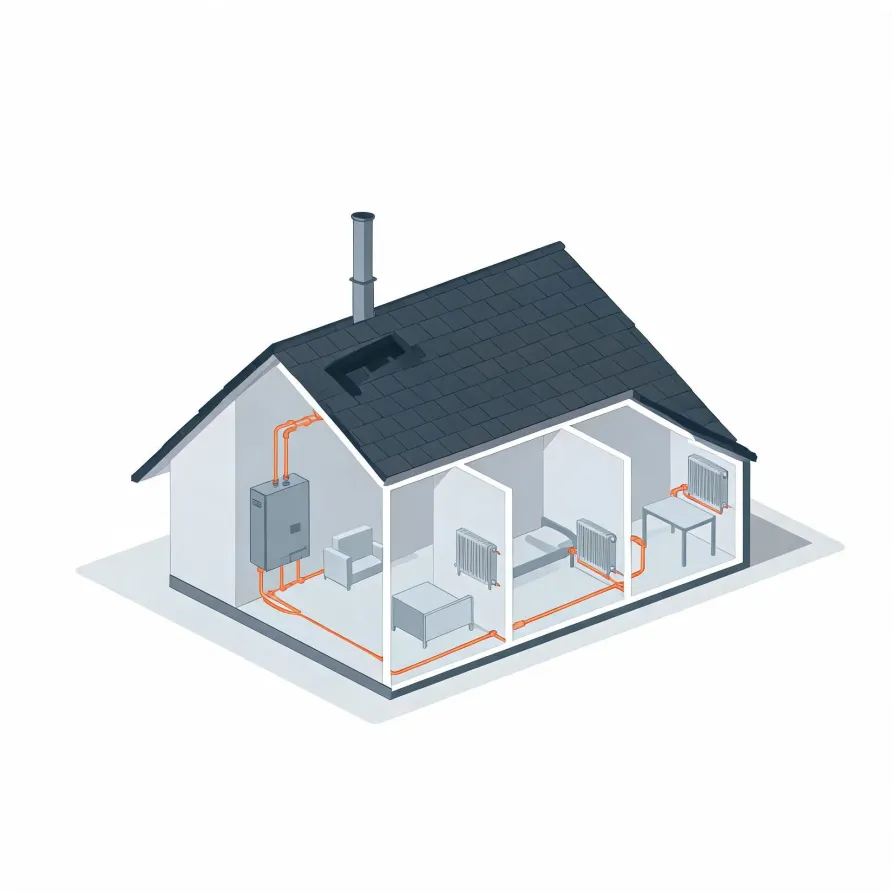
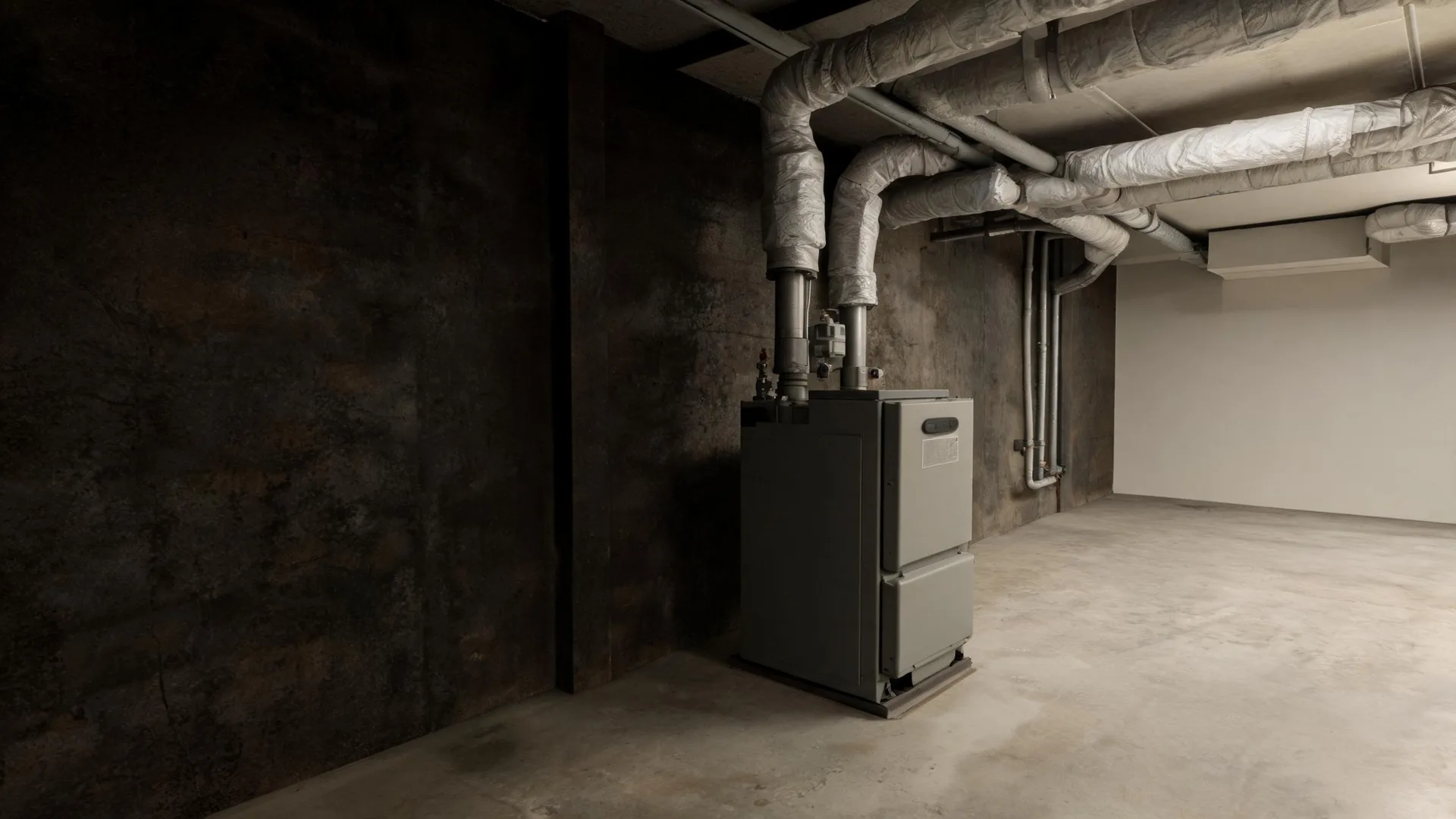
The boiler itself sits in the basement or a mechanical room and is the system's heat source. Attached to it are the circulator pump, which pushes hot water through the pipes, and the expansion tank, which absorbs pressure changes as the water heats and cools. These three pieces occupy the same general footprint as the old unit.
From the boiler, supply pipes run through the house to the heat emitters, whether those are baseboard units along the walls or radiators in each room. A thermostat mounts on an interior wall and signals the boiler when to fire. The fill valve and pressure relief valve sit close to the boiler and keep the system operating within safe limits.
The drawing shows a typical layout, and a licensed contractor determines exactly what applies to your house.
Find a contractor in Lawrence CountyLawrence County, by the numbers
148 severe weather events were recorded in Lawrence County, Missouri between 2015 and 2024.
NOAA National Centers for Environmental Information, Storm Events Database, bulk CSV export, events 2015-01-01 through 2024-12-31.Half the homes in Lawrence County, Missouri were built in 1979 or earlier (2020-2024 ACS 5-year).
U.S. Census Bureau, 2020-2024 American Community Survey 5-Year EstimatesLawrence County, Missouri holds 16,303 housing units (2020-2024 ACS 5-year).
U.S. Census Bureau, 2020-2024 American Community Survey 5-Year EstimatesOwners occupy 73.9% of the occupied homes in Lawrence County, Missouri (2020-2024 ACS 5-year).
U.S. Census Bureau, 2020-2024 American Community Survey 5-Year EstimatesSevere Weather History in Lawrence County
Weather swings put real load on heating equipment, and boilers sized or installed without accounting for local conditions work harder than they should. How often this area sees severe weather is part of what shapes the right installation decisions here.
148 severe weather events, 2015–2024. Source: NOAA National Centers for Environmental Information, Storm Events Database.