Tell us about the job
Takes about a minute. No obligation.
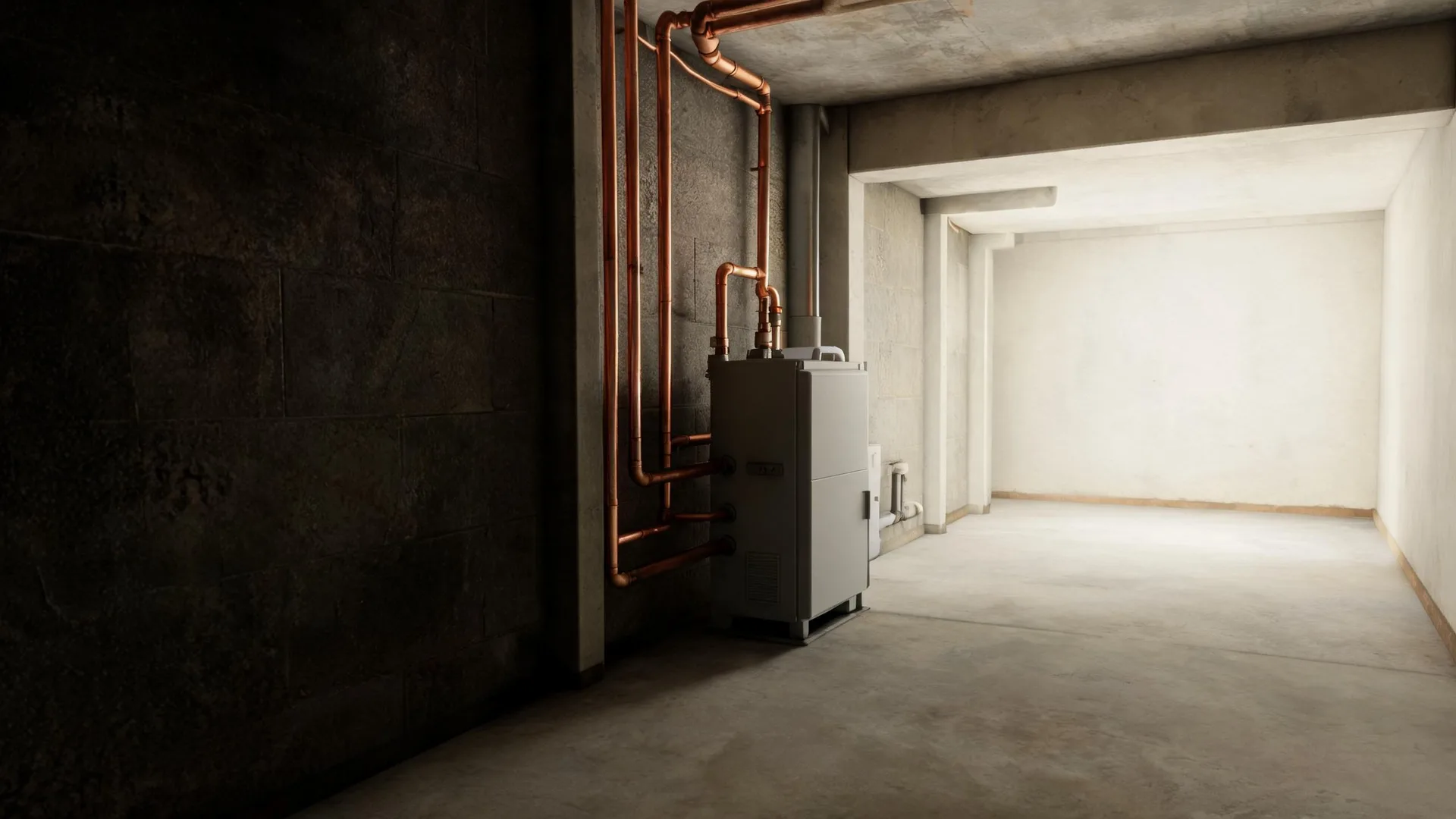
Sizing a boiler correctly in Barry County is not a generic calculation. The load here is real and sustained. Homes in Barry County, MO run heat about seven months a year, from October through April. A burner and heat exchanger that cycle under an undersized load accumulate wear on the ignition system and the heat exchanger surfaces long before a homeowner notices anything wrong. A contractor quoting a new installation has to account for that sustained demand when selecting equipment and specifying the installation, because a system that is marginal on paper will run short on capacity right when the season asks the most of it.
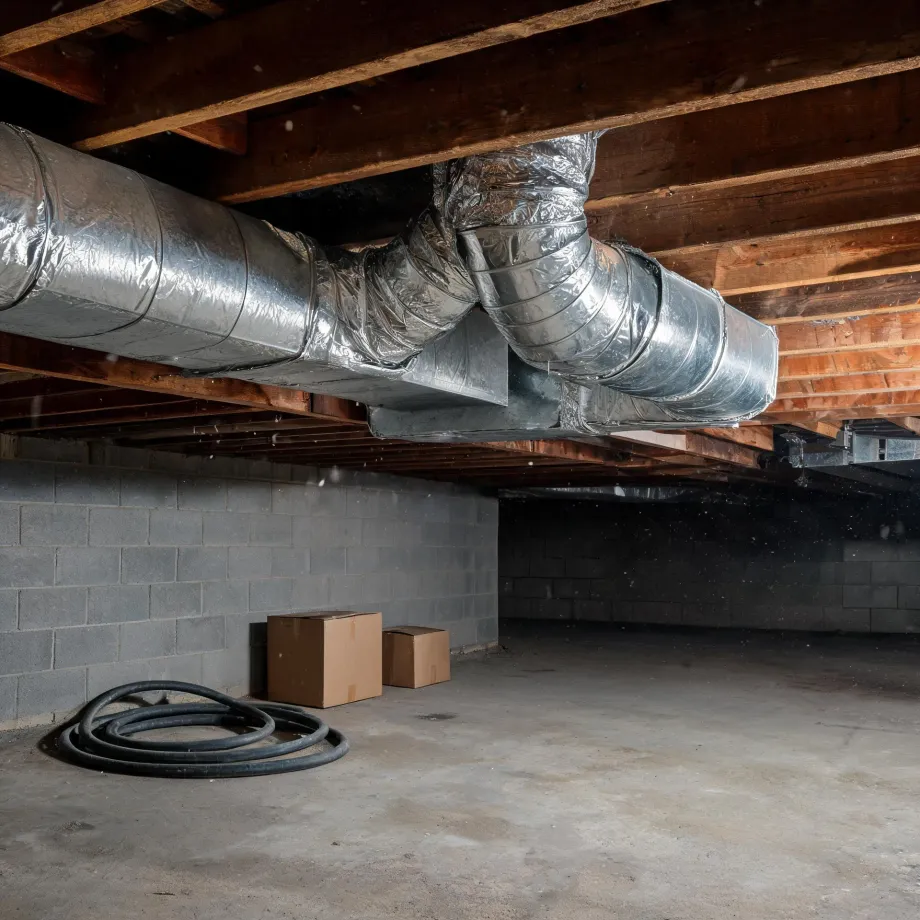
Piping and distribution in a house often tells a contractor more about the scope of a boiler installation than the equipment spec sheet does. Half the homes in Barry County, Missouri were built in 1986 or earlier (2020-2024 ACS 5-year). That depth of stock means a meaningful share of houses here were piped and zoned around systems that have since been replaced at least once, and the original distribution work was sized for something that no longer exists. When a contractor prices a new boiler installation, the pipe runs, the existing zone valves, and the heat emitters are what get measured before anything else, because those are the variables that can turn a straightforward swap into a more involved job.
What Goes Into a Boiler Installation
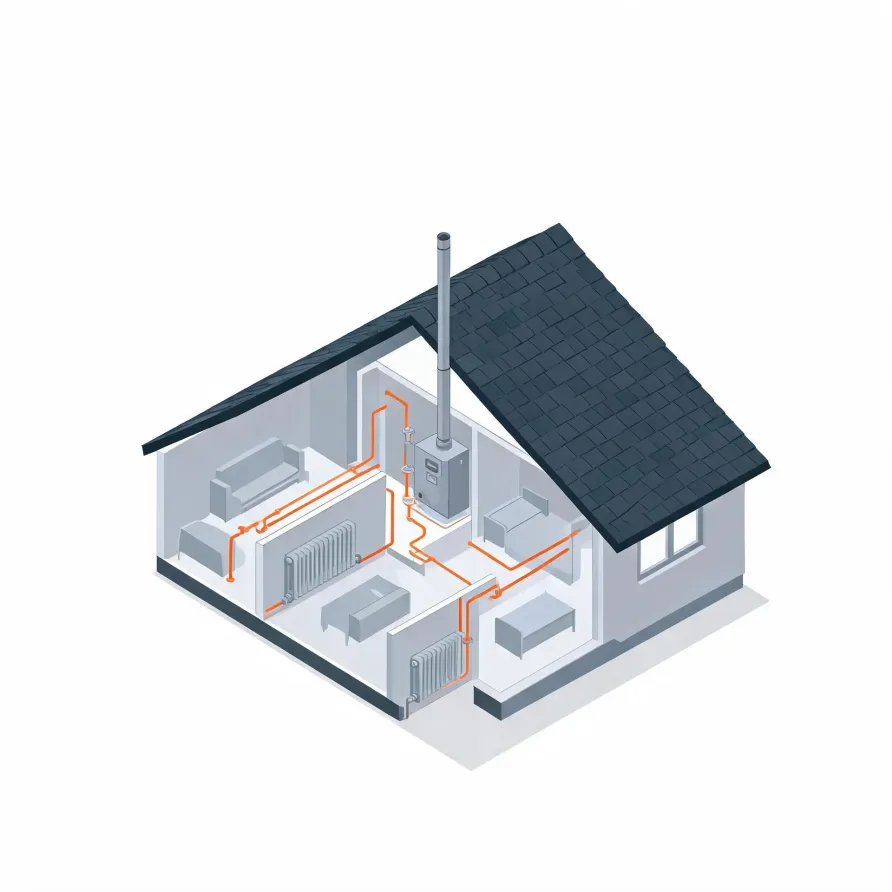
The boiler itself sits in the mechanical room or basement and is the heart of the system. It heats water and sends it out through the distribution piping. A pressure relief valve mounts directly on the unit and holds the system within safe operating limits.
The circulator pump moves heated water through the piping loop to the radiators or radiant panels in each room. An expansion tank, typically mounted near the boiler, absorbs pressure changes as water heats and cools. A thermostat goes on a main living-area wall and tells the system when to fire.
The drawing shows a representative layout, and a licensed contractor determines exactly what applies to this house.
Find a contractor in Barry CountyBarry County, by the numbers
248 severe weather events were recorded in Barry County, Missouri between 2015 and 2024.
NOAA National Centers for Environmental Information, Storm Events Database, bulk CSV export, events 2015-01-01 through 2024-12-31.Half the homes in Barry County, Missouri were built in 1986 or earlier (2020-2024 ACS 5-year).
U.S. Census Bureau, 2020-2024 American Community Survey 5-Year EstimatesBarry County, Missouri holds 17,063 housing units (2020-2024 ACS 5-year).
U.S. Census Bureau, 2020-2024 American Community Survey 5-Year EstimatesOwners occupy 77.3% of the occupied homes in Barry County, Missouri (2020-2024 ACS 5-year).
U.S. Census Bureau, 2020-2024 American Community Survey 5-Year EstimatesSevere Weather Events in Barry County
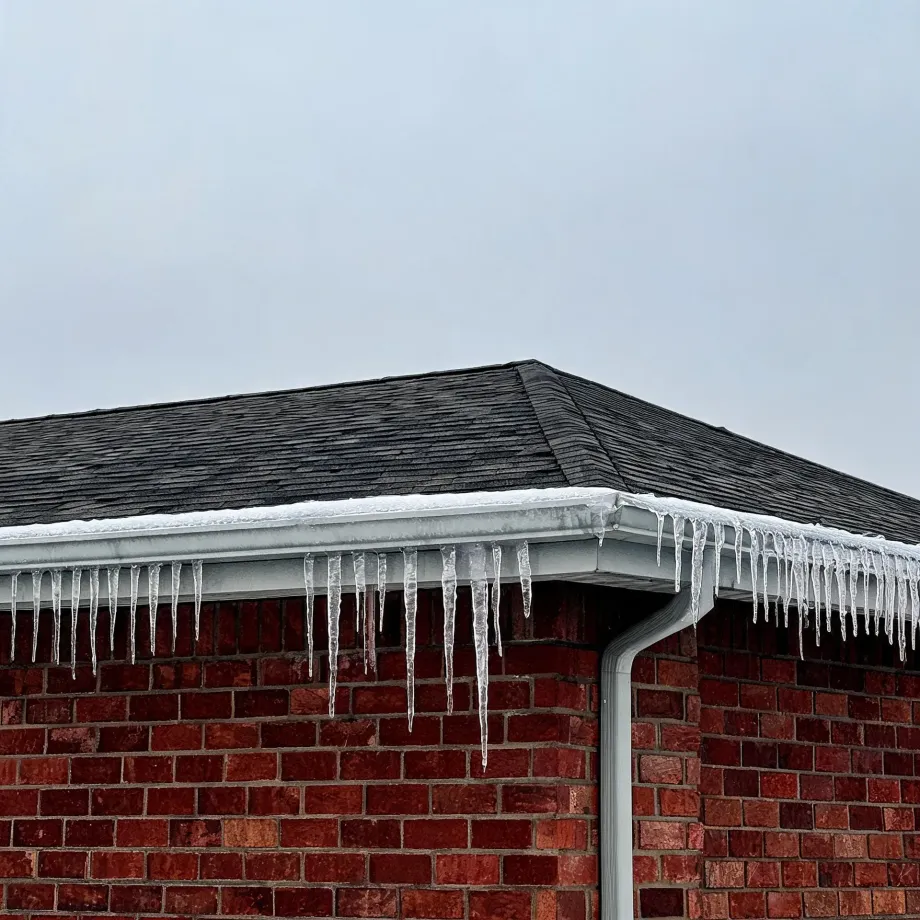
Barry County's weather puts real demands on heating equipment over its working life. A boiler sized and installed for local conditions holds up better than one spec'd to a national average.
248 severe weather events, 2015–2024. Source: NOAA National Centers for Environmental Information, Storm Events Database.