Tell us about the job
Takes about a minute. No obligation.
Sizing a boiler for a Jasper County home starts with what the burner and ignition system are actually being asked to carry. Homes in Jasper County, MO run heat about seven months a year, from October through April. A contractor quoting an installation here has to account for the fact that the burner cycles repeatedly through months of hard work, then sits idle through summer. Corrosion, sediment, and mechanical fatigue all develop at rates tied to how long and how steadily a system runs. A poorly sized unit will short-cycle, and a short-cycling boiler wears its ignition components faster than the heat exchanger is rated to accept.
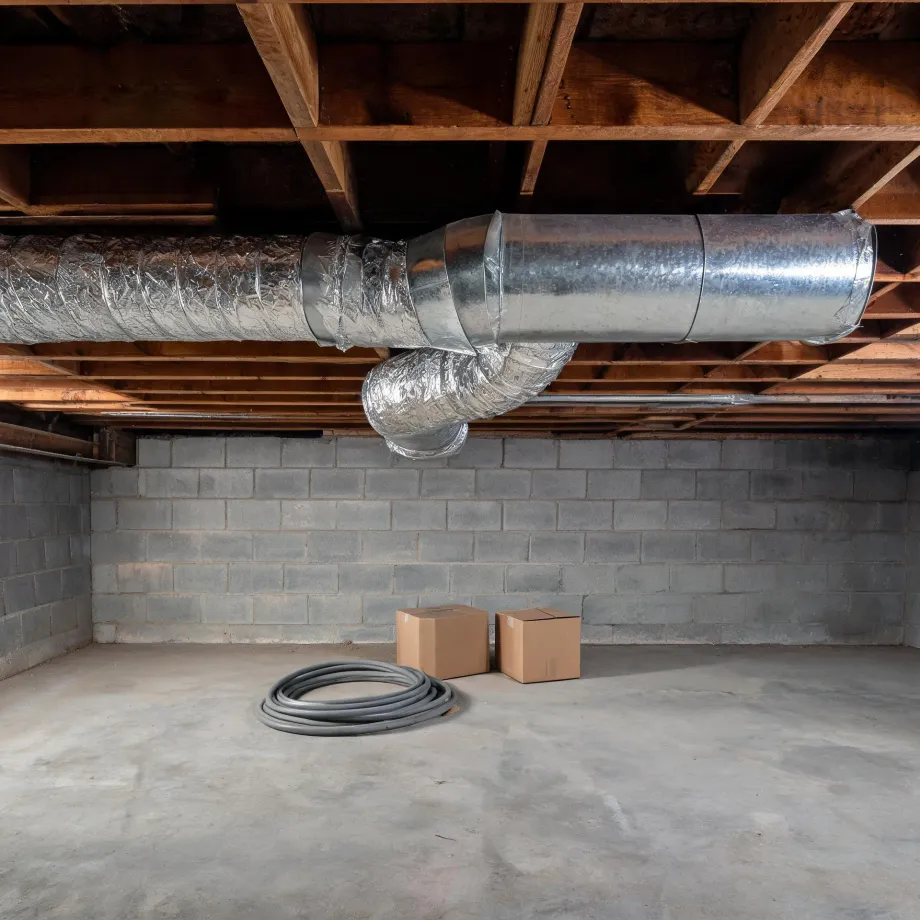
Existing ductwork in a house is sized for the system that went in when the house was built, and a boiler installation tests whether that sizing still holds. Half the homes in Jasper County, Missouri were built in 1986 or earlier (2020-2024 ACS 5-year). Hydronic distribution has different flow and zone requirements than what many of those original layouts assumed, so a contractor working in this county checks the existing runs, the pipe gauge, and the radiation before pricing the new unit. What the house already contains either fits the new system or it does not, and that answer changes the scope of the job more than the equipment selection does.
What a Boiler Installation Puts in Your Home
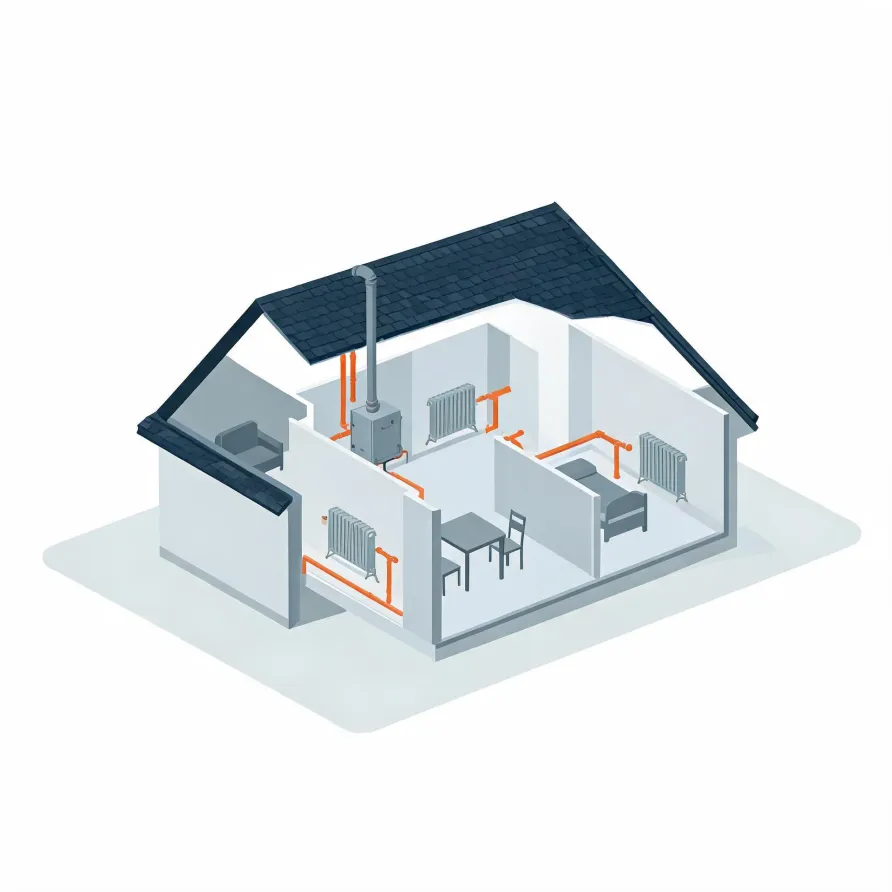
The boiler itself sits in a mechanical room, basement, or utility space and is the unit that heats water for the whole system. Wall-mounted or floor-standing depending on the house, it connects to a flue or exhaust vent that runs to the outside. That venting path is part of what gets placed during installation.
From the boiler, supply and return piping run through the house to the heat emitters, which are the radiators, baseboard units, or radiant floor loops a homeowner actually sees or walks on. A circulator pump moves water through those pipes, and an expansion tank sits on the system to handle pressure changes as the water heats.
The drawing shows a typical layout, and a licensed contractor determines exactly what applies to this house.
Find a contractor in Jasper CountyJasper County, by the numbers
232 severe weather events were recorded in Jasper County, Missouri between 2015 and 2024.
NOAA National Centers for Environmental Information, Storm Events Database, bulk CSV export, events 2015-01-01 through 2024-12-31.Half the homes in Jasper County, Missouri were built in 1986 or earlier (2020-2024 ACS 5-year).
U.S. Census Bureau, 2020-2024 American Community Survey 5-Year EstimatesJasper County, Missouri holds 54,480 housing units (2020-2024 ACS 5-year).
U.S. Census Bureau, 2020-2024 American Community Survey 5-Year EstimatesOwners occupy 62.8% of the occupied homes in Jasper County, Missouri (2020-2024 ACS 5-year).
U.S. Census Bureau, 2020-2024 American Community Survey 5-Year EstimatesSevere Weather History in Jasper County
Weather in this part of Missouri puts real demands on heating equipment. A boiler that handles a hard winter here is sized and installed for local conditions, not a national average.
232 severe weather events, 2015–2024. Source: NOAA National Centers for Environmental Information, Storm Events Database.