Tell us about the job
Takes about a minute. No obligation.
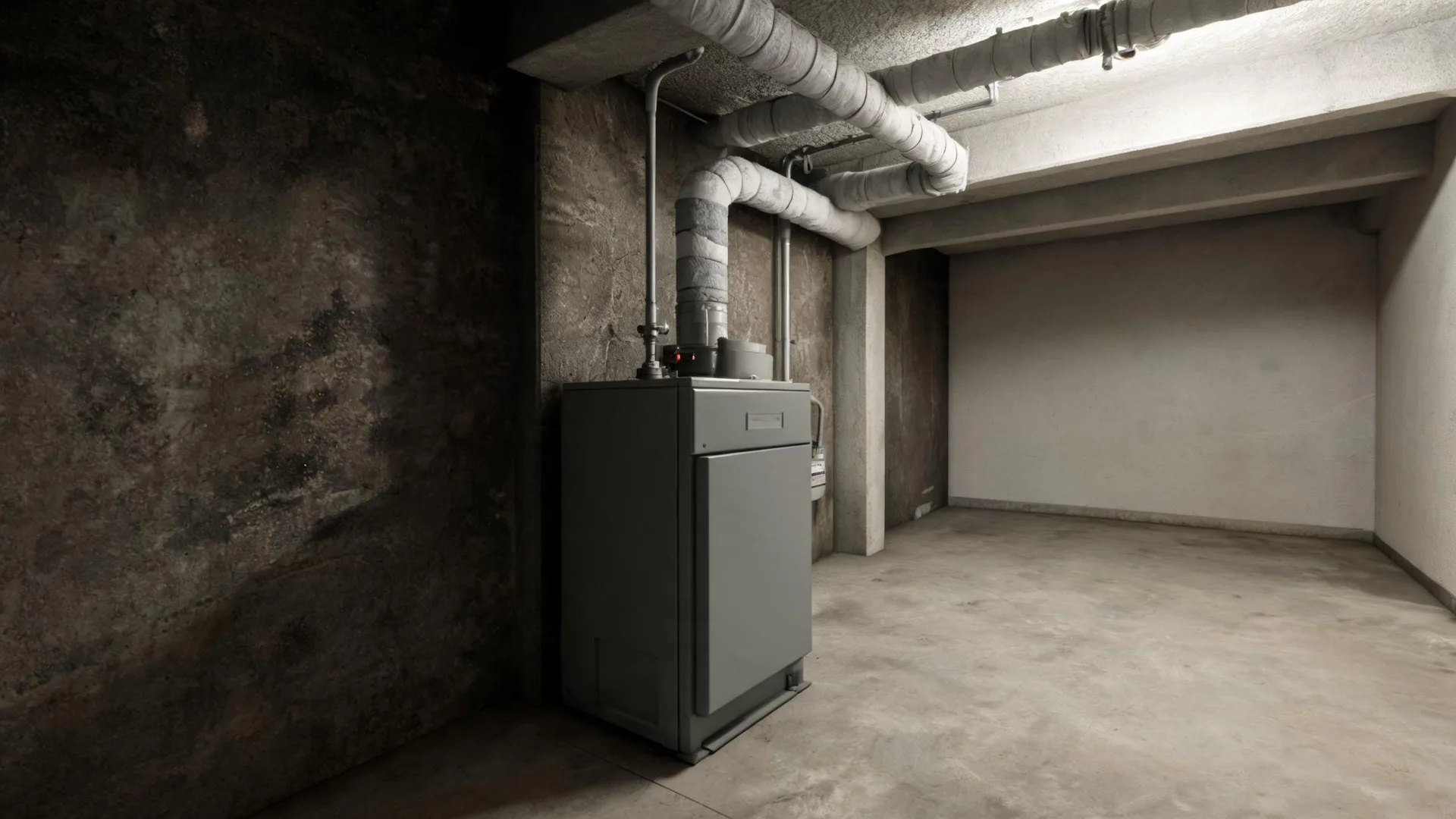
A boiler repair quote in Harrison County starts with the burner assembly and heat exchanger, not the thermostat or the controls. Homes in Harrison County, MO run heat about eight months a year, from October through May. A unit cycling that consistently builds wear on the ignition system, the burner orifices, and the seals around the heat exchanger in a way that shows up as cracking, scaling, or ignition failure well before a homeowner expects it. A contractor inspecting one of these systems checks those components first, because that is where the season's load lands.
Boilers that have run for generations accumulate problems that show up only once a technician opens the unit: heat exchangers that have cracked along seams, controls wired to specs that no current replacement board matches exactly, and fittings sized to standards that changed quietly decades back. Half the homes in Harrison County, Missouri were built in 1966 or earlier (2020-2024 ACS 5-year). A stock that old means a contractor pulling a failed component cannot assume a drop-in replacement exists or that it ships from a warehouse in any reasonable time. That gap between what the system takes and what is still made is where repair estimates in this county tend to widen.
The Parts of a Boiler a Contractor Checks First
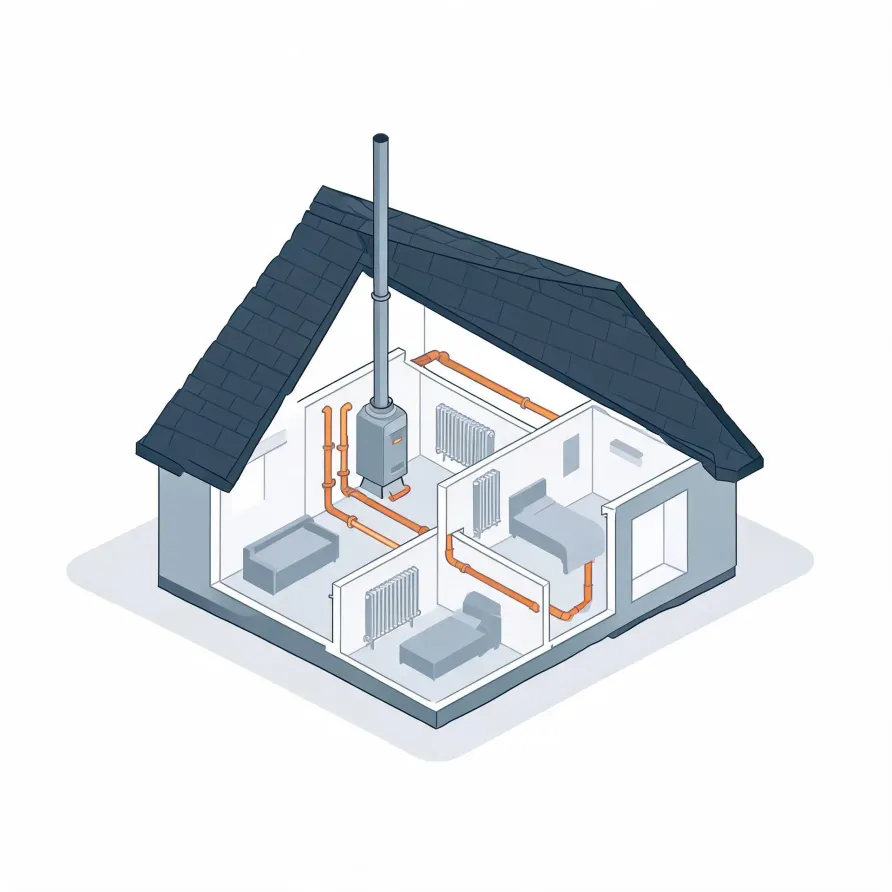
The boiler itself sits in the basement or a mechanical room and is the heart of the system. It heats water and sends it out through the pipes. When a home loses heat or the system short-cycles, the contractor starts here, looking at the heat exchanger, the burner, and the controls that tell the unit when to fire.
Radiators and baseboard units sit throughout the living spaces and release heat into each room. The circulator pump, usually mounted close to the boiler, moves hot water through the loop. The expansion tank, pressure relief valve, and zone valves all live near the boiler and are checked when pressure drops, flow stalls, or a single zone stops responding.
The drawing shows a general layout of these components, and a licensed contractor determines which of them apply to your specific system and what the work involves.
Find a contractor in Harrison CountyHarrison County, by the numbers
88 severe weather events were recorded in Harrison County, Missouri between 2015 and 2024.
NOAA National Centers for Environmental Information, Storm Events Database, bulk CSV export, events 2015-01-01 through 2024-12-31.Half the homes in Harrison County, Missouri were built in 1966 or earlier (2020-2024 ACS 5-year).
U.S. Census Bureau, 2020-2024 American Community Survey 5-Year EstimatesHarrison County, Missouri holds 4,008 housing units (2020-2024 ACS 5-year).
U.S. Census Bureau, 2020-2024 American Community Survey 5-Year EstimatesOwners occupy 71.4% of the occupied homes in Harrison County, Missouri (2020-2024 ACS 5-year).
U.S. Census Bureau, 2020-2024 American Community Survey 5-Year EstimatesSevere Weather Events in Harrison County
Boilers in Harrison County work against whatever the local climate delivers, and hard weather accelerates wear on heat exchangers, controls, and seals. How much stress local conditions place on heating equipment is part of what shapes repair demand here.
88 severe weather events, 2015–2024. Source: NOAA National Centers for Environmental Information, Storm Events Database.